Pluta

AkordDRVA I MAHOVINEdrvenast · zemljan · topao

Sedam parfemaJedan od njih vas posmatra

Bazne notePiramida
—Jačina
—Trajnost
1Poreklo
Uzorak
Pluta kao sirovina za parfeme
Bazne note
Quercus suber
Fantazijska/konceptualna
Definicija

Cork is the phellem layer of bark tissue that is harvested for commercial use primarily from Quercus suber, the cork oak. Cork is composed of suberin, a hydrophobic substance.

DRVENAST ZEMLJAN SLADAK TOPAO
Type
Akord
Olfactive family
Drvenasti
Source
Bark of the cork oak (Quercus suber)
Chemical class
Suberin-rich bark tissue
Instrumenti
Piramida
GGornje note
SSrednje note
BBazne note
Zemlje proizvođači
Mediteran

Miris

Vanillin and acetovanillone, two of the main aroma compounds found in cork samples, smell of vanilla. Guaicol is described as wood, smoked, sweet and medicine, and 4-vinylguaicol as wood, spice, cloves and curry. TCA, the main compound behind cork taint in wine, has an unpleasant earthy, musty and moldy smell.

Detaljno

Origin

The cork oak, Quercus suber, is native to southwest Europe and northwest Africa. The montado landscape of Portugal produces approximately half of the cork harvested annually worldwide. The cork oak is a medium-sized evergreen tree and the primary source of cork for wine stoppers, flooring and the cores of cricket balls.

Composition

In general, cork is made up of suberin (average of about 40%), lignin (22%), polysaccharides (18%) and extractables (15%), among others. Suberin is a major constituent of cork and is named after the cork oak, Quercus suber. Suberin is a lipophilic, complex polyester biopolymer found in plants, composed of long-chain fatty acids and glycerol. Cork consists of dead, air-filled, thin-walled cells and contains cellulose and suberin. The cells of cork usually have a pentagonal or hexagonal shape. Cork is heat and sound insulating, and its suberin gives it water-repellent properties.

Uses

Because of its impermeable, buoyant, elastic and fire retardant properties, cork is used in a variety of products, the most common of which is wine stoppers. Natural cork closures are used for about 80% of the 20 billion bottles of wine produced each year. Cork is also used in construction, automotive and textiles. Aromatic compounds found in cork by-products and cork stoppers have been proposed for reuse as flavoring agents and antioxidants in the food industry.

Aromatic compounds

Twenty-three aromatic compounds were determined in granulates and cork samples. They belong to the families of vanillins and derivatives, volatile phenols, aldehydes, alcohols, terpenes, lactones, fatty acids and furans. Vanillin was the most important compound in the analysed samples, at up to 170 μg/g. 4-vinylguaicol was the most abundant volatile phenol. The terpenols found in cork include camphor, borneol, α-terpineol and 4-terpineol. A thermal desorption analysis of cork characterised 104 volatile organic compounds across samples from different geographical origins and manufacturing stages. Vanillin was the most abundant compound across all the geographical origins of cork analysed. Thermal treatment of cork stoppers raised the levels of ketones such as acetophenone and 2-nonadecanone and lowered certain alkanes and fatty acids.

Cork taint

Cork taint is a wine fault, an off-odor and off-flavor, arising from aroma-intense compounds present in the cork that are transferred into wine after bottling. 2,4,6-Trichloroanisole (TCA) has been identified as the primary chemical responsible for cork taint. An estimated 80-85% of all cork taints are due to TCA. The estimated share of affected bottles is between 1% and 5%. TCA is formed by the methylation of 2,4,6-trichlorophenol. It may also be produced when naturally occurring airborne fungi and bacteria are presented with chlorinated phenolic compounds, which they then convert into chlorinated anisole derivatives. TCA has the molecular formula C₇H₅Cl₃O and the IUPAC name 1,3,5-trichloro-2-methoxybenzene. A worldwide loss of roughly US$1 billion per year is attributed to cork taint in wine.

Explore all seven extraits in the Discovery Set.

—

Related: Alder · Alpha Humulene · Amaranth · Amberever · Amburana Bark · Antillone · Apple Tree

Zanimljivosti

Humans are very sensitive to TCA: some experts can detect it at levels as low as 1-2 ng/L, and a specially trained group reportedly reached a threshold of 0.3 ng/L. Robert Hooke examined cork microscopically, which led to his discovery and naming of the cell.

Dobijanje i hemija

Način dobijanja

Cork is extracted only from early May to late August, when the cork can be separated from the tree without causing permanent damage. Once a tree reaches 25 years old, its thick bark can be harvested for cork every 9 to 12 years without causing harm to the tree. The best quality cork is obtained from the third and fourth harvest. Cork macerates made from granulates reached their highest concentrations of total aromas after 5 days of maceration. For cork stoppers the maximum content was generally reached after 15 days of extraction.

Formula
Complex natural mixture (key constituents: suberin; lignin; polysaccharides)
Botanički naziv
Quercus suber
Izgled
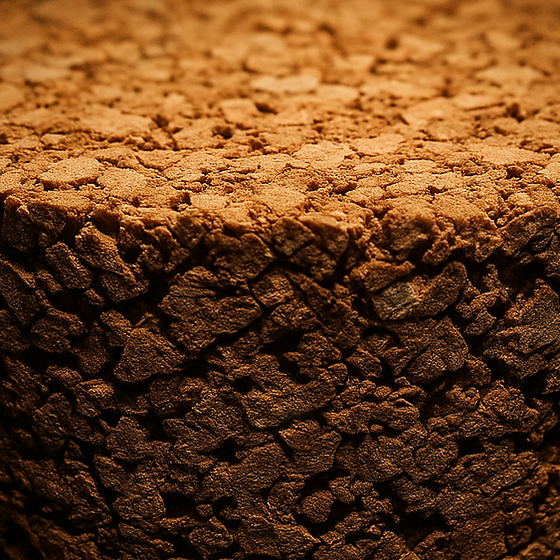
Light and spongy, white on the outside and red to red-brown on the inside
Status prema standardima IFRA
Pogledajte napomenu

No IFRA Standard for the material itself (51st Amendment)

U parfemima

Vanillin has a great impact on the overall aroma of cork extracts, and it is used in many industrial fields, including the production of fragrances. Aromatic compounds can be used as flavours or fragrances in consumer goods such as food, beverages, pharmaceuticals and cosmetics.

Uloga u formuli
01modifikator
02nota potpisa
03graditelj volumena
Oblici na tržištu
sintetički akord fantazijska nota

Pogledajte i

7 nota