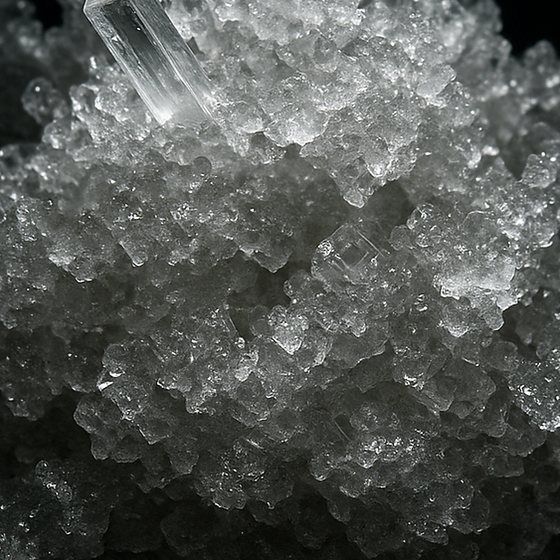
Floralozone

SintetičkaPOPULARNO I NEOBIČNOcvetni · svež · zelen
Gornje notePiramida
3/5Jačina
80hTrajnost
—Poreklo
Uzorak
Floralozone kao sirovina za parfeme
Gornje note
Definicija

Floralozone is an aromatic aldehyde that is not found in nature. Its odour is strong and clean, reminiscent of fresh air and sea air, with floral and aldehydic character.

CVETNI ZELEN ALDEHIDNI MORSKI SVEŽ ČIST
Ozone propanal, Floralozonex, Florazon, Florone, Ozofloranal, Ethyl dimethylhydrocinnamal
Type
Sirovina
Olfactive family
Cvetni
Source
not found in nature; made by laboratory synthesis
Chemical class
aromatic aldehyde
Instrumenti
Piramida
GGornje note
SSrednje note
BBazne note
3/5Jačina
Srednja
jačina mirisa
Trajnost na mirisnoj traci
80sati · 3 dana
1 h6 h24 h3 d7 d400 h
pri 100 %

Miris

At 10% in dipropylene glycol, Floralozone smells of ozone, clean, fresh, green and marine notes. It is a powerful, clean, green, fresh air note reminiscent of ocean breezes. It is also described as strong and clean, reminiscent of fresh air and sea air, floral and aldehydic with lily of the valley aspects. Another description gives it a floral-jasmine side alongside fresh, clean and ozone notes. Its texture is airy, crisp, light and transparent rather than creamy, sweet or heavy. Secondary nuances are watery petals, soft powder, white floral airiness, clean laundry freshness and delicate marine-floral transparency.

Detaljno

Floralozone is a reaction mass of 3-(o-ethylphenyl)-2,2-dimethylpropionaldehyde and 3-(p-ethylphenyl)-2,2-dimethylpropionaldehyde. Its molecular formula is C₁₃H₁₈O and its molecular weight is 190.28. The two components share the formula and differ in where the ethyl group sits on the benzene ring, at position 2 in one and position 4 in the other. Indexes of chemical names list the mixture as benzenepropanal, 2(or 4)-ethyl-α,α-dimethyl-. Cosmetic ingredient databases give its function as perfuming.

Chemistry

The 4-ethylphenyl component is 3-(4-ethylphenyl)-2,2-dimethylpropanal, CAS 67634-15-5, and the 2-ethylphenyl component is 3-(2-ethylphenyl)-2,2-dimethylpropanal, CAS 67634-14-4. It is soluble in alcohol and insoluble in water. Its shelf life is 24 months or longer if it is stored in a cool, dry place in tightly sealed containers, protected from heat and light. Its export tariff code is 2906.19.0000. The para isomer has the European inventory number 266-819-2 and is PubChem compound 105513. The ortho isomer has the number 266-818-7 and is PubChem compound 105512. Estimated XlogP3 values are 3.30 for the para isomer and 3.50 for the ortho isomer. A predicted density of 0.942 g/cm³ is given for the ortho isomer, and the solubility in water is estimated at 21.05 mg/L at 25 °C. The para isomer has a Kovats retention index of 1456.8. The proton NMR spectrum of the 4-ethyl compound prepared in the patent example shows one proton at 9.62 ppm, four aromatic protons near 7.15 ppm, a two-proton multiplet at 2.8 ppm, a two-proton quartet at 2.6 ppm and a nine-proton multiplet near 1.2 ppm.

Manufacture

A patented process for aromatic aldehydes, with Floralozone among its examples, first treats an aromatic hydrocarbon with paraformaldehyde and hydrogen bromide and then reacts the product with an aldehyde under a phase-transfer catalyst. The catalyst can be a tetraalkylammonium halide such as tetrabutylammonium iodide, and the reaction temperature is preferably 60 to 90 °C, more preferably 70 to 80 °C. In the Floralozone example, the first step used 50 grams (0.47 mol) of ethylbenzene and 15.56 grams of paraformaldehyde in 100 mL of acetic acid, with 138.6 grams of a 33% solution of hydrogen bromide in acetic acid added dropwise over 30 minutes. In the second step, 10 grams (50.2 mmol) of compound 2 and 5.03 grams (69.8 mmol) of isopropanal were added to 2.63 grams of sodium hydroxide and 0.27 grams of PTC 2 in water, toluene and THF. The reaction was followed by gas chromatography, and the organic phase was dehydrated with anhydrous sodium sulfate. The phase-transfer catalyst was used at 0.02 equivalent.

Safety

Its European hazard classification is irritant (Xi), irritating to skin and eyes. The hazard statements H317, H315 and H410 are listed for the material with CAS 67634-14-4. No listed EU fragrance allergens are declared for it. The material with CAS 67634-14-4 carries the GHS07 and GHS09 pictograms and the signal word Warning. Supplier labels state that it causes skin irritation, may cause an allergic skin reaction and is very toxic to aquatic life with long lasting effects. Both isomers are on the Canadian Domestic Substances List, and the material with CAS 67634-14-4 is TSCA listed. Its German water hazard class (WGK) is 2. It is a raw material for formulation work and must not be applied to the skin undiluted.

Explore all seven extraits in the Discovery Set.

—

Related: Abelia · Almond Blossom · Alpha Terpineol · Alstroemeria · Alumroot · Amarillys · Amazon Moonflower · Amethyst Flower

Zanimljivosti

Floralozone and cyclamen aldehyde have the same molecular formula, C₁₃H₁₈O, but different structures. Floralozone is 3-(4-ethylphenyl)-2,2-dimethylpropanal, while cyclamen aldehyde is 2-methyl-3-(4-propan-2-ylphenyl)propanal. The patent that describes the preparation of Floralozone names it among aldehydes made by the same process, together with lysmeral, methyl lysmeral, cyclamen aldehyde, methyl cyclamen aldehyde and 2,2-dimethyl-3-phenylpropanal.

Dobijanje i hemija

Način dobijanja

One documented route prepares Floralozone in two steps. In the first step, ethylbenzene, paraformaldehyde and hydrogen bromide in acetic acid are heated to 120 °C and stirred for 7.5 hours, giving compound 2. In the second step, compound 2 is added dropwise with isopropanal to a vigorously stirred mixture of sodium hydroxide, the catalyst PTC 2, water, toluene and THF at 70–75 °C. When the addition is finished, the mixture is stirred at 70–75 °C for 3 hours. Water is then added to obtain an organic phase, which is dried, filtered and concentrated by vacuum distillation. The example gave 7.92 grams of Floralozone, a yield of 82.8%, with a purity of 95.76% by GC analysis. Yields were higher with the catalyst PTC 2 than with tetrabutylammonium iodide. No reaction occurred at 20–25 °C.

Formula
C₁₃H₁₈O
CAS
67634-14-4 / 67634-15-5
Izgled
Liquid
Jačina mirisa
Srednji
Trajnost
80 hours at 100%
Sinonimi
Ozone propanal, Floralozonex, Florazon, Florone, Ozofloranal, Ethyl dimethylhydrocinnamal
Status prema standardima IFRA
Pogledajte napomenu

No IFRA Standard for the material itself (51st Amendment)

Fizička svojstva
Tačka ključanja
262.1 ± 9.0 °C (predicted)
Tačka paljenja
> 212 °F / > 100 °C (TCC)

U parfemima

Floralozone gives lift to fragrances without dominating them because of its neutral nature. It is interesting in rose-muguet blends with a top note of rose oxide. Its stability is good in body lotion, shampoo, soap and powder, and poor in citric cleaner and bleach. It is not for flavour use.

Uloga u formuli
01pojačivač difuzije
02modifikator
03sredstvo za podizanje
04svežina
Oblici na tržištu
sintetički

Pogledajte i

6 nota