Zagrejani metal

AkordPRIRODNO I SINTETIČKO, POPULARNO I NEOBIČNOmetalan · nalik pečurkama · krv
Srednje notePiramida
—Jačina
—Trajnost
—Poreklo
Uzorak
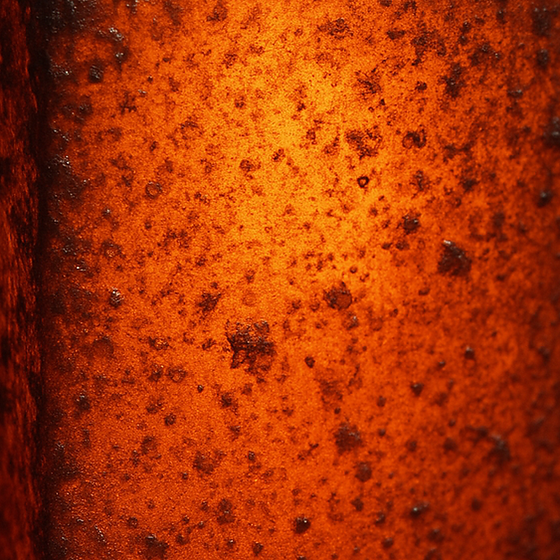
Zagrejani metal kao sirovina za parfeme
Srednje note
Fantazijska/konceptualna
Definicija

The metallic smell of metals touched by hand is a body odour produced by the metal reacting with skin, not the smell of the metal itself. Its main odorant, oct-1-en-3-one, has a strong metallic mushroom-like odor.

METALAN PEČURKAST BUĐAV KAO KRV
Type
Akord
Olfactive family
Ambrasti i mošusni
Chemical class
Ketone (key odorant: 1-octen-3-one)
Instrumenti
Piramida
GGornje note
SSrednje note
BBazne note

Miris

Oct-1-en-3-one is described as blood, metallic and mushroom-like. Humans can detect it at very low concentrations and experience it as a mushroom-like, metallic odour. The odour of touched iron is described as musty. Iron touched by a sweaty palm can give a garlic-tinged metallic aroma. Decanal, with an orange-skin, flowery smell, and nonanal, with a tallowy, fruity smell, follow oct-1-en-3-one among the compounds responsible for the smell of metal.

Detaljno

Origin of the metallic smell

The metallic smell of iron or copper objects does not come from the metal itself. Copper has a similar effect, accounting for the metallic smell created by handling coins made of copper alloys. Oct-1-en-3-one is also known as 1-octen-3-one, octeneone or amyl vinyl ketone. It is the degradative reduction product of the reaction of skin lipid peroxides and Fe²⁺. Skin lipid peroxides form from skin lipid by oxidation, either enzymatically by lipoxygenases or by air oxygen. When iron is touched, the iron ions needed for the reaction form as perspiration on the skin corrodes the iron. Oct-1-en-3-one has an odor detection threshold of 0.03-1.12 μg/m³.

Dietmar Glindemann of the University of Leipzig and co-workers reported the results in Angewandte Chemie in 2006. Seven test subjects immediately recognized a musty metallic odor when their hands touched metallic iron or a solution of iron ions with a twofold positive charge. The researchers captured the vapours emitted from the skin of people who had handled iron objects, and the gases contained several aldehydes and ketones. Oct-1-en-3-one contributes about a third of the total odour concentration, along with several C6 to C10 n-alkanals and other unsaturated aldehydes and ketones. Rubbing blood over skin results in a similar metallic smell based on the same scent molecules.

Other metallic odours

Cast iron and steel containing carbon and phosphorus develop a metallic-garlic odor when exposed to acids. The cause is organophosphines, especially methylphosphine and dimethylphosphine, and not pure phosphine, which is basically odorless at breathable concentrations. Acids in sweat react with carbon and phosphorus impurities that are typically present in iron, which generates volatile, smelly organophosphines.

An industrial source of the odorant

People were surprised by a mushroom smell near a Canadian car painting plant. It came from oct-1-en-3-one that formed when methanal in paint resins reacted with the solvent heptan-2-one.

—

Related: Aldron · Ambretone · Ambrette Musk Mallow · Ambrettolide Natural Musk · Ambrinol · Coral Reef · Cyclopentadecanolide · Exaltolide

Dobijanje i hemija

Način dobijanja

It forms on contact, as the breakdown product left when iron(II) ions react with lipid peroxides on the skin.

Formula
N/A — key odorant: 1-octen-3-one C₈H₁₄O (blood, metallic, mushroom-like)
CAS
4312-99-6 (1-octen-3-one, key odorant)
Status prema standardima IFRA
Pogledajte napomenu

No IFRA Standard for the material itself (51st Amendment)

Fizička svojstva
Tačka ključanja
56-60 °C at 16 mm Hg (1-octen-3-one)
Tačka paljenja
35 °C (1-octen-3-one)
Nota
The metallic smell of skin in contact with iron is caused mainly by 1-octen-3-one.

U parfemima

Its key odorant, oct-1-en-3-one, is classed among the ketones of the aroma compounds.

Uloga u formuli
01modifikator
02nota potpisa
Oblici na tržištu
sintetički

Pogledajte i

6 nota