The tree
Handroanthus impetiginosus is distributed throughout North, Central and South America, from northern Mexico south to northern Argentina. Along with all other species of the genus Handroanthus, it is the national tree of Paraguay. It is a rather large deciduous tree, with trunks sometimes reaching 80 cm (31 in) in width and 30 m (98 ft) in height. The leaves are palmately compound with usually 5 leaflets. Its bark is brownish grey, tough and hard to peel.
Flowers
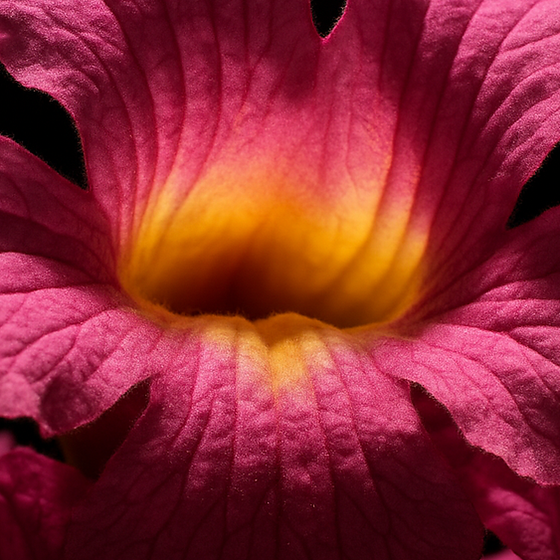
In the southern hemisphere, pink lapacho flowers between July and September, before the new leaves appear. The flower is about 2 in (5.1 cm) long, with four stamens and a staminode. The fruit consists of a narrow dehiscent capsule containing several winged seeds. Some hummingbirds, such as the black jacobin and the black-throated mango, seem to prefer the flowers over those of other Handroanthus species.
Wood
The wood is of a pleasant yellowish colour, barely knotted and very tough and heavy (0,935 kg/dm3). It is rich in tannins and therefore very resistant to weather and sun. It is not very useful for furniture since it is so hard to work by hand. It can be found as beams or fulfilling other structural uses where needed outdoors. In the genus Handroanthus, the wood is among the hardest and heaviest known, and the heartwood is distinct from the sapwood and contains large quantities of lapachol.
Uses
It is used as a honey plant, and widely planted as an ornamental tree in landscaping gardens, public squares and boulevards. In the genus Handroanthus, many flowers appear on still-leafless stems at the end of the dry season, making the floral display more conspicuous. Tea from the inner bark of pink ipê is known as pau d'arco, lapacho, or taheebo. Much of the ipê imported into the United States is used for decking.
Naming and classification
The genus Handroanthus consists of 30 species of trees, known in Latin America by the common names poui, pau d'arco, or ipê. It was erected by João Rodrigues de Mattos in 1970 and named for the Brazilian botanist Oswaldo Handro. Handroanthus was resurrected in 2007, when a comparison of DNA sequences showed that Tabebuia, as then circumscribed, was not monophyletic. The IUCN lists the conservation status of Handroanthus impetiginosus as Near Threatened.
—
Related: Alder · Alpha Humulene · Amaranth · Amberever · Amburana Bark · Antillone · Apple Tree