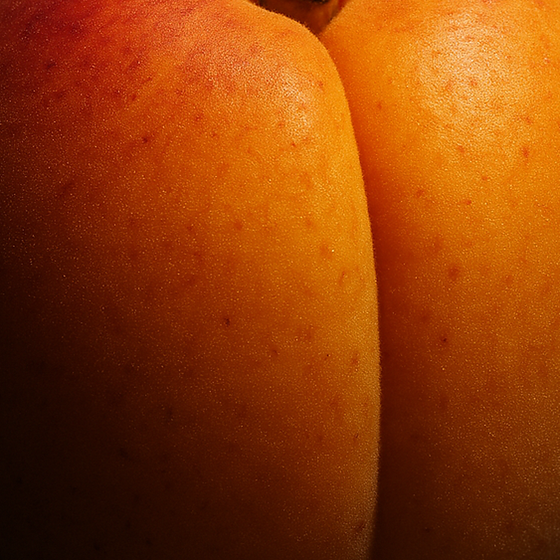
The apricot is a small tree, up to 8 metres tall, with a round canopy. The crown spreads about as wide as the tree is tall. Its flowers are white or pinkish and appear before the leaves early in the spring. The single seed, the kernel or stone, is enclosed in a hard shell.
Explore all seven extraits in the Discovery Set.
Kernels and amygdalin
Apricot kernels contain amygdalin, a poisonous compound. Apricot seeds, like almonds, apple seeds and cherry seed, contain significant amounts of amygdalin. Amygdalin is a cyanogenic glycoside derived from the amino acid phenylalanine, with the formula C₂₀H₂₇NO₁₁. This glycoside breaks up under enzyme catalysis into benzaldehyde, hydrogen cyanide and two equivalents of glucose. Benzaldehyde released from amygdalin provides a bitter flavor. In the plant, amygdalin and the enzymes that break it down are stored in separate places and mix only when the tissue is damaged. A typical apricot kernel weighs 600 mg, and bitter and sweet kernels contain respectively 1.8 and 0.3 mg of cyanide. Raw apricot kernels release cyanide rapidly, and blood cyanide peaks within a short time.
Aroma
An aroma extract dilution analysis of a distillate of fresh apricots identified 26 odor-active compounds. (R)-γ-decalactone, (E)-β-damascenone, δ-decalactone and linalool had the highest flavor dilution factors among them. β-Ionone, (Z)-1,5-octadien-3-one, γ-decalactone, (E,Z)-2,6-nonadienal, linalool and acetaldehyde had odor activity values above 100. Previously unknown constituents such as (E,Z)-2,6-nonadienal and (Z)-1,5-octadien-3-one are key contributors to the apricot aroma. The amounts were measured by stable isotope dilution assays, and odor activity values were calculated from them.
Origin and production
Genetic studies confirm that domestication of P. armeniaca occurred in Central Asia and China. From there, cultivation spread across Eurasia and to North Africa and Japan. The fruit is consumed both fresh and dried. In 2023, world production of apricots was 3.7 million tonnes, led by Turkey with 20% of the total. Behind Turkey, the next largest producers were Uzbekistan, Iran, Italy and Algeria, and Malatya is the centre of the Turkish apricot industry.
Taxonomy
The taxonomic position of P. brigantina is disputed: chloroplast DNA sequences group it with plum species, while nuclear DNA sequences place it closer to the apricot species.
Cultivation
Apricot trees have a chilling requirement of 300 to 900 chilling units, and a dry climate favours the ripening of the fruit. The tree is slightly more cold-hardy than the peach and tolerates winter temperatures as low as −30 °C or lower when healthy, though cultivars differ widely. It is hardy in USDA zones 5 through 8. Spring frost limits apricot growing, because the trees flower very early, in early March in western Europe, and frost can kill flowers or flower buds.
Culinary uses
Apricots are used in cakes, tarts and jam, and in savoury dishes such as stuffing. In Austria they are the basis of Marillenknödel, sweet apricot dumplings.