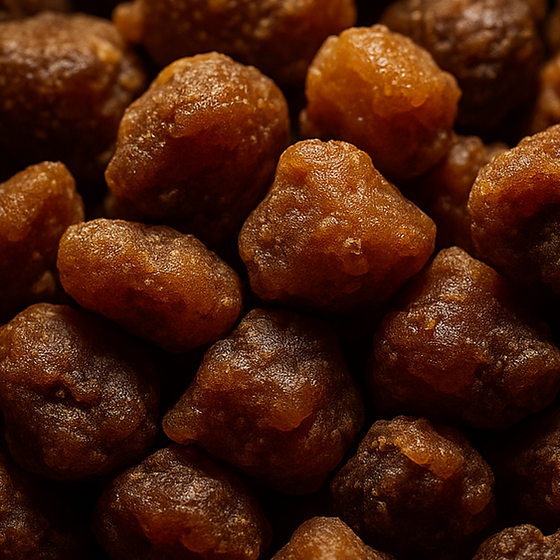
Different regions have different botanical sources of asafoetida. The taxonomy of the plants that produce it is complex and has been subject to differing interpretations. The species Ferula assa-foetida is endemic to Southern Iran. It is a source of asafoetida, but not the main source, although many sources claim so. Production from this species is confined to Southern Iran, especially the area near Lar. Outside its native range, other asafoetida-producing species are often misidentified as F. assa-foetida.
Origin and Production
The plant is monoecious, herbaceous and perennial, and belongs to the family Apiaceae. The hollow flowering stems contain a number of schizogenous ducts in the cortex that hold the resinous gum. The Ferula plants that yield asafoetida have massive taproots or carrot-shaped roots, 12.5-15 cm in diameter at the crown when they are 4-5 years old. Historically, Afghanistan and Iran have been the principal producers of asafoetida, exporting most of their production to India in raw form. In India, the resin is processed and packaged and is partly re-exported, sometimes in blended forms, to other markets. Since 2020, efforts have been undertaken in India to establish domestic cultivation, notably in Himachal Pradesh.
Chemistry
Asafoetida is made up of resinous compounds (approximately 40-64%), gum (about 25%) and a volatile fraction in the form of essential oil (10-17%). The resin fraction contains up to 60% ferulic acid and its esters, along with coumarins and various terpenoids. The gum fraction is composed of simple sugars, as well as polysaccharides and glycoproteins. The volatile oil component is rich in various organosulfide compounds, such as 2-butyl-propenyl-disulphide, diallyl sulphide and diallyl disulphide. Dimethyl trisulfide, one of these compounds, is also responsible for the odour of cooked onions. The disagreeable odour of the oil is reported to be due mainly to the disulphide C₁₁H₂₀S₂. The volatile oil also holds monoterpenes such as α- and β-pinene, free ferulic acid, valeric acid and traces of vanillin.
History
Like other related resins, including galbanum and sagapenum, asafoetida was known in Greco-Roman antiquity. Its historical use partly overlaps with that of the now-extinct silphium, a plant highly valued in the ancient Mediterranean world for its reputed medicinal and culinary properties. Asafoetida is frequently mentioned in Ayurvedic texts and, later, in Arabo-Persian medical treatises. Ancient texts describe it as hingu. The name asafoetida combines asa, a latinized form of the Farsi word for resin, with the Latin foetidus, meaning smelling or fetid.
Culinary and Medicinal Uses
In cooking, asafoetida is used mainly in Indian and Middle Eastern cuisines, to complement or substitute for alliaceous ingredients such as garlic and onion. Its use in the West has historically been limited, largely because of its odour. Used with moderation, asafoetida enhances mushroom and vegetable dishes. The spice is used as a digestive aid, as a condiment in food and in pickles. In modern herbalism it is used in the treatment of hysteria, some nervous conditions, bronchitis, asthma and whooping cough. Iranian medical practice prescribes it mixed with honey for toothache and in olive oil for relief of otitis pain.
Explore all seven extraits in the Discovery Set.