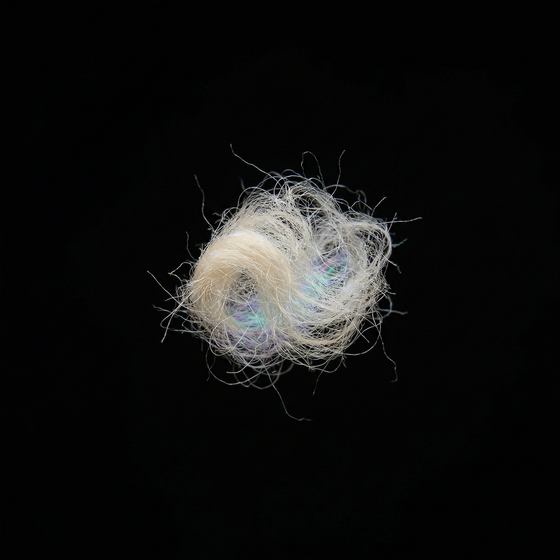
Кашемір

СинтетичнийМУСКУС, АМБРОВИЙ АКОРД, ТВАРИННІ ЗАПАХИмускусний · деревний · пряний
Базові нотиПіраміда
—Сила
—Стійкість
—Походження
Зразок
Кашемір як парфумерна сировина
Базові ноти
Визначення

Cashmere is the fine, soft, downy winter undercoat of the cashmere goat, and the fabric whose soft sensuous feeling the odour of the fragrance compound Cashmeran is overall intended to convey. Cashmeran is a chemical compound used in fragrances for its spicy, musk, woody, and clean aroma.

МУСКУСНИЙ ДЕРЕВНИЙ ПРЯНИЙ ТЕПЛИЙ
Type
Складник
Olfactive family
Амброві й мускусні
Chemical class
Alicyclic ketone
Інструменти
Піраміда
ВВерхні ноти
СНоти серця
ББазові ноти

Запах

Cashmeran has a spicy, musk, woody and clean aroma. Its odour is complex, with rich spicy, fruity, chypre, balsamic and vanilla notes. It is often described as "cashmere-like", warm, cocooning, and cozy. It has a slight peppery undertone and a diffusive, almost airy quality. Woody-musky notes are present, yet the odour is completely different from regular musk ingredients and sits between clean white musks and dry woods.

Докладно

Cashmere wool is the fine, soft, downy winter undercoat of the cashmere goat. Cashmere goats grow a double fleece: a fine, soft undercoat mingled with much coarser outer hair called guard hair. The goats naturally shed their winter coat in the spring moulting season, which is when cashmere wool is collected. Cashmere absorbs and releases water from the air depending on the surrounding environment, so it is a hygroscopic fiber. China is the largest producer of raw cashmere, and Mongolia is second. World raw production is estimated at between 15,000 and 20,000 tons in hair per year. Before sale, the fine underdown must be de-haired, a mechanical process that separates the coarse hairs from the fine hair. The softer hair is reserved for textiles, while the coarse guard hair is used for brushes and other non-apparel purposes. Removing the undercoat by hand rather than shaving the entire coat takes much longer but yields a much finer, higher quality fiber. Under one labelling rule, a wool or textile product may be labelled as containing cashmere only if it is the fine, dehaired undercoat fiber of a cashmere goat and its average fiber diameter does not exceed 19 microns.

Explore all seven extraits in the Discovery Set.

Cashmeran

Cashmeran is the trade name of a compound also known as musk indanone or indomuscone. Its chemical name is 6,7-dihydro-1,1,2,3,3-pentamethyl-4(5H)-indanone, or DPMI. It is an alicyclic ketone with the molecular formula C₁₄H₂₂O and a molecular weight of 206 g/mol. Although some describe it as a polycyclic musk, it is neither primarily a musk odour ingredient nor a member of the polycyclic musk group as the International Fragrance Association defines it. That association defines a polycyclic musk as a material used primarily and uniquely for its musk odor, with a molecular formula of C₁₇H₂₄O or C₁₈H₂₆O and one central aromatic benzene ring. Cashmeran also lacks the aromatic benzene ring structure that is present throughout the polycyclic musks. The boiling point of Cashmeran has been reported as 256 °C, although some tests noted decomposition of the material at 220 °C.

Musks

Nearly all musk fragrance used in perfumery today is synthetic. Synthetic musks fall into three major classes: aromatic nitro musks, polycyclic musk compounds, and macrocyclic musk compounds. The nitro and polycyclic musks have broad uses in industry, from cosmetics to detergents, but their detection in human and environmental samples, together with their carcinogenic properties, started a public debate and led to bans or reductions in many regions of the world. Macrocyclic musk compounds are expected to replace the nitro and polycyclic musks, since they appear to be safer. Galaxolide, with the molecular formula C₁₈H₂₆O, is a polycyclic musk.

Safety

Cashmeran is a slight skin irritant and an eye irritant. It is a weak sensitiser (R43/H317) with an EC3 of 33%. Its environmental hazard classification is H411 under the EU CLP. Cashmeran is not classified as toxic, and it is not a CMR substance. In most monitoring studies, DPMI was not detected.

Цікавий факт

The undercoat of cashmere goats grows in the winter as a way to keep the goat warm in colder months. It is estimated that the average yearly production per goat is 150 grams. The Changthangi, or Pashmina, goat yields the finest cashmere, with an average diameter of 12 to 13 μm, yet it makes up less than 0.1% of global cashmere production. Some yarns and clothing marketed as containing cashmere have been found to contain little to no cashmere fiber.

Отримання й хімія

Спосіб отримання

A convenient starting material for the 4-indanones is pentamethylindane. The pentamethylindane is hydrogenated to give the tetrahydro derivative, which is the first step in the synthesis of the 4-indanones. The six-membered ring is then oxidized with a suitable agent to give a mixture of the monounsaturated indanone and the epoxy indanone. In one example, a solution of sodium bichromate in acetic acid is added to the tetrahydropentamethylindane while the temperature is kept at 50 °C.

Формула
C₁₄H₂₂O
CAS
33704-61-9 (Cashmeran)
Зовнішній вигляд
White solid
Фізичні властивості
Температура кипіння
256 °C
Температура плавлення
27 °C

У парфумерії

Cashmeran is used to impart its own characteristic odour. Its typical use level is around 2%, compared with use levels in fragrances of up to 30% for the polycyclic musk HHCB.

Роль у формулі
01модифікатор
02сполучний компонент
Форми випуску
синтетична пахуча речовина

Див. також

8 ноти