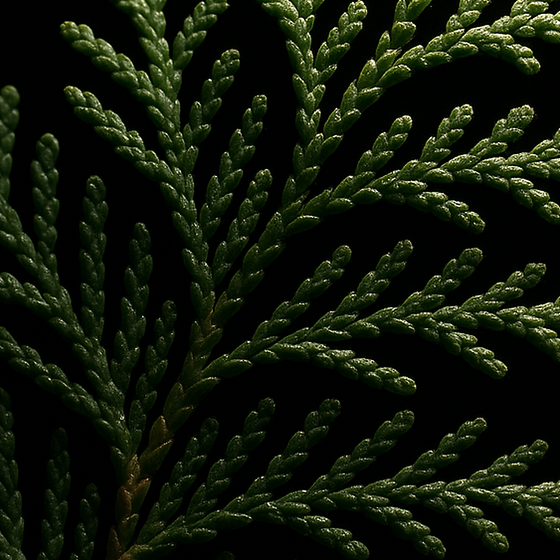
Кипарис

НатуральнийДЕРЕВИНА Й МОХИдеревний · свіжий · бальзамічний
Ноти серцяПіраміда
3/5Сила
44годСтійкість
2Походження
Зразок
Кипарис як парфумерна сировина
Ноти серця
Cupressus sempervirens
Визначення

Resinous, vertical, bone-dry. The smell of a Provençal cemetery in August — dark columnar trees baking in white heat, needles releasing a sharp piney transparency undercut by a faint peppery rasp. Leaner than pine, more architectural than juniper, with none of the sweetness of fir balsam.

Boisé
89
Terreux
66
Vert
61
Fumé
42
Résineux
42
Doux
44
Cypress wood, Cypress oil
Type
Складник
Olfactive family
Деревні
Source
wood
Chemical class
complex natural (essential oil)
Інструменти
Піраміда
ВВерхні ноти
СНоти серця
ББазові ноти
3/5Сила
Середня
інтенсивність запаху
Стійкість на блотері
44годин
1 год6 год24 год3 дн.7 дн.400 год
за 100 %
Країни-виробники
Марокко Іспанія

Запах

Sharp, green-resinous, arid. Opens with a turpentine-bright flash of α-pinene — cleaner than pine oil, more transparent than juniper berry, entirely without the balsamic sweetness of fir or spruce. The body is woody and mineral, closer to pencil shavings than to a forest floor. A peppery-spicy undertone persists from top to base, giving cypress an almost savory quality. The cedrol dry-down adds a thin layer of woody amber, but the overall impression remains austere and skeletal — structural scaffolding, not decoration.

Теруар і зрілість

Докладно

Cypress oil is steam-distilled from the branches, leaves, and young cones of Cupressus sempervirens — the tall, dark, flame-shaped trees that punctuate Mediterranean landscapes from Tuscany to the Peloponnese. The oil is dominated by monoterpene hydrocarbons: α-pinene (40–50%), δ-3-carene (15–25%), with smaller contributions from limonene (3–5%), α-terpinolene (3–5%), and α-terpinyl acetate (5–10%). The sesquiterpenol cedrol (2–4%) provides the only meaningful base-note anchor in an otherwise volatile composition. Morocco and Spain remain the largest producers; French cypress oil, particularly from Provence, commands a premium for its cleaner, less terpenic profile.

Scent Architecture

The opening is sharp and turpentine-bright — raw α-pinene pushing through like rubbing alcohol cut with crushed pine needles. This clears within minutes into a dry, green-woody body where the δ-3-carene asserts itself: less aromatic than pinene, more structural, almost mineral. The cedrol fraction surfaces late, contributing a quiet woody-ambery warmth that extends the oil's life beyond what its volatile terpene skeleton would suggest. There is a persistent peppery-spicy thread throughout, sometimes likened to a coniferous black pepper.

Perfumery Use

Cypress functions as a heart-note structural element, providing lift and vertical architecture. Its dry, austere character suits fougère, chypre, and eaux fraîches where coniferous green is needed without resinous heaviness. It brings Mediterranean aridity to citrus accords and sharpens woody bases. Natural bridges include lavender, bergamot, juniper, clary sage, and oakmoss. PREMIEREPEAU sources sustainable cypress oil from France for Nuit Élastique, where it provides a dry, vertical counterpoint to the composition's dense jasmine-indole heart.

This note in PREMIEREPEAU. Nuit Élastique. Sample all seven extraits in the Discovery Set.

Отримання й хімія

Спосіб отримання

Steam distillation of the branches, leaves, and young cones of Cupressus sempervirens. Distillation runs approximately 4 hours. The resulting oil is a pale yellow to brownish-green liquid. Yield is modest and variable by origin: 0.26% (Algerian material) to 1.0% (Cameroonian), with most Mediterranean sources falling between 0.3–0.6%. Leaf distillation yields higher α-pinene content; wood distillation produces more cedrol. Supercritical CO₂ extraction is sometimes used commercially, completing extraction in roughly 1 hour with yields approximately 34% higher than steam distillation, though the resulting extract has a different olfactory profile — heavier, more resinous, less terpenic.

Формула
Complex essential oil — principal components: α-pinene (C₁₀H₁₆, 40–50%), δ-3-carene (C₁₀H₁₆, 15–25%), cedrol (C₁₅H₂₆O, 2–4%)
CAS
8013-86-3
Ботанічна назва
Cupressus sempervirens
Зовнішній вигляд
brownish green viscous liquid
Сила запаху
Середня
Стійкість
44 hours at 100.00%
Синоніми
Cypress wood, Cypress oil
Статус IFRA
Див. примітку

No IFRA Standard for the material itself (51st Amendment)

Фізичні властивості
Температура спалаху
108.00 °F. TCC ( 42.22 °C. )
Відносна густина
0.87000 to 0.89100 @ 25.00 °C.
Показник заломлення
1.47100 to 1.48200 @ 20.00 °C.

У парфумерії

Cypress oil operates as a heart-note modifier and structural element. Its high α-pinene content (40–50%) provides diffusion and lift, while the cedrol fraction (2–4%) contributes modest base-note persistence — roughly 44 hours of substantivity at full concentration. In fougère compositions, it reinforces the aromatic-herbal axis alongside lavender and coumarin. In chypre accords, it contributes dry Mediterranean warmth without heaviness. In colognes and eaux fraîches, it provides coniferous backbone at low dosage. Cypress is a blender and equalizer: it smooths transitions between citrus top notes and woody-ambery bases. The α-terpinyl acetate component (5–10%) provides a subtle bergamot-lavender layered that aids integration. Natural allies include lavender, juniper, bergamot, clary sage, and oakmoss. No single synthetic replicates cypress oil's full profile. However, α-pinene (synthetic), δ-3-carene, and cedrol isolate can approximate its skeleton. Dihydromyrcenol extends the fresh-woody quality. Iso E Super can amplify the woody-ambery dry-down. PREMIEREPEAU uses sustainable cypress oil from France in Nuit Élastique (/products/nuit-elastique-jasmine-night-perfume), where it provides arid, vertical structure against the jasmine absolute.

Роль у формулі
01модифікатор
02фірмова нота
03компонент піднесення
04сполучний компонент
05формувач об’єму
06свіжість
Форми випуску
ефірна олія

Див. також

7 ноти