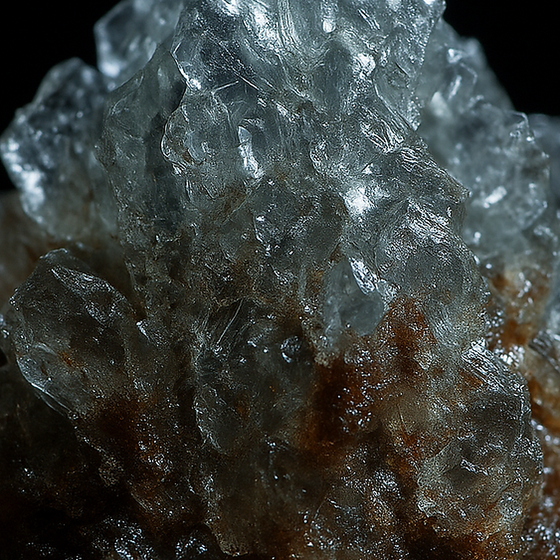
Геосмін

НатуральнийНАТУРАЛЬНІ Й СИНТЕТИЧНІ, ПОПУЛЯРНІ Й НЕЗВИЧНІземлистий · свіжий · вологий
Ноти серцяПіраміда
4/5Сила
68годСтійкість
—Походження
Зразок
Геосмін як парфумерна сировина
Ноти серця
Визначення

Geosmin is a chemical with a distinct earthy or musty odour. It contributes to petrichor, the strong scent that occurs when rain falls after a spell of dry weather or when soil is disturbed.

ЗЕМЛИСТИЙ СВІЖИЙ ВОЛОГИЙ ЗАТХЛИЙ МУЛИСТИЙ
trans-1,10-dimethyl-trans-9-decalol, 4,8a-dimethyl-decahydronaphthalen-4a-ol
Type
Складник
Olfactive family
Землисті
Chemical class
irregular sesquiterpenoid; bicyclic tertiary alcohol
Інструменти
Піраміда
ВВерхні ноти
СНоти серця
ББазові ноти
4/5Сила
Висока
інтенсивність запаху
Стійкість на блотері
68годин · 3 днів
1 год6 год24 год3 дн.7 дн.400 год
за 100 %

Запах

Its odour type is earthy, with fresh and humus-like facets. At 1.00 % in dipropylene glycol, its odour is described as freshly plowed soil and earthy. It is also described as fresh, earthy and wet, and as very diffusive and powerful. It is likened to the scent of a freshly ploughed field and of the first rain after a dry period. The odour is best described as the smell of the air after rain falls on dry soil. Reported odour characteristics also include "muddy" and "moldy".

Докладно

Geosmin is a bicyclic alcohol with the formula C₁₂H₂₂O, a derivative of decalin. Its molecular weight is 182.30. Its IUPAC name is (4S,4aS,8aR)-4,8a-dimethyl-1,2,3,4,5,6,7,8-octahydronaphthalen-4a-ol. It is an irregular sesquiterpenoid. Geosmin is a tertiary alcohol that exists as (+) and (-) enantiomers. Its name comes from the Ancient Greek words geō-, meaning "earth", and osmḗ, meaning "smell".

Geosmin is produced as a secondary metabolite by various cyanobacteria, filamentous bacteria in the class Actinomyces, other prokaryotes, and various eukaryotes. The main cyanobacterial genera shown to produce it include Anabaena, Phormidium and Planktothrix, while the main genus in the Actinomyces that produces it is Streptomyces. Geosmin is produced by a number of microorganisms, including most Streptomyces and several species of cyanobacteria, myxobacteria and fungi. In beetroots, geosmin is produced endogenously and not by environmental or endophytic microbes. Geosmin is responsible for the earthy taste of beetroots. The related molecule dehydrogeosmin, together with geosmin, gives some plants a musty smell, especially certain cacti. Geosmin has been found to repel the nematode Caenorhabditis elegans, reducing its contact with Streptomyces. Geosmin and 2-methylisoborneol have been shown to attract the springtail Folsomia candida, which is believed to feed on and spread the spores of Streptomyces.

Geosmin is easily smelled by most people, because its odour detection threshold is very low. Human sensitivity differs between the two enantiomers. Across 50 subjects, the mean odour detection threshold was 9.5 ng/L for naturally occurring (-)-geosmin and 78 ng/L for (+)-geosmin. This makes the natural form roughly eight times more potent. The extreme sensitivity of humans to geosmin is proposed to have evolved to help them or their ancestors find scarce water, but this is not conclusive.

Geosmin and 2-methylisoborneol are the major biological causes of muddy odour and flavour in drinking water worldwide and in farmed fish. Bottom-feeding freshwater fish can absorb geosmin that cyanobacteria (blue-green algae) and actinobacteria release when they die. In acidic conditions geosmin decomposes into odourless substances. In 2002, French wine growers were concerned about a musty smell in some young wines, and geosmin, specifically the (-) isomer, was identified as its cause. Communities that depend on surface water can periodically have episodes of unpleasant-tasting water when a sharp drop in the population of these bacteria releases geosmin into the supply.

Geosmin is a colourless neutral oil with an optical rotation [α]D25 of -16.5° and a composition of 79.06% carbon, 12.16% hydrogen and 8.78% oxygen. Besides Streptomyces, it is produced by Penicillium and Aspergillus species and by a liverwort, Symphyogyna brongniartii. Geosmin levels in beetroot vary between cultivars, so selective breeding can produce varieties with a bland taste. Titanium dioxide photocatalysts can destroy geosmin in water, but geosmin resists oxidation and is difficult to remove with standard water treatments. A geosmin synthase gene, geoA, is present in geosmin-producing cyanobacteria but not in other cyanobacterial species, so detecting it in water samples may help predict taste and odour events.

Explore all seven extraits in the Discovery Set.

Цікавий факт

In water, the human odour detection threshold for geosmin has been determined between 4 and 10 ng/L, which is about one teaspoon in 200 Olympic swimming pools. It has been suggested that camels can detect geosmin released by Streptomyces miles away in wet ground and track it to find an oasis.

Отримання й хімія

Спосіб отримання

Geosmin is produced from the universal sesquiterpene precursor farnesyl pyrophosphate, also known as farnesyl diphosphate, in a two-step Mg²⁺-dependent reaction. The enzyme germacradienol-geosmin synthase contains two very similar catalytic domains. One domain converts farnesyl diphosphate into germacradienol, which diffuses into the second domain nearby, where the conversion to geosmin is completed. Intermediate compounds are involved, such as germacrene D, octalin and isolepidozene. In the conversion of germacradienol to geosmin, the three-carbon side chain is released as acetone. Magnesium ions support the reaction, and no other cofactors are necessary. Only the (-) isomer of geosmin is formed. The (+) isomer can be prepared in the laboratory. A racemic (+/-) mix of geosmin is commercially available.

Формула
C₁₂H₂₂O
CAS
19700-21-1
Зовнішній вигляд
colorless to pale yellow clear liquid (est)
Сила запаху
Висока
Стійкість
68 hours at 100.00%
Синоніми
trans-1,10-dimethyl-trans-9-decalol, 4,8a-dimethyl-decahydronaphthalen-4a-ol
Статус IFRA
Див. примітку

No IFRA Standard for the material itself (51st Amendment)

Фізичні властивості
Температура кипіння
270 to 271 °C
Температура плавлення
78 to 82 °C
Температура спалаху
> 212.00 °F. TCC ( > 100.00 °C. )
Відносна густина
1.01800 to 1.02300 @ 25.00 °C.

У парфумерії

The earthy note of geosmin may add a fresh scent to perfumes and fragrances, at least at low concentrations. It is used to give perfumes an earthy scent. It is sold diluted, for example as a 1% solution in dipropylene glycol. A drop or two of the 1% solution is enough to be noticed, and dilution to 0.1% or less is recommended for blending. Its cosmetic use is as a perfuming agent.

Роль у формулі
01модифікатор
02сполучний компонент
03натуралізатор
04свіжість
Форми випуску
стандартна форма

Див. також

5 ноти