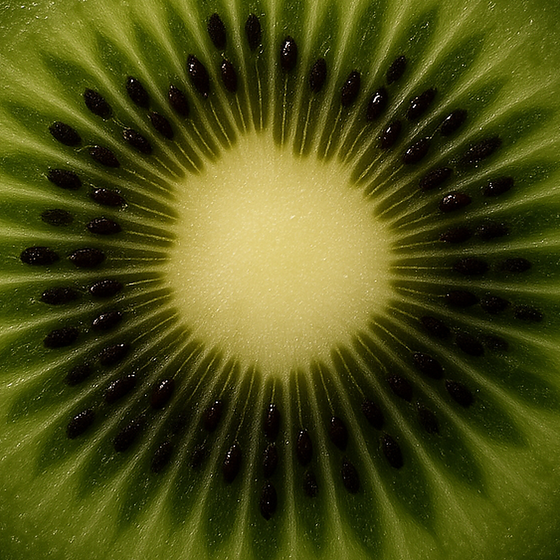
Ківі

АкордФРУКТИ, ОВОЧІ Й ГОРІХИфруктовий · свіжий · солодкий

Сім ароматівОдин із них дивиться на вас

Верхні нотиПіраміда
—Сила
—Стійкість
3Походження
Зразок
Ківі як парфумерна сировина
Верхні ноти
Actinidia chinensis var. deliciosa
Фантазійний/концептуальний
Визначення

Kiwi is the fruit of several species of woody vines in the genus Actinidia, also called Chinese gooseberry. Its aroma joins fruity sweetness from esters with fresh grassy notes from aldehydes and alcohols.

ЦИТРУСОВИЙ ЗЕЛЕНИЙ СОЛОДКИЙ ФРУКТОВИЙ СВІЖИЙ ТРОПІЧНИЙ
Chinese gooseberry, kiwifruit, green kiwifruit, fuzzy kiwifruit
Type
Акорд
Olfactive family
Фруктові
Source
fruit
Інструменти
Піраміда
ВВерхні ноти
СНоти серця
ББазові ноти
Країни-виробники
Китай Італія Нова Зеландія

Запах

Esters are the compounds mainly responsible for the sweet and fruity notes of kiwifruit. Aldehydes are important contributors to the aroma volatiles of kiwifruit, being responsible for the fresh, grassy, and green notes perceived by consumers. Ethyl butanoate, which is fruity and sweet, is found in many other fruits. Hayward kiwifruit has more green note compounds, while Hort16A kiwifruit has more tropic note compounds.

Scent Evolution

With longer ripening, the green note aldehydes declined and the main fruity esters increased.

Докладно

The green kiwifruit, Actinidia chinensis var. deliciosa, is a fruiting vine native to central Southern China, growing naturally at altitudes between 800 and 1,400 metres. Botanically, kiwifruit is a berry. The fruit has a soft texture with a sweet, sour and unique flavour.

Origin and Production

Kiwifruit is native to central and eastern China. As of 2023, China accounted for 55% of the world's total kiwifruit production, making it the largest global producer. In 2006 Italy was the leading producer of kiwifruit in the world, followed by New Zealand, Chile, France, Greece, Japan, and the United States. 'Hayward' is the most commonly available cultivar in stores.

Aroma Chemistry

A total of 172 aroma components were detected in 23 kiwifruit cultivars. Esters, aldehydes and alcohols are the main volatiles in kiwifruit. Ethyl butanoate, (E)-2-hexen-1-ol and (E)-2-hexenal could be considered the core aroma components in kiwifruit, but this still needs further confirmation. Ethyl butanoate, also known as ethyl butyrate, is an ester, and it had the highest ester content, at 7042.01 μg/L in the cultivar Jinhong No. 1. Kiwifruit cultivars with different flesh colors cannot be effectively distinguished by their aroma chemical compositions.

Names

The first known reference to the name Chinese gooseberry came from 1917 in New Zealand, but the name was likely in use before then. By the 1920s, Chinese gooseberry became the standard name for the fruit in English until the 1950s. The name kiwifruit was coined by Jack Turner of Turners & Growers, referencing kiwi, an informal name used to describe New Zealanders. The name was first registered by Turners & Growers on 15 June 1959, and by 1970 all exports from New Zealand used the name kiwifruit.

Цікавий факт

Despite the name Chinese gooseberry, the kiwifruit, being from the genus Actinidia, is not related to the gooseberry family, Grossulariaceae. The Chinese cultivars are a rare example of crop development, where plants only a few generations removed from wild plants became commercial crops.

Отримання й хімія

Спосіб отримання

Ethyl butyrate, an ester found in kiwifruit, can be synthesized by reacting ethanol and butyric acid. This is a condensation reaction, so water is produced as a byproduct.

Ботанічна назва
Actinidia chinensis var. deliciosa
Зовнішній вигляд
Fruit with fuzzy, dull brown skin and bright green flesh
Синоніми
Chinese gooseberry, kiwifruit, green kiwifruit, fuzzy kiwifruit
Статус IFRA
Див. примітку

No IFRA Standard for the material itself (51st Amendment)

У парфумерії

Ethyl butanoate, which can be considered a core aroma component of kiwifruit, is also one of the most common chemicals used in flavors and fragrances. Ethyl butyrate is used in a variety of flavourings, including orange (the most common), cherry, pineapple, mango, guava, bubblegum, peach, apricot, fig and plum.

Роль у формулі
01модифікатор
02фірмова нота
03компонент піднесення
04сполучний компонент
05натуралізатор
06свіжість
Форми випуску
синтетичний акорд фантазійна нота

Див. також

8 ноти