Лимонний мирт

НатуральнийЦИТРУСОВІ ЗАПАХИцитрусовий · свіжий · зелений
Верхні нотиПіраміда
4/5Сила
—Стійкість
1Походження
Зразок
Лимонний мирт як парфумерна сировина
Верхні ноти
Backhousia citriodora
Визначення

Lemon myrtle is Backhousia citriodora, a flowering plant of the family Myrtaceae native to Queensland, Australia. The crushed leaves have a strong lemon smell.

ЦИТРУСОВИЙ ЗЕЛЕНИЙ ЗЕМЛИСТИЙ СОЛОДКИЙ ТРАВ’ЯНИЙ ТЕПЛИЙ СВІЖИЙ
lemon-scented myrtle, lemon ironwood, sweet verbena myrtle, sweet verbena tree
Type
Складник
Olfactive family
Цитрусові
Source
leaves
Chemical class
complex natural (essential oil)
Інструменти
Піраміда
ВВерхні ноти
СНоти серця
ББазові ноти
4/5Сила
Висока
інтенсивність запаху
Країни-виробники
Австралія

Запах

The oil of lemon myrtle is considered to have a "cleaner and sweeter" aroma than comparable sources of citral, such as lemongrass and Litsea cubeba. Citral, its main component, has a strong lemon scent. It is described as sharp, lemon, sweet, fresh, juicy, lemon peel, tart and green. Neral has a less sweet citrus, lemon, lemon peel note, while geranial is described as citrus, lemon.

Докладно

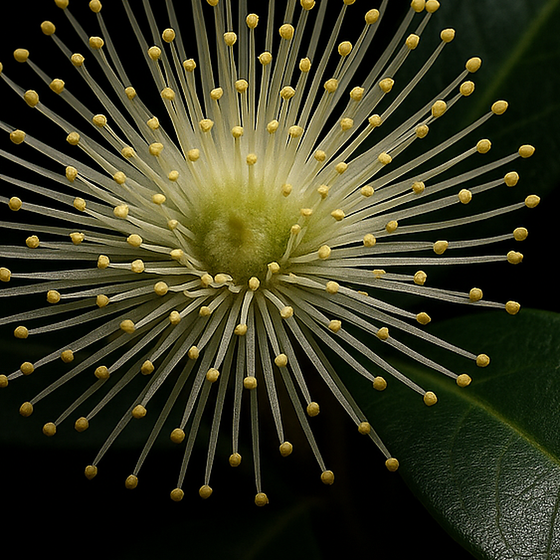
Lemon Myrtle, scientifically known as Backhousia citriodora, is a native Australian plant. It belongs to the family Myrtaceae and is native to the subtropical rainforests of central and south-eastern Queensland, with a natural distribution from Mackay to Brisbane. The species can reach 6 m (20 ft) in height, but is often smaller. The leaves are evergreen, opposite and lanceolate, 5-12 cm long and 1.5-2.5 cm broad, and glossy green. The flowers are creamy-white and are produced in clusters at the ends of the branches from summer through to autumn.

Origin and Production

The harvested leaves are dried for leaf spice, or distilled for the essential oil. The majority of commercial lemon myrtle is grown in Queensland and the north coast of New South Wales, Australia. In plantation cultivation the tree is typically maintained as a shrub by regular harvesting from the top and sides. Mechanical harvesting is used in commercial plantations. Drying lemon myrtle leaves at higher temperatures may improve the citral content of the dried leaves but discolours them more. Myrtle rust, a fungal pathogen, was detected in lemon myrtle plantations in January 2011. It severely damages new growth and threatens lemon myrtle production.

Chemistry

Backhousia citriodora has two essential oil chemotypes. The citral chemotype is more prevalent and is cultivated in Australia for flavouring and essential oil. Citral as an isolate in steam distilled lemon myrtle oil is typically 90-98%. Its oil is the highest-content natural source of citral. The major component of the oil was first thought to be one compound and was named citral because of its lemony aroma and flavor. It is a mixture of the two geometric isomers neral and geranial. Citral is an acyclic monoterpene aldehyde with the formula C₁₀H₁₆O. In a sample of the leaf oil, geranial made up 52.13% and neral 37.65%. Oxygenated monoterpenes, at 91.95%, were the most abundant compound class in that sample. The citronellal chemotype is uncommon and can be used as an insect repellent. Its oil is a source of L-citronellal, whereas many sources contain either the racemic form or the D-isomer.

Culinary Uses

Lemon myrtle is used as flakes in shortbread, as a flavouring in pasta, as whole leaf with baked fish, infused in macadamia or vegetable oils, and made into tea, including tea blends. It is found as a flavor in teas, breads, biscuits, cakes, cheeses, chutneys, jams, pastas and vinegars.

Safety

Because of toxicity investigations on major component citral, topical use at less than 1% in a topical formulation is recommended. The use of essential oils high in citral, such as that of Backhousia citriodora, should be restricted during pregnancy because of a possible teratogenic hazard.

Цікавий факт

Lemon myrtle is sometimes referred to as the "Queen of the lemon herbs". Lemon myrtle is sometimes confused with 'lemon ironbark', which is Eucalyptus staigeriana.

Отримання й хімія

Спосіб отримання

Lemon myrtle oil is steam distilled from the leaf, and the oil yield is 1-3% from fresh leaf. In a laboratory extraction, fresh leaves were air-dried for three days, ground to powder and hydrodistilled for 4 h in a Clavenger-type apparatus.

Ботанічна назва
Backhousia citriodora
Зовнішній вигляд
Pale yellow to yellow liquid
Сила запаху
Висока
Синоніми
lemon-scented myrtle, lemon ironwood, sweet verbena myrtle, sweet verbena tree
Статус IFRA
Див. примітку

No IFRA Standard for the material itself (51st Amendment)

У парфумерії

Lemon myrtle is used as a fragrance in soaps, cosmetics and pot pourris, and in aromatherapy oils as a fragrant therapeutic. Fresh or dried leaves are used as ingredients in perfumes and personal care products in Australia. Citral, the main component of the oil, is used as an aroma compound in perfumery and to fortify lemon oil. The aldehydes citronellal and citral are considered key components responsible for the lemon note, with citral preferred. The rarer form of L or (-) citronellal provides a starting material for the stereospecific synthesis of terpenoids used in the perfume and flavor industry.

Роль у формулі
01модифікатор
02фірмова нота
03компонент піднесення
04сполучний компонент
05формувач об’єму
Форми випуску
ефірна олія

Див. також

7 ноти