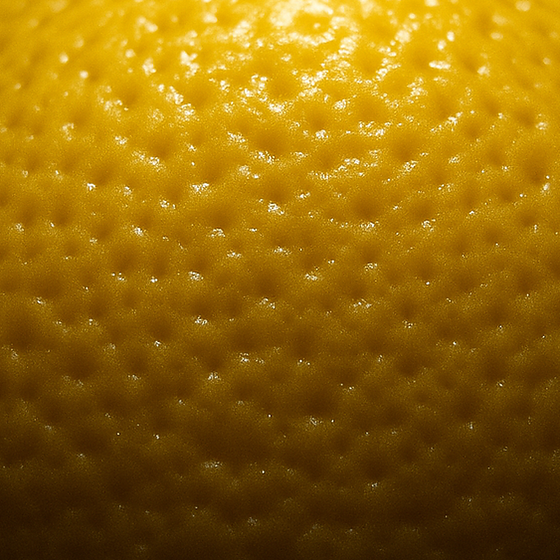
Цедра лимона

НатуральнийЦИТРУСОВІ ЗАПАХИцитрусовий · свіжий · зелений
Верхні нотиПіраміда
4/5Сила
24годСтійкість
5Походження
Зразок
Цедра лимона як парфумерна сировина
Верхні ноти
Citrus limon
Визначення

Zesty and refreshing, lemon zest adds a bright citrus note to perfumes.

ЦИТРУСОВИЙ ЗЕЛЕНИЙ СОЛОДКИЙ ТРАВ’ЯНИЙ ТЕПЛИЙ СВІЖИЙ
lemon peel, lemon oil
Type
Складник
Olfactive family
Цитрусові
Source
fruit peel
Chemical class
complex natural (expressed oil)
Інструменти
Піраміда
ВВерхні ноти
СНоти серця
ББазові ноти
4/5Сила
Висока
інтенсивність запаху
Стійкість на блотері
24годин
1 год6 год24 год3 дн.7 дн.400 год
Країни-виробники
Італія (Сицилія, Калабрія) Іспанія Аргентина Сполучені Штати (Каліфорнія) Франція (Грас)

Запах

Lemon zest has a bright and tangy aroma that is unmistakably fresh and bracing. It has a sharp citrus quality that can be likened to biting into a ripe lemon. The initial impression is clean and crisp, with a hint of sweetness that balances its acidity.

Scent Evolution

As the scent develops, the sharpness of lemon zest softens slightly. The brightness persists, but it becomes layered with subtle green and herbal undertones. This evolution has the complexity of lemon zest.

Signature Accords

After a day on a blotter, lemon zest maintains its freshness while integrating with other notes. The citrus character remains evident, but it may take on a slightly warmer aspect as it melds with sweeter or woodier base notes. This lasting quality enhances its versatility.

Теруар і варіації

Докладно

Lemon zest in perfumery is the cold-pressed peel oil of Citrus limon (CAS 8008-56-8) — the same expressed material as the culinary 'zest' produced by rasping the outer yellow layer of the rind. The oil is captured by mechanical pressure on the rind's oil glands, with no heat; the volatile chemistry survives the process intact.

Explore all seven extraits in the Discovery Set.

Chemistry

Lemon peel oil is limonene-dominant (~65–75%, CAS 5989-27-5) [A], with γ-terpinene (~6–11%), β-pinene (~6–12%), citral (geranial + neral, ~2–5%), neral and geranial each providing the lemon-aldehydic angle, and small fractions of citronellal, linalool, geraniol and α-pinene. The phototoxic furocoumarin bergapten is present at modest levels — IFRA limits apply to expressed lemon oil in leave-on products.

Sources & Notes

[A] PubChem CID 22311 — d-limonene, CAS 5989-27-5. The dominant terpene of lemon peel oil. pubchem.ncbi.nlm.nih.gov/compound/22311.

Отримання й хімія

Спосіб отримання

Cold pressing

Формула
Limonene C₁₀H₁₆ (major component, 60–70%) · Citral C₁₀H₁₆O
CAS
84929-31-7
Ботанічна назва
Citrus limon
Зовнішній вигляд
colorless to pale yellow liquid
Сила запаху
Висока
Стійкість
24 hours
Синоніми
lemon peel, lemon oil
Статус IFRA
Обмежено

Restricted. Expressed lemon oil is phototoxic due to furocoumarin content (bergapten, oxypeucedanin); IFRA limits use in leave-on products unless furocoumarin-free (FCF) grade is used.

Фізичні властивості
Відносна густина
0.79000 to 0.84000 @ 25.00 °C.
Показник заломлення
1.36000 to 1.37000 @ 20.00 °C.

У парфумерії

In perfumery, lemon zest is primarily used as a top note, providing an immediate burst of freshness that can invigorate a fragrance. Its bright and cheerful scent is excellent for opening a composition, setting a lively tone that captures attention. It can also harmonize well with floral notes, adding a refreshing lift to bouquets. The use of lemon zest in fragrances can create a sense of cleanliness and brightness, making it particularly popular in summer scents and those designed to carries a feeling of rejuvenation. Its smooth blending ability with a wide variety of other notes makes it a staple in many perfumers' creations, underscoring its importance in fragrance formulation.

Роль у формулі
01модифікатор
02кістяк
03фірмова нота
04компонент піднесення
05сполучний компонент
Форми випуску
олія холодного пресування

Див. також

8 ноти