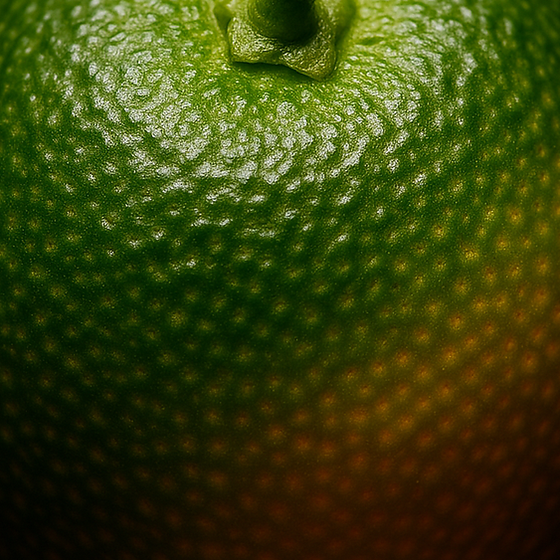
Каламондин

НатуральнийЦИТРУСОВІ ЗАПАХИцитрусовий · свіжий · фруктовий
Верхні нотиПіраміда
—Сила
—Стійкість
1Походження
Зразок
Каламондин як парфумерна сировина
Верхні ноти
Citrus × microcarpa
Визначення

Calamansi is a small, sour citrus hybrid cultivated predominantly in the Philippines. Its scent is described as citrus, sharp and bitter, with notes of mandarin orange and kumquat.

ЦИТРУСОВИЙ СОЛОДКИЙ ТЕПЛИЙ СВІЖИЙ
calamondin, Philippine lime, Philippine lemon
Type
Складник
Olfactive family
Цитрусові
Source
fruit peel
Chemical class
complex natural (expressed oil)
Інструменти
Піраміда
ВВерхні ноти
СНоти серця
ББазові ноти
Країни-виробники
Філіппіни

Запах

Calamansi essential oil has a bright, zesty fragrance. The thin green skin of the fruit is fragrant. The plant, often grown as a bonsai, constantly blooms and releases a citrus blossom scent. Limonene, the main compound of the oil, has a citrus, orange, fresh, sweet, peely aroma.

Докладно

Calamansi (Citrus × microcarpa), also known as calamondin, is a citrus hybrid cultivated predominantly in the Philippines. Calamansi is a hybrid between kumquat and another species of Citrus, probably the mandarin orange. It is native to the Philippines and extends southwards to nearby parts of Indonesia, Malaysia and Brunei. It is naturally very sour and is used in various condiments, beverages, dishes, marinades and preserves. The plant is a shrub or small tree growing to 3-6 m (10-20 ft). The fruit resembles a small, round lime, usually 25-35 mm in diameter and sometimes up to 45 mm. The pulp and juice are the orange colour of a tangerine when ripe, and the peel is very thin and orange. A variegated mutation shows green stripes on yellow fruit.

Explore all seven extraits in the Discovery Set.

Chemistry

Calamondin essential oil consists of 25 compounds, of which D-limonene is the most abundant, at about 85% of the total. Crude calamondin peel oil holds 90.40% D-limonene and 3.36% β-pinene. Refining the peel oil raised the limonene content, from 90.4% to 92.87%. In an oil obtained by hydrodistillation of the peels, limonene made up 94.0%, with β-myrcene at 1.8%, linalool at 0.4% and α-terpineol at 0.3%. Another analysis of calamansi peel oil identified 109 compounds, with D-limonene comprising 65.59%. The fruit peel contains limonene, α-pinene, β-pinene, linalool, geraniol and citral. Whole fruit oil has higher levels of monoterpene alcohols such as linalool, terpinen-4-ol and α-terpineol, while peel oil has higher contents of sesquiterpenes such as germacrene D. Limonene, C₁₀H₁₆, is a hydrocarbon that appears as a clear liquid. It is classified as a cyclic monoterpene and is the major component in the fragrance and essential oil of citrus fruit peels.

Extraction

The amount of essential oil from ripe peels is typically lower than from unripe peels, because they are softer and the biochemical content of the peel has changed. The origin of the plant and the method of extraction can also affect the yield and composition of the oil. Hot water heating increased the yields of essential oils from both whole fruit and peel. Modern methods include ultrasound-assisted, microwave-assisted, supercritical fluid and accelerated solvent extraction.

In the kitchen

Calamansi is ubiquitous in traditional Philippine cuisine. It is used in its partly ripe stage with soy sauce, vinegar and/or labuyo chili in the most ubiquitous dipping sauce of Filipino cuisine. Filipino cuisine uses it mostly to contribute sourness to a dish. The taste of the fruit itself is quite sour, although the peel is sweet. The fruit is a source of vitamin C. The juice can be used in place of that of the common Persian lime.

Цікавий факт

The Philippines is the only major producer of calamansi. It exports between 160,000 and 190,000 metric tons of calamansi juice each year. The fruit can be frozen whole and used as ice cubes in beverages such as tea, soft drinks, water and cocktails.

Отримання й хімія

Спосіб отримання

Essential oil of calamansi is obtained by cold-pressing the peel. The oil can be obtained from the peel whether it is fresh, dried or frozen. Cold pressing or screw presses are traditional methods for extracting essential oils from citrus peels. In some countries, distillation is also commonly used because of its higher yield, 0.21% compared with 0.05% for cold pressing.

Формула
Complex natural mixture (key constituents: limonene C₁₀H₁₆; linalool)
Ботанічна назва
Citrus × microcarpa
Синоніми
calamondin, Philippine lime, Philippine lemon
Статус IFRA
Див. примітку

No IFRA Standard for the material itself (51st Amendment)

У парфумерії

Calamansi is rarely used in fine fragrance, but when it is, it brings a citrus note to the composition. D-Limonene, its main compound, is used as a fragrance in perfumery, aftershave lotions, bath products and other personal care products.

Роль у формулі
01модифікатор
02фірмова нота
03компонент піднесення
04формувач об’єму
05свіжість
Форми випуску
олія холодного пресування

Див. також

8 ноти