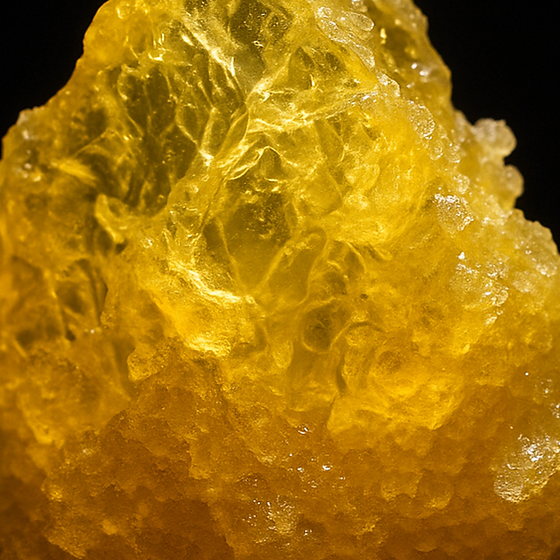
Лімонен

НатуральнийЦИТРУСОВІ ЗАПАХИцитрусовий · свіжий · апельсин
Верхні нотиПіраміда
3/5Сила
—Стійкість
—Походження
Зразок
Лімонен як парфумерна сировина
Верхні ноти
Citrus sinensis (orange peel oil)
Визначення

Limonene is a cyclic monoterpene and the major component in the fragrance and essential oil of citrus fruit peels. D-limonene has a citrus, orange, fresh, sweet, peely aroma.

ЦИТРУСОВИЙ СВІЖИЙ СОЛОДКИЙ
D-limonene, (+)-limonene, (4R)-limonene, (R)-(+)-limonene, (+)-(R)-limonene, D-(+)-limonene
Type
Складник
Olfactive family
Цитрусові
Source
Citrus fruit peels
Chemical class
Cyclic monoterpene
Інструменти
Піраміда
ВВерхні ноти
СНоти серця
ББазові ноти
3/5Сила
Середня
інтенсивність запаху

Запах

D-limonene has a fresh, light, sweet, citrusy aroma. Another description gives it a pleasant lemon-like odor. Its aroma is also described as citrus, orange, fresh, sweet and peely, and its odor as citrus or orange. The less common (-)-isomer, l-limonene, has a piny, turpentine-like odor.

Теруар і варіації

Докладно

Limonene is a chiral molecule, and most biological sources produce just one enantiomer. The (R)-enantiomer, d-limonene (CAS 5989-27-5), occurs more commonly in nature in citrus fruit peels, the principal commercial source. The less common (S)-enantiomer, l-limonene (CAS 5989-54-8), is found in the edible parts of plants such as caraway, dill and bergamot orange. The racemic form is called DL-limonene or dipentene.

Orange oil is an essential oil produced by cells within the rind of an orange fruit. It is composed of mostly (greater than 90%) d-limonene. In published analyses of Italian and Valencia orange oils, limonene made up between 91.4% and 97.0% of the oil. Most of the substances in orange oil belong to the terpene group, with limonene the dominant one. Terpenes such as D-limonene, myrcene, valencene and linalool are found in orange peels. Brazil is the world's leading producer of both oranges and orange juice.

Limonene oxidises to a film in air, with oxidation behaviour similar to that of rubber or drying oils. Among the most commonly used fragrance terpenes, the hydroperoxides of limonene and linalool that result from autoxidation are the major allergens. In animal experiments, the oxidation products of terpenes such as limonene, linalool, geraniol and linalyl acetate were markedly more potent allergens than the non-oxidised raw substances. Regulation (EU) 2023/1545 amends Annex III of Regulation (EC) No 1223/2009 as regards labelling of fragrance allergens in cosmetic products. The annex of that Regulation names d-limonene (CAS 5989-27-5) and l-limonene (CAS 5989-54-8).

D-limonene is used in chemical synthesis as a precursor to carvone. Limonene is used as a solvent for cleaning purposes, such as adhesive remover, or the removal of oil from machine parts. (+)-Limonene is also used as a botanical insecticide. As a main component of orange oil, limonene can dissolve skin oils, potentially causing irritation.

Limonene is a cyclic monoterpene, an aliphatic hydrocarbon that forms a slightly yellow-green liquid. Its formula is C₁₀H₁₆, its molar mass is about 136.2 g/mol, and its preferred IUPAC name is 1-methyl-4-(prop-1-en-2-yl)cyclohex-1-ene. It is very poorly soluble in water, at 13.8 mg/L at 25 °C, but it mixes with ethanol, ether and fixed oils. Its density is 0.8411 at 20 °C, so it floats on water.

The composition of orange oil changes with the region, the season and the extraction method, and several hundred compounds have been identified in it by gas chromatography–mass spectrometry. After the terpenes, the second important group is long-chain aliphatic alcohols and aldehydes such as 1-octanol and octanal, and the flavone sinensetin accounts for the orange colour. About 50% of the mass of orange processing is classed as waste, and d-limonene and valencene are valuable derivatives of that processing. Fractions from orange juice waste processing (oil phase, cold-pressed oil, citric terpene, orange oil and valencene phase) contain 91.73% to 96.35% D-limonene. D-limonene dissolves poorly in water, yet the colloidal material in a treatment lagoon of citrus waste held a significant amount of it, probably absorbed by polysaccharides.

Because of its high limonene content, orange oil is used in cleaning products as a natural solvent. (+)-Limonene is also used in organic herbicides. Limonene in orange oil is flammable and can irritate if swallowed, inhaled or splashed in the eyes, and some people have allergic reactions. Oxidation of different terpenes gives identical or at least similar products, which could explain cross-reactivity between allergens. Antioxidant agents can prevent or at least delay the oxidation of such terpenes, and they are used more and more often.

Explore all seven extraits in the Discovery Set.

—

Related: Buddhas Hand · Calamansi · Citronellal · Citrus Water · Citruses · Crystalfizz · Dihydromyrcenol · Dihydromyrcenol Acetate

Цікавий факт

Air oxidation of d-limonene, the citrus solvent, creates potent allergens, as a 1992 paper showed. Patch tests using oxidised terpenes resulted in a significantly higher prevalence of sensitisation than patch tests using non-oxidised material. Orange oil works as a green pesticide against ants and other insects by disrupting their scent-pheromone trails or dissolving their exoskeletons.

Отримання й хімія

Спосіб отримання

Citrus fruit peels are the principal commercial source of d-limonene, which is obtained commercially by two primary methods: centrifugal separation and steam distillation. Orange oil is extracted as a by-product of orange juice production by centrifugation, producing a cold-pressed oil. D-limonene can be extracted from the oil by distillation.

Формула
C₁₀H₁₆
CAS
5989-27-5
Ботанічна назва
Citrus sinensis (orange peel oil)
Зовнішній вигляд
Colorless liquid
Сила запаху
середня
Синоніми
D-limonene, (+)-limonene, (4R)-limonene, (R)-(+)-limonene, (+)-(R)-limonene, D-(+)-limonene
Статус IFRA
Див. примітку

Specification — IFRA Standard « Limonene » (Amendment 29)

Фізичні властивості
Температура кипіння
176 °C
Температура плавлення
-74 °C
Температура спалаху
48 °C (closed cup)
Відносна густина
0.8402 at 20.5 °C/4 °C
Показник заломлення
1.4730 at 20 °C/D

У парфумерії

D-limonene is used as a fragrance in perfumery, aftershave lotions, bath products and other personal care products. D-limonene is used as a flavoring agent in food manufacturing. In some medicines it is used as a flavoring agent to mask the bitter taste of alkaloids. Orange oil, which is composed of mostly d-limonene, is often used in place of pure d-limonene. (+)-Limonene is added to cleaning products, such as hand cleansers, to give a lemon or orange fragrance. Orange oil is also added to furniture polishes to impart a fresh, citrus aroma.

Роль у формулі
01піднесення верхніх нот
02свіжість
03дифузія
Форми випуску
олія холодного пресування ізолят

Див. також

8 ноти