Папая

НатуральнийФРУКТИ, ОВОЧІ Й ГОРІХИфруктовий · тропічний · мускусний
Ноти серцяПіраміда
—Сила
—Стійкість
5Походження
Зразок
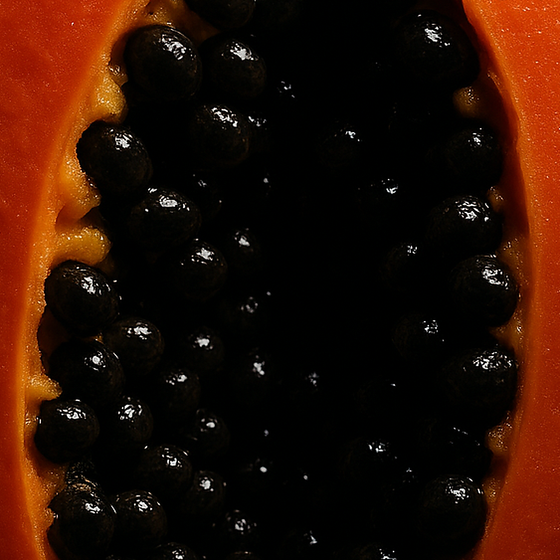
Папая як парфумерна сировина
Ноти серця
Carica papaya
Визначення

Papaya is the plant species Carica papaya, of the family Caricaceae, first domesticated in Mesoamerica. Among the odour-active compounds of its fruit, benzyl isothiocyanate is described as smelling of papaya.

СОЛОДКИЙ МУСКУСНИЙ ФРУКТОВИЙ ТЕПЛИЙ СВІЖИЙ ТРОПІЧНИЙ
pawpaw, papaw
Type
Складник
Olfactive family
Фруктові
Source
fruit
Інструменти
Піраміда
ВВерхні ноти
СНоти серця
ББазові ноти
Країни-виробники
Індія Домініканська Республіка Індонезія Бразилія Мексика

Запах

Among the odour-active compounds of papaya fruit, δ-octalactone is described as sweet and herbal, and benzyl isothiocyanate as papaya. Methyl butanoate and ethyl butanoate are described as fruity. Olfactometry studies of several papaya varieties found linalool to be one of the most aroma-active compounds of the fruit. However, in the Red Maradol cultivar, esters were the most powerful odorants; linalool was not the major compound even in the ripe fruit.

Докладно

The word papaya derives from the Arawakan languages of the West Indies and is also the name for the plant. It was first used in English around 1600 in reference to the fruit and tree. In Australian English, pawpaw and papaya denote the fruit of different cultivars of Carica papaya. The papaya is a large herbaceous plant, usually with a single stem growing from 5 to 10 m (16 to 33 ft) tall.

Explore all seven extraits in the Discovery Set.

Origin and spread

Native to tropical regions in the Americas, papaya originates from southern Mexico and Central America. Spaniards introduced papaya to the Old World in the 16th century. Papaya cultivation is now nearly pantropical, spanning Hawaii, Central Africa, India, and Australia. In 2024, India was the leading producer, accounting for 36% of the world total.

Aroma chemistry

Papaya skin, pulp and seeds contain benzyl isothiocyanates and benzyl glucosinates, with skin and pulp levels that increase during ripening. Benzyl isothiocyanate is an isothiocyanate found in plants of the mustard family. In papaya seeds it is the main product of the breakdown of glucotropaeolin by the enzyme myrosinase.

In a headspace study of the Sunrise variety, 32 volatile compounds were identified, most of them aldehydes. Its volatile profile comprised aldehydes, alcohols, esters, terpenes, lactones and ketones. Benzyl isothiocyanate, δ-octalactone and γ-octalactone are among the major compounds of that variety. In the Golden variety, linalool made up 61.6% of the volatile compounds, followed by linalool oxide derivatives. In fruit from Madeira island, benzyl isothiocyanate made up 32.1% of the volatile composition.

Ripening and use

As a climacteric fruit, the fast ripening of papaya is triggered by ethylene biosynthesis. The ripe fruit of the papaya is usually eaten raw, without skin or seeds. The green fruit contains papain, a cysteine protease enzyme used to tenderize meat. Papaya releases a latex fluid when not ripe, possibly causing irritation and an allergic reaction in some people. Almost all commercial papaya orchards contain only hermaphrodites.

Отримання й хімія

Спосіб отримання

Volatiles of papaya fruit can be extracted from the headspace by solid-phase microextraction.

Ботанічна назва
Carica papaya
Синоніми
pawpaw, papaw
Статус IFRA
Див. примітку

No IFRA Standard for the material itself (51st Amendment)

У парфумерії

Methyl butanoate, a fruity ester among the odour-active compounds of papaya, is manufactured on a small scale for use in perfumes and as a food flavouring.

Роль у формулі
01модифікатор
02кістяк
03фірмова нота
04компонент піднесення
05сполучний компонент
06натуралізатор
Форми випуску
fruit headspace extract

Див. також

7 ноти