The plant
Posidonia oceanica, commonly known as Neptune grass or Mediterranean tapeweed, is a seagrass species endemic to the Mediterranean Sea. It is a flowering plant that grows in dense meadows or along sandy channels in the waters of the Mediterranean. Seagrasses are the only embryophytes, commonly called land plants, that grow in marine environments. Its large underwater meadows are an important part of the ecosystem. The plant is found at depths of 1 to 35 metres, depending on water clarity.
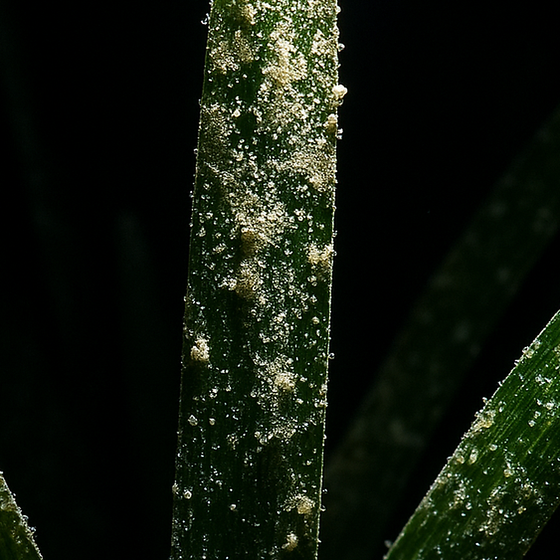
The plant has roots, which mainly serve to anchor it to the substrate, and rhizomes. The leaves are ribbon-like. They are bright green, perhaps turning brown with age, and have 13 to 17 parallel veins. Its rhizomes grow both horizontally and vertically and build a terrace of rhizomes, roots and trapped sediment, and in this way the plant colonises an environment that algae could hardly occupy because they lack roots. Its horizontal rhizomes grow from 1 to 6 centimetres per year. Growing a new leaf takes about 51 days, exceptionally longer than in other seagrasses. It flowers in autumn and produces floating fruits in spring, commonly known as sea olives. The genus Posidonia is named after Poseidon, the Greek god of the seas.
The plant grows for millennia, accumulating organic-rich soils, called mats, beneath the meadows. Research on the mats explores their potential to reconstruct six thousand years of environmental change. The meadows are threatened by rising temperatures, which slow its growth, and by damage from anchors.
Beach-cast leaves and extracts
Balls of fibrous material formed from the plant's foliage, called egagropili or Neptune balls, are washed up on nearby shores. Leaves lost by the plant are deposited along the coast by storm surges and form dead leaf structures called banquettes.
To date, 51 natural products have been reported from P. oceanica, including natural phenols, chalkones and flavonols. Many of the reported compounds were not detected by appropriate phytochemical methods, and some most probably represent artifacts. Extracts of the leaves contain polyphenols, of which chicoric acid is the most abundant. In vitro, pre-treating fibroblast cells with an ethanol leaf extract protected them significantly against oxidative stress caused by UV exposure.
Explore all seven extraits in the Discovery Set.
—
Related: Acronychia Pedunculata · Adoxal · Agave · Algae · Aloe Vera · Aromatic Notes · Asparagus · Avocado