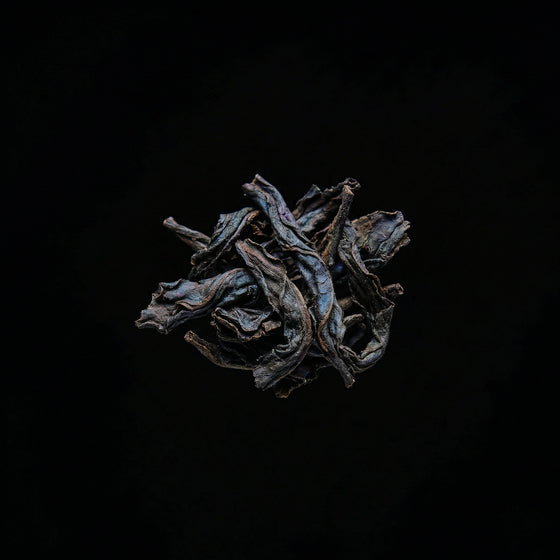
The tea plant
Tea is made from the leaves of Camellia sinensis, an evergreen shrub native to East Asia. Two principal varieties are used: Camellia sinensis var. sinensis for most Chinese, Formosan and Japanese teas, and C. sinensis var. assamica for Pu-erh and most Indian teas, but not Darjeeling. Black tea is the most oxidized tea and white tea the least. In 2022, global production of tea was 29.8 million tonnes, led by China with 49% and India with 20% of the world total. Polyphenols are the most abundant compounds in tea leaves, making up 30-40% of their composition. The astringency in tea can be attributed to the presence of polyphenols. Green tea deteriorates more rapidly than black tea, usually in less than a year.
How tea aroma forms
Volatile compounds in tea products can be formed through many pathways, such as the carotenoid, fatty acid, terpene, phenylpropanoid/benzenoid, glycoside hydrolysis and Maillard reaction pathways. Carotenoids are important precursors of tea volatile compounds. Ionone and damascone are important compounds derived from carotenoids and form an essential aroma note in black tea. In a model fermentation system of β-carotene, tea catechins and enzymes extracted from fresh tea leaves, β-ionone was the major volatile product and β-damascone the minor product. Ionone derivatives such as α-ionone, β-ionone, β-cyclocitral, 5,6-epoxy-β-ionone and dihydroactinidiolide are formed by oxidation of carotenoids. Geraniol, linalool and linalool oxides are important terpene derivatives in tea, especially in black tea. Many tea volatile compounds are present in glycosidically-bound forms, which are more water soluble and more easily stored, but less volatile than their free aglycone counterparts.
During black tea fermentation, catechins are oxidized. 133 aromatic volatiles were formed during black tea processing, among them 48 carbonyls, 30 esters and 25 alcohols. Linalool, methyl salicylate and C6-aldehydes increased appreciably during the rolling and fermentation of black tea. Volatiles are key contributors to tea aroma. Each type of tea has its own typical aroma, because it has specific aroma-active volatiles. β-Ionone, β-damascenone, linalool and geraniol are important aroma-active compounds in black teas. The major aroma-active volatiles in green tea, which usually has nutty-like or flowery aromas, include linalool, linalool oxides and geraniol. Green tea processed from leaves stored at 15 °C has higher levels of volatiles with floral, fruity and sweet flavors than green tea from leaves stored at 25 °C.
Key aroma compounds
The ionones are part of a group of compounds known as rose ketones, which also includes damascones and damascenones. The ionones and the damascenones are derived from the degradation of carotenoids. The combination of α-ionone and β-ionone is characteristic of the scent of violets and is used with other components in perfumery and flavouring to recreate their scent. β-Damascenone is a major contributor to the aroma of roses despite its very low concentration, and it is an important fragrance chemical used in perfumery. Theaspirane has the molecular formula C₁₃H₂₂O. Dihydroactinidiolide has the molecular formula C₁₁H₁₆O₂.
Names and varieties
The name sinensis is Botanical Latin for "from China". Five varieties of Camellia sinensis are accepted. Kukicha, or twig tea, is also made from the plant, but it uses only twigs and stems rather than leaves and buds. China, India, Kenya and Sri Lanka are the four biggest tea-producing countries, together representing 81% of world tea production.
This note in PREMIEREPEAU. Nuit Élastique. Sample all seven extraits in the Discovery Set.