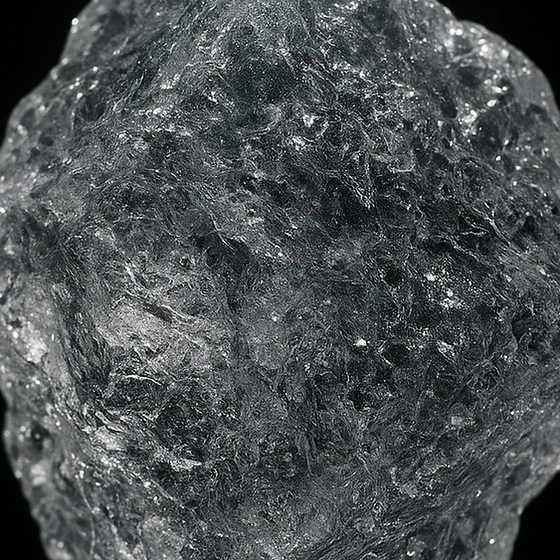
Оксид троянди

Натуральний і синтетичнийНАТУРАЛЬНІ Й СИНТЕТИЧНІ, ПОПУЛЯРНІ Й НЕЗВИЧНІквітковий · свіжий · зелений
Верхні нотиПіраміда
—Сила
—Стійкість
—Походження
Зразок
Оксид троянди як парфумерна сировина
Верхні ноти
N/A — molecule
Визначення

Rose oxide is a monoterpenoid of the oxane (tetrahydropyran) class, a fragrance chemical found in roses and rose oil. It has a powerful, distinctive geranium top note.

КВІТКОВИЙ ЗЕЛЕНИЙ СОЛОДКИЙ СВІЖИЙ
Rosoxide, Rosenoxide, 4-methyl-2-(2-methylprop-1-enyl)oxane, tetrahydro-4-methyl-2-(2-methyl-1-propenyl)-2H-pyran, 2-isobutenyl-4-methyltetrahydropyran
Type
Складник
Olfactive family
Квіткові
Source
Found in roses and rose oil; produced industrially from citronellol
Chemical class
monoterpenoid; oxane (tetrahydropyran)
Інструменти
Піраміда
ВВерхні ноти
СНоти серця
ББазові ноти
—Сила
Потужна
Потужна

Запах

The odour is powerful, with a distinctive geranium top note. It is green, metallic, rosy and geranium-like, with a cut-rose-stem character and a ferric freshness, and it shows lychee at low concentrations. Smelled from a blotter, the genuine material gives a sharp, green-metallic, rosy-geranium note with an iron-like edge. The (−)-cis isomer smells fresh and rosy-green, the (+)-cis isomer metallic-sweet, and the trans isomers herbaceous-spicy.

Докладно

Rose oxide (4-methyl-2-(2-methylprop-1-enyl)oxane) gives the green, metallic top of modern rose accords; at PREMIEREPEAU it holds Rose Monotone against lychee and Brazilian pink pepper.

Rose oxide is a fragrance chemical found in roses and rose oil. It also contributes to the flavor of some fruits, such as lychee, and of wines, such as Gewürztraminer. Cis-rose oxide is an important chiral compound in Gewürztraminer wine. Rose oxide has been reported in Daphne odora and Pelargonium, among other organisms. In chemical terms it is a monoterpenoid and an oxane, a tetrahydro-2H-pyran carrying an isoprop-1-enyl group at position 2 and a methyl group at position 4.

Origin and Production

The photosensitized oxygenation of citronellol is an industrially important transformation. It is used for the bulk production of rose oxide. In a microreactor study of this reaction on (−)-citronellol, methylene blue served as sensitizer in acetonitrile, and reactions at higher concentration finished in almost the same time as at lower concentration, whereas the batch reaction was still incomplete after several hours. Rose oxide has also been isolated from Heracleum moellendorffii.

Chemistry

Rose oxide is an organic compound of the pyran class of monoterpenes. Its IUPAC name is 4-methyl-2-(2-methylprop-1-enyl)oxane. The compound has a cis and a trans isomer, each with a (+) and a (−) stereoisomer. All four possible stereoisomers are known. Enantiomers have the same molecular formula and the same connectivity but differ in how they are oriented in three-dimensional space, and olfactory receptors react differently with the two forms, which changes odour strength and quality. The two enantiomers of cis-rose oxide have different detection thresholds. Rose oxide has a role as a plant metabolite. The CAS number is 16409-43-1, and the stereoisomers have their own numbers: 876-17-5 for (−)-cis, 876-18-6 for (−)-trans, 4610-11-1 for (+)-cis and 5258-10-6 for (+)-trans.

Chemical Properties

Rose oxide is slightly soluble in water and soluble in oils. It is also soluble in ethanol, and its solubility in water is 764 mg/L at 20 °C. Its density is 0.873-0.877. The molecule has one hydrogen bond acceptor and no hydrogen bond donor.

Regulation and Flavour Use

Rose oxide is a REACH registered substance (EC 240-457-5), and manufacturers and importers in the United States report their production and use of it to the EPA under the Toxic Substances Control Act. As a food additive it belongs to the class of flavouring agents, and its JECFA number is 1237.

This note at PREMIEREPEAU. Rose Monotone. Sample all seven extraits in the Discovery Set.

Цікавий факт

Of the four stereoisomers of rose oxide, only the (−)-cis isomer, with an odor threshold of 0.5 ppb, is responsible for the typical rose fragrance.

Отримання й хімія

Спосіб отримання

Rose oxide can be made industrially from citronellol. Photooxygenation of citronellol gives an allyl hydroperoxide, which is reduced with sodium sulfite to the diol. Ring closure with sulfuric acid then forms the cis and trans isomers in equal amounts.

Формула
C₁₀H₁₈O
CAS
16409-43-1
Ботанічна назва
N/A — molecule
Зовнішній вигляд
colourless mobile liquid
Сила запаху
Потужна
Синоніми
Rosoxide, Rosenoxide, 4-methyl-2-(2-methylprop-1-enyl)oxane, tetrahydro-4-methyl-2-(2-methyl-1-propenyl)-2H-pyran, 2-isobutenyl-4-methyltetrahydropyran
Статус IFRA
Див. примітку

No IFRA Standard for the material itself (51st Amendment)

Фізичні властивості
Температура кипіння
86.00 °C. @ 20.00 mm Hg
Показник заломлення
1.453-1.457

У парфумерії

Rose oxide's 2S,4R and 2S,4S diastereoisomers are main constituents of several essential oils and serve as a food flavouring and in perfumes and cosmetics. It is a flavouring agent with a green FEMA flavour profile and the FEMA number 3236.

Роль у формулі
01модифікатор
02фірмова нота
03компонент піднесення
04сполучний компонент
05формувач об’єму
06свіжість
Форми випуску
синтетична речовина натуральний ізолят

Див. також

7 ноти