


Пісок
АкордНАТУРАЛЬНІ Й СИНТЕТИЧНІ, ПОПУЛЯРНІ Й НЕЗВИЧНІземлистий · мінеральний
Базові нотиПіраміда
—Сила
—Стійкість
—Походження
Зразок
Фантазійний/концептуальний
Визначення
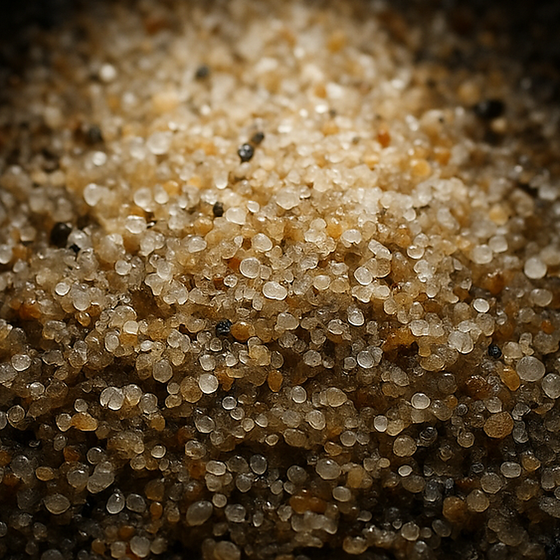
Sand is a granular material composed of finely divided mineral particles. Its most common constituent in inland continental settings and non-tropical coastal settings is silica, usually in the form of quartz.
ЗЕМЛИСТИЙ СУХИЙ МІНЕРАЛЬНИЙ
- Type
- Акорд
- Olfactive family
- Землисті
- Source
- Finely divided rock and mineral particles
Інструменти
Піраміда
ВВерхні ноти
СНоти серця
ББазові ноти
В ароматах PREMIEREPEAU
Докладно
Цікавий факт
Only 15% of the Sahara is sand dunes, while 70% is bare rock. People who collect sand as a hobby are known as arenophiles.
Отримання й хімія
Спосіб отримання
Sand from rivers is collected either from the river itself or its flood plain. River sand accounts for the majority of the sand used in the construction industry.
- Формула
- Complex natural mixture (key constituents: silica SiO₂; calcium carbonate)
Статус IFRA
Див. приміткуNo IFRA Standard for the material itself (51st Amendment)
У парфумерії
Silica, the major constituent of sand, is used in cosmetics for its light-diffusing properties and natural absorbency.
Роль у формулі
01модифікатор
02фірмова нота
03сполучний компонент
04натуралізатор
05формувач об’єму
Форми випуску
синтетичний акорд фантазійна нота
Див. також
8 нотиУд деревний · тваринний · димний Сандалове дерево деревний · квітковий Ветивер землистий · деревний · димний Андіроба деревний · землистий · насичений Кедр деревний · сухий · чистий Пил землистий · сухий · фруктовий Персикове дерево фруктовий · деревний · солодкий Сизалева мотузка землистий · деревний · свіжий
