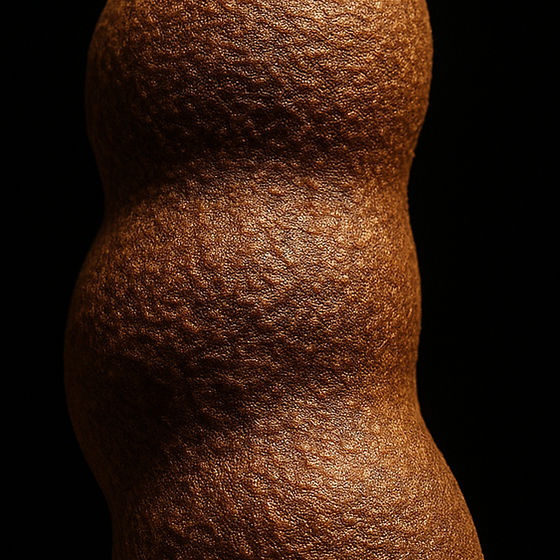
Tamarind (Tamarindus indica, Fabaceae) is a leguminous tree indigenous to tropical Africa. The genus Tamarindus is monotypic, meaning that it contains only this species. The tamarind is a long-living, medium-growth tree that attains a maximum crown height of 25-30 metres. The tree grows well in full sun and prefers clay, loam, sandy and acidic soil types. Its timber consists of hard, dark red heartwood and softer, yellowish sapwood.
Explore all seven extraits in the Discovery Set.
The fruit
The fruit is an indehiscent pod 12 to 15 cm in length, with a hard, brown shell. The tamarinds of Asia have longer pods containing six to 12 seeds, whereas African and West Indian varieties have shorter pods containing one to six seeds. The seeds are brown, somewhat flattened and glossy. A typical fruit contains about 55% pulp, 34% seeds and 11% shell and fibres. A mature tree may produce up to 225 kg of fruit each year.
Composition
The pulp of the fruit contains tartaric acid, reducing sugars, pectin, protein, fiber and cellulosic materials. Tartaric acid is the major acid present in the pulp and gives it its acidic taste. The pulp also contains malic, succinic, citric and quinic acid. In the pulp, reducing sugars make up 25-45%, pectin 2-3.5% and protein 2-3%, and the proportions vary from sample to sample. Tartaric acid accumulates at high levels in the fruit and is the major contributor to its sour flavor. It is primarily synthesized via the ascorbic acid metabolism pathway.
The major volatile constituents of tamarind pulp include furan derivatives (44.4%) and carboxylic acids (38.2%). In the analysis of Lee and colleagues, the most abundant volatile constituent of tamarind is 2-acetyl-furan, with only traces of furfural and 5-methylfurfural, and these are said to form the total aroma of the pulp. Another analysis lists furfural (38.2%), palmitic acid (14.8%), oleic acid (8.1%) and phenyl acetaldehyde (7.5%) among the components. Two varieties of tamarind are found mainly in India, the red and the common brown; the pulp of the red variety is less acidic in taste, while that of the brown variety is more acidic or sour.
Origin and distribution
Tamarind grows wild in Africa. In Arabia, it is found growing wild in Oman, especially Dhofar, where it grows on the sea-facing slopes of mountains. It has been cultivated for so long on the Indian subcontinent that it is sometimes reported to be indigenous there. It is widely distributed throughout the tropics, from Africa to South Asia and Australia. India is the world's largest producer of tamarind, with an average production of about 191750 tonnes in 2015-2016.
Uses
Most parts of the tamarind tree, including the wood, bark, flowers, leaves, pulp and seeds, have various environmental, commercial and culinary uses. The wood can be used for woodworking, and the young leaves are used in Indian and Filipino cuisine. The sticky, edible tamarind pulp is a common ingredient in culinary preparations such as curries, chutneys, sauces, ice cream and sherbet. Some formulations of Worcestershire sauce may include tamarind. The pulp is used for seasoning and to flavor confections, curries and sauces, and it serves as a substitute for chemical acidulants in the preparation of certain beverages. The pulp is also used in traditional medicine and as a dye. Tamarind pulp is regarded as a digestive, carminative, laxative, expectorant and blood tonic.