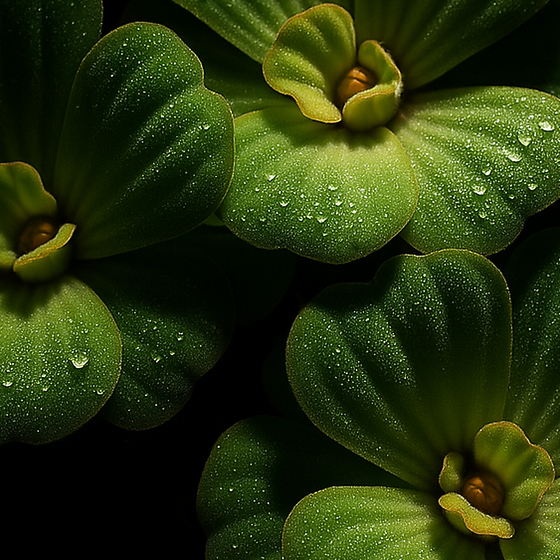
Водяні квіти

АкордКВІТИквітковий · свіжий · акватичний
Ноти серцяПіраміда
—Сила
—Стійкість
—Походження
Зразок
Водяні квіти як парфумерна сировина
Ноти серця
Фантазійний/концептуальний
Визначення

The roots of the sacred lotus (Nelumbo nucifera) grow in the soil at the bottom of a pond or river, while its leaves float on the water's surface or are held well above it. The scent of the lotus is often described as a fresh, light, and slightly sweet aroma.

КВІТКОВИЙ ЗЕЛЕНИЙ АКВАТИЧНИЙ СВІЖИЙ МІНЕРАЛЬНИЙ
Type
Акорд
Olfactive family
Квіткові
Інструменти
Піраміда
ВВерхні ноти
СНоти серця
ББазові ноти

Запах

1,4-Dimethoxybenzene, a principal aromatic constituent of lotus stamens and receptacles, has a pronounced clove-like odor. Eucalyptol, the second most prevalent component, has a camphor-like aroma. γ-terpinene has a citrus and lemon-like aroma. The aroma of tropical water lilies is influenced by ethyl benzoate, acetic acid phenylmethyl ester, and 2-heptadecanone, which provide a fruity and sweet flower aroma. The volatile compounds of Nymphaea hybrid may give it a sweeter fruity floral scent than other water lilies. Benzyl alcohol, a main volatile of Nymphaea hybrid petals, has a sweet, floral aroma. The aroma of the cold-resistant water lily is influenced by nerolidol and lilac alcohols, which give orange and clove flower aromas.

Докладно

The roots of the sacred lotus (Nelumbo nucifera) grow in the soil at the bottom of a pond or river, while its leaves float on the water's surface or are held well above it. Its flowers are showy and grow up to 35 cm in diameter. The Japanese variety ohmi myoren can have between 2,000 and 5,000 petals, the greatest number recorded for any species of plant.

Analysis of Antique Lotus flowers, a Nelumbo nucifera, found 64 volatile components, comprising 38 terpenoids, two benzenoids/phenylpropanoids and 24 fatty acid derivatives. The stamens contain the greatest number of volatile compounds, while the petals have the highest content. Fatty acid derivatives are the primary volatile substances in the petals, while the stamens and receptacles are dominated by benzenoids/phenylpropanoids. 1,4-Dimethoxybenzene is the major component of the aromatic emissions of Antique Lotus.

Nymphaea is a genus of hardy and tender aquatic plants in the family Nymphaeaceae. Many species are cultivated as ornamental plants, and the genus has a cosmopolitan distribution. The genus name comes from the Greek and Latin words meaning water lily. Water lily flowers may be fragrant or without odour. In the petals of the tropical water lily Nymphaea hybrid, the predominant volatile compounds are benzyl alcohol, pentadecane, trans-α-bergamotene, (E)-β-farnesene and (6E,9E)-6,9-heptadecadiene. Alkenes, alcohols and alkanes are the three major types of volatile components in its petals.

Calone has an intense “sea-breeze” note with slight floral and fruit overtones. In the fragrance industry Calone is known as watermelon ketone or simply calone. The aroma of Helional is described as watery, fresh, green, ozone, cyclamen and hay. Cyclamen aldehyde is a component of fragrances described as floral, cyclamen, fresh, rhubarb, musty and green. Methyl dihydrojasmonate, often called hedione, is an aroma compound with an odor similar to that of jasmine. Hedione is a synthetic relative of methyl jasmonate, a naturally occurring compound in floral scents such as jasmine, tuberose and magnolia.

Explore all seven extraits in the Discovery Set.

Цікавий факт

Sacred lotus regulates the temperature of its floral chamber to 32°C to 35°C across ambient temperatures of 8°C to 40°C. Researchers think this temperature control may serve to attract cold-blooded insect pollinators to the flowers. In 1994, a seed from a sacred lotus, dated at roughly 1,300 years old, was successfully germinated.

Отримання й хімія

Спосіб отримання

Volatiles of lotus (Nelumbo nucifera) flowers have been collected by dynamic headspace and analysed by gas chromatography-mass spectrometry. The tissues sampled were petals, stamens and receptacles from first-day blooms, and 1 g of fresh tissue was placed in a 20 mL headspace vial. Cyclamen aldehyde is not naturally occurring and is prepared by the crossed-aldol condensation of cuminaldehyde and propionaldehyde followed by catalytic hydrogenation. The most common route to Helional is a crossed-aldol condensation between piperonal (heliotropin) and propanal, followed by selective hydrogenation of the intermediate alkene.

Статус IFRA
Див. примітку

No IFRA Standard for the material itself (51st Amendment)

У парфумерії

Calone is used to give the olfactory impression of a fresh seashore through its marine and ozone nuances. Cyclamen aldehyde has been used in soaps, detergents, lotions, and perfumes since the 1920s. Hedione is used in fine fragrances as well as cosmetics, toiletries, and detergents.

Роль у формулі
01модифікатор
02компонент піднесення
03сполучний компонент
04прозора нота серця
05компонент негативного простору
Форми випуску
синтетичний акорд фантазійна нота

Див. також

5 ноти