


Lychee
Keywords: fruity · floral · rosy
Lychee is the fruit of the tree Litchi chinensis, the sole member of the genus Litchi, in the soapberry family Sapindaceae. Its flavor is sweet and mildly tart, with a distinctive floral aroma often described as rose-like.
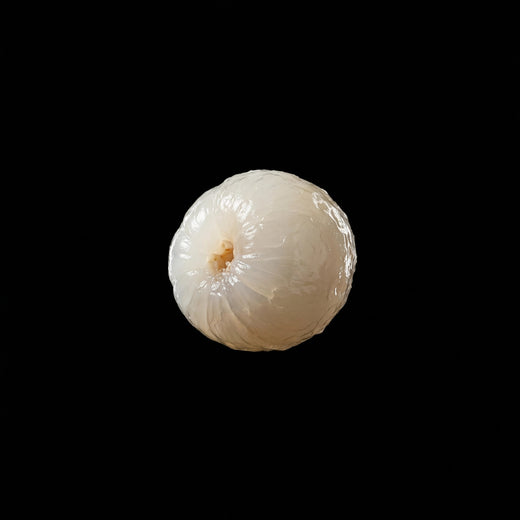
- Olfactive family
- Fruity · 696 entries of the glossary in this family Subfamily: Tropical fruits · 120 entries in this subfamily Cluster: Mixed fruit notes · 346 entries in this cluster
- Material
- Natural Fruit of Litchi chinensis
- Pyramid
- Top · Volatility: Top Note
- Strength
- Medium Step 3 of 5 · shared by 1,473 of 2,156 graded entries Graded entries at each step, from 1 to 5: 4, 119, 1,473, 498, 39. 23 more sit between two steps.
- Also called
- Litchi
Family, subfamily and cluster: PREMIEREPEAU house classification, version 2026‑11.
Lychee · Facets
Entries of the glossary that carry each facet, of 3,979:
- floral 1,546
- sweet 1,988
- musky 113
- fruity 1,301
- fresh 1,387
- rosy 9
Lychee · Scent
Lychee has a distinctive flavor and is usually described as rose-floral and fruity-floral in aroma. Among the aroma attributes of the ‘Sweetheart’ cultivar, floral was the most intense, followed by tropical fruit, peach/apricot and honey. By contrast, the lychee samples showed relatively low odor intensities for citrus, cabbage, green/woody and garlic/onion.
Methional is perceived as cooked potato, and geraniol as sweet and floral. Geraniol has a rose-like scent. Nerol is floral and sweet, linalool is floral, dimethyl trisulfide is pickled vegetable and sulfury, and nerolidol is metallic, sesame oil. The (+)-cis-rose oxide is perceived as green and floral. In Muscaris and Muskateller grapes, the (2S,4R) enantiomer of cis-rose oxide smells floral and lychee-like (strong), while the (2R,4S) enantiomer is floral and lychee-like only weakly.
Evolution over time
Lychee: scent over time.
- Immediately
Fruity, sweet and floral, with a grassy green note.
Scent words: green · floral · fruity · sweet - After a few hours
Floral and sweet, with a rose-like quality.
Scent words: floral · sweet - After a few days
Sweet and caramel-like, with metallic, sesame-oil and sulfury touches.
Scent words: sweet
Lychee · In Perfumery
Rose oxide is a fragrance chemical found in roses and rose oil. Odor reconstitution and omission experiments showed that the distinct lychee note in the aroma of the Muscaris grapes was generated by the combination of (2S,4R)-rose oxide and geraniol. (2S,4R)-rose oxide was the only compound among the odorants identified in Muscaris and Muskateller grapes with a specific lychee-like odor. Linalool, one of the aroma-active compounds of lychee flesh, is used as a scent in perfumed hygiene products and cleaning agents, including soaps, detergents, shampoos, and lotions. Featured in PREMIEREPEAU’s Rose Monotone, where it anchors the crystalline-fruity quality of the composition alongside a mineral rose accord.
Pyramid
Lychee: Top. Entries of the glossary stored at each place of the pyramid, of 4,006 (42 store no place):
- Top 718
- Top · Heart 497
- Heart 1,641
- Heart · Base 514
- Base 594
Role in the formula
Lychee: roles in the formula. Entries of the glossary that share each role, of 4,006:
- Modifier 1,167
- Blender 1,040
- Freshness 720
- Lifting agent 567
In PREMIEREPEAU
Rose Monotone
Abstract Floral, Crystalline Fruity
Rose oxide kept for its one cold angle. Cold lychee chills the base beneath it. The flower holds at a single temperature all day. By Claire Liégent.
- Lychee:
- Dominant note: Lychee. Heart note: Lychee Sherbet. Signature: Lychee Sherbet Effect.
- Duality
- Bloom / Drone
- Dominant
- Rose · Lychee · Chrome · Cellophane
- Signature
- Cellophane Rose · Lychee Sherbet Effect · Chrome Accord
- Top
- Pink Pepper Organic Brazil · Cellophane Accord · Crystal Notes
- Heart
- Crystalline Rose · Chrome Accord · Lychee Sherbet · Rose Oxide · Ambrette
- Base
- Modern Vetiver · Ambroxan
PREMIEREPEAU collection: Extrait de parfum
Lychee · Terroir & Origins
- Producing countries
- China, India, Madagascar, Thailand, Vietnam
Lychee · Extraction & Chemistry
Rose oxide, which contributes to the flavor of lychee, can be produced industrially beginning with photooxygenation of citronellol to give the allyl hydroperoxide which is then reduced with sodium sulfite to provide the diol. Ring-closure with sulfuric acid forms both the cis- and trans-isomers in equal amounts.
Available as
Lychee: available as.
- synthetic accord
- fantasy note
- fruit
- juice
- Appearance
- Pale yellow to colorless clear liquid (extract/absolute)
Lychee · Did You Know?
Gewürztraminer wines have a flamboyant bouquet of lychees, and the grape and lychees share the same aroma compounds. Since the floral flavor is lost in the process of canning, the fruit is usually eaten fresh.
Lychee · In Depth
Lychee — crystalline, transparent, faintly rose-adjacent — is used in PREMIEREPEAU’s Rose Monotone to refract rose oxide and Brazilian pink pepper.
Family and fruit of lychee
Lychee is a member of the Sapindaceae family, which also includes longan and rambutan. There are three distinct subspecies of lychee. Litchi chinensis subsp. chinensis is the only commercialized lychee, and it grows wild in southern China, northern Vietnam, and Cambodia.
The outside of the fruit is a pink-red, rough-textured soft shell. The edible aril is juicy and translucent. At full maturity the flesh is a white, juicy aril surrounding a large brown seed. The seeds and edible aril can contain methylene cyclopropyl glycine. Lychee toxins have been linked to hypoglycemic encephalopathy in undernourished children in India, and may also have played a role in cases in Vietnam. Lychee’s sweetness is primarily due to sucrose, glucose, and fructose, while malic and citric acids provide acidity.
Aroma compounds
Aroma-active compounds in the flesh include the monoterpenes linalool, geraniol, nerol, limonene, and cis-rose oxide, which contribute rose-like and citrus-like notes. The flesh also contains furaneol, methional and sulfur volatiles such as dimethyl trisulfide.
In the ‘Sweetheart’ cultivar, methional and geraniol showed the highest flavor dilution factors, 1024 and 512 respectively. Geraniol, nerol and linalool are the most aroma-active terpenes due to their low sensory threshold. The strong combination of these three volatiles explained the most intense floral note of lychee fruit perceived in the sensory evaluation. Besides giving the impression of a floral note, linalool can also contribute sweet and citrus scents to the overall aroma profile of lychee.
Rose oxide
Rose oxide is an organic compound of the pyran class of monoterpenes. Rose oxide also contributes to the flavor of some fruits, such as lychee. The (−)-cis isomer of rose oxide has a strong floral green, rose-like scent and an odor threshold of 0.5 ppb. The (+)-cis isomer also has a green floral character, with a higher threshold of 50 ppb.
Odorant studies
A comparison of Gewürztraminer wine, fresh lychees and canned lychees detected 12 odorants common to all three samples. Among them, cis-rose oxide, β-damascenone, ethyl 2-methylpropanoate, linalool and geraniol consistently showed concentrations beyond their odor threshold concentrations. Together with geraniol, nerol and citronellol, linalool is one of the rose alcohols.
The aroma-active compounds of ‘Sweetheart’ lychee were isolated with solvent assisted flavor evaporation and examined by gas chromatography-olfactometry/mass spectrometry. The most important odorants were then characterized by aroma extract dilution analysis. Thirty-one key aroma-active odorants were identified, with flavor dilution factors from 2 to 1024.
In the distilled spirit, linalool, cis-rose oxide and trans-rose oxide had the highest odor activity values, which may explain its rose and flower aroma. Some yeast strains can metabolize geraniol into cis-rose oxide.
In the PREMIEREPEAU collection, lychee appears in Rose Monotone, where its crystalline fruitiness amplifies the cooler, mineral quality of the rose accord.
Lychee fruit, aroma and cultivation
The tree is a tall evergreen that bears small fleshy sweet fruits. The skin is green when immature, ripening to red or pink-red. The rind is inedible but easily removed to expose a layer of translucent white flesh. The fleshy, edible portion of the fruit is an aril, surrounding one dark brown inedible seed. Lychee seeds contain methylene cyclopropyl glycine, which has caused hypoglycemia associated with outbreaks of encephalopathy in undernourished Indian and Vietnamese children who consumed lychee fruit.
The translucent flesh has a floral aroma that is often described as rose-like, with citrus-like notes. The sweetness of the flesh is primarily due to sucrose, glucose, and fructose, while malic and citric acids provide acidity. The aroma-active compounds of the flesh include the monoterpenes linalool, geraniol, nerol, limonene and cis-rose oxide, together with furaneol, methional and sulfur volatiles such as dimethyl trisulfide.
A total of 556 volatile organic compounds have been reported from litchi fruit. The aroma of litchi is mainly determined by the content and composition of monoterpenoids and alcohols. Sulfur-containing volatile compounds possibly impart a special flavor to litchi fruit.
Cultivation of lychees began in the regions of southern China (going back to 1059 AD), Malaysia, and northern Vietnam. Genomic studies indicate that the lychee resulted from double domestication by independent cultivation in two different regions of ancient China. The lychee tree was introduced in the northwestern parts of the Indian subcontinent in 1932 and remained an exotic plant until the 1960s, when commercial production began.
China is the main producer of lychees, followed by India, Vietnam, other countries in Southeast Asia, other countries in South Asia, Madagascar, and South Africa.
A lychee tree in Xiadong town, Maoming, identified as 1,780 years old, still blooms and bears fruit every year. A tree in the Huangpu district of Guangzhou, estimated to be more than 1,000 years old, was laden with fruit.
This note in PREMIEREPEAU. Rose Monotone. Sample all seven extraits in the Discovery Set.
Lychee · History
Cultivation in China has been documented since the 11th century. The tree has been introduced throughout Southeast and South Asia. It was described and named by the French naturalist Pierre Sonnerat in an account published in 1782.
Lychee · Technical Sheet
Identity
- Botanical
- Litchi chinensis
- Taxonomy
- Sapindales order › Sapindaceae family › Litchi genus · GBIF
- Botanical records
- Litchi chinensis: POWO, Litchi chinensis · IPNI, Litchi chinensis · GBIF, Litchi chinensis · Wikidata, Litchi chinensis · Wikipedia, Litchi chinensis
- IPNI
- Litchi chinensis Sonn., Voy. Indes Orient. ed. 2., 3: 255 (1782) — Pierre Sonnerat (1748–1814)
- Type
- Ingredient
- Category
- Fruits, vegetables and nuts
In Nature
- Growth form
- Tree · POWO
- Native range
- China · Indian Subcontinent · Indo-China · Malesia · Papuasia · POWO
- Introduced to
- 7 regions · Tropical Asia 5 · Africa 2
- Sample origins in GC-MS studies
- China (1 paper; one: J Agric Food Chem 2009, China)
- Recorded altitude
- 0–750 m · median 150 m · 269 records with an altitude · GBIF
- Wild or cultivated
- 5 native · 22 introduced · 29 cultivated among 2,955 records (the rest carry no such mark) · GBIF
- Recorded in
- 68 of 512 squares of the world grid; a brighter dot holds more records · GBIF
- Also from this genus
- Litchi: Litchi Blossom
In Print
- Timeline
- first described 1782 · earliest aroma paper in Europe PMC, 2003
- In English books
- most mentioned in the 1990s · Google Books Ngram
Classification
- Chemical class
- Synthetic aroma chemical
Chemical data
- Formula
- C₁₀H₁₈O (Linalool) · C₁₀H₁₈O (Cis-rose oxide, key character impact)
- Most reported compounds
- l-Epicatechol (2 papers; one: Int Immunopharmacol 2007, l-Epicatechol) · Citral (1 paper; one: J Agric Food Chem 1980, Citral) · Acetoin (1 paper; one: J Agric Food Chem 1980, Acetoin) · LOTUS
- CAS
- N/A (not a single substance, so no single CAS number)
- Odour-active compounds (GC-olfactometry)
- Methional · Geraniol · Furaneol · Nerol · Dimethyl trisulfide · Linalool (J Food Drug Anal 2018)
- INCI names (CosIng)
- LITCHI CHINENSIS FRUIT EXTRACT (SKIN CONDITIONING)LITCHI CHINENSIS SEED EXTRACT (SKIN CONDITIONING)LITCHI CHINENSIS WATER (SKIN CONDITIONING)LITCHI CHINENSIS FRUIT JUICE (SKIN CONDITIONING)LITCHI CHINENSIS SEED POWDER (ABRASIVE)
- Compound classes reported
- Monoterpenoids 33 % · Sesquiterpenoids 7 % · Flavonoids 19 % · Fatty acyls 14 % · of 58 compounds reported, 7 % of them esters · LOTUS
Labelling
- Forms in the EU cosmetic inventory
- Lychee: LITCHI CHINENSIS PERICARP EXTRACT
- EU allergens reported
- Limonene · Linalool · Geraniol · Citronellol · Citral · Cinnamal · Pinene · Terpineol · Alpha-Terpinene · Terpinolene · Menthol · Benzaldehyde
Physical properties
- Boiling point
- 239.00 to 241.00 °C. at 760.00 mm Hg
- Flash point
- 169.00 °F. TCC (76.11 °C.)
- Specific gravity
- 0.96410 to 1.01410 at 25.00 °C.
- Refractive index
- 1.33370 to 1.34170 at 20.00 °C.
- Vapour pressure
- 0.015000 mmHg at 25.00 °C. (est)
- Log P
- 2.624 (est)
Performance and rules
- IFRA status
- No IFRA Standard for the material itself (51st Amendment)
Lychee · See Also
Entries related to Lychee, by their place in the pyramid. “shared” marks a scent word Lychee has too.
Top notes

Longan Berries
fruity (shared) · sweet (shared) · floral (shared) Fruity / Top · Heart / Same cluster / Natural
Quenepa
fruity (shared) · fresh (shared) · tropical Fruity / Same subfamily / Fantasy/Concept
Champagne
aldehydic · effervescent · fruity (shared) Citrus / Fantasy/Concept
Calypsone
aquatic · marine · ozonic Aquatic / Top · Heart / Synthetic


Heart notes

Cantaloupe
fruity (shared) · sweet (shared) · fresh (shared) Fruity / Same cluster / Fantasy/Concept
Pitanga
fruity (shared) · sweet (shared) · fresh (shared) Fruity / Same cluster / Natural
Cupuaçu, Cupuassu, Copoasu
creamy · fruity (shared) · rich Fruity / Same cluster / Natural
Rose
floral (shared) · honeyed · waxy Florals / Natural
Peony
floral (shared) · fresh (shared) · green Florals / Accord
Magnolia
floral (shared) · warm · sultry Florals / Natural
Osmanthus
floral (shared) · fruity (shared) · leathery Florals / Natural
(2S,4R)-4-methyl-2-(2-methylprop-1-enyl)
oxane
floral (shared) · green · metallic Florals
Litchi Blossom
floral (shared) · fruity (shared) · sweet (shared) Florals / Natural
Petalia
floral (shared) · fruity (shared) Florals / Heart · Base / Synthetic


Other entries · Place in the pyramid not stored

Carambola (Star Fruit)
fruity (shared) · sweet (shared) · fresh (shared) Fruity / Same cluster / Natural

Lychee · Sources
Read the science
- J Food Drug Anal (2018) Characterization of key aroma-active compounds in lychee (Litchi chinensis Sonn.)
- J Agric Food Chem (2009) Comparison of volatile profiles of nine litchi (Litchi chinensis Sonn.) cultivars from Southern China
- International Plant Names Index (IPNI) Litchi chinensis Sonn.
- Journal of Food and Drug Analysis (2018) Characterization of key aroma-active compounds in lychee (Litchi chinensis Sonn.)
- Journal of Agricultural and Food Chemistry (2024) Molecular Background of the Lychee Aroma of Vitis vinifera L. ‘Muscaris’
- Food Science & Nutrition (2021) Characterization of volatile aroma compounds in litchi (Heiye) wine and distilled spirit
- Journal of Agricultural and Food Chemistry (2016) Quantification of Toxins in Soapberry (Sapindaceae) Arils: Hypoglycin A and Methylenecyclopropylglycine
- The American Journal of Tropical Medicine and Hygiene (2017) Outbreak of Sudden Death with Acute Encephalitis Syndrome Among Children Associated with Exposure to Lychee Orchards in Northern Bangladesh, 2012
- IFRA Standards, 51st Amendment
- Wikipedia Lychee
- Wikipedia Rose oxide
- Wikipedia Linalool
- Wikipedia Gewürztraminer
- University of Bologna Novel Asymmetric Organocatalytic Transformations, Development, Optimization and Applications, doctoral thesis
- Emerging Infectious Diseases, CDC Hypoglycemic Toxins and Enteroviruses as Causes of Outbreaks of Acute Encephalitis-Like Syndrome in Children, Bac Giang Province, Northern Vietnam
- FAO AGRIS Aroma Volatiles in Litchi Fruit: A Mini-Review
Cite as PREMIEREPEAU Glossary, “Lychee”, https://premierepeau.com/
