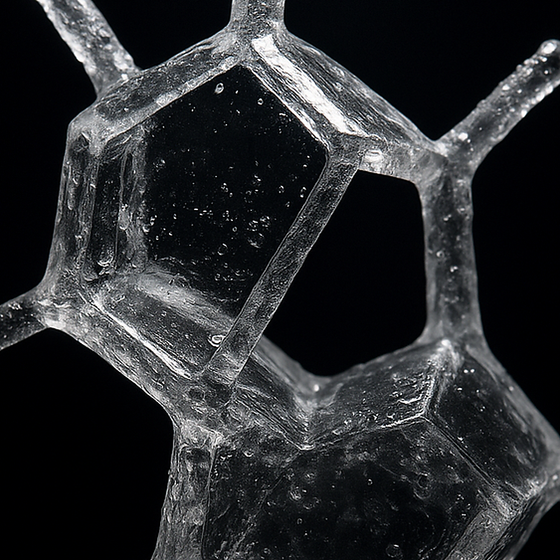
Beta-pinen

Prirodna i sintetičkaZELENE NOTE, BILJE I FUŽERIborov · drvenast · zelen
Gornje notePiramida
4/5Jačina
—Trajnost
—Poreklo
Uzorak
Beta-pinen kao sirovina za parfeme
Gornje note
N/A — found in Pinus pinaster and Humulus lupulus
Prirodna / sintetička
Definicija

Beta-pinene is a monoterpene, an organic compound found in plants. It has a woody-green pine-like smell.

DRVENAST ZELEN BOROV SMOLAST
nopinene, pseudopinene, 2(10)-pinene, pin-2(10)-ene
Type
Sirovina
Olfactive family
Aromatični
Source
turpentine
Chemical class
monoterpene
Instrumenti
Piramida
GGornje note
SSrednje note
BBazne note
4/5Jačina
Visoka
jačina mirisa

Miris

The odour is characteristic of turpentine, with a dry, woody or resinous aroma. Other descriptions give a piney, turpentine-like odour and a terpene odour. A dry woody, resinous piney aroma is also reported.

Detaljno

What it is

Beta-pinene is the less abundant of the two isomers of pinene, the other being alpha-pinene. Pinene is a collection of unsaturated bicyclic monoterpenes. Both isomers are chiral, and both contain a strained four-membered ring. Beta-pinene is a colorless liquid soluble in alcohol, but not water.

Where it occurs

Beta-pinene is one of the most abundant compounds released by forest trees. Many plants from many botanical families contain it. Turpentine is composed of terpenes, primarily the monoterpenes alpha-pinene and beta-pinene. Optically active and racemic beta-pinenes are present in turpentine oils. Cannabis contains alpha-pinene and beta-pinene. In bergamot oil, beta-pinene is one of the key monoterpenes, at 6%.

Chemistry

Both alpha-pinene and beta-pinene are produced from geranyl pyrophosphate. In the presence of strong bases, beta-pinene can be converted to alpha-pinene. If oxidized in air, the allylic products of the pinocarveol and myrtenol family prevail. Industrially, myrcene is made by pyrolysis of beta-pinene. Reaction with formaldehyde, a Prins reaction, converts beta-pinene to nopol.

Explore all seven extraits in the Discovery Set.

—

Related: Alpha Pinene · Angelica · Angelica Root · Angelica Root Oil · Artemisia · Barrenwort · Beachheather · Behini Tree

Dobijanje i hemija

Način dobijanja

The pinenes in turpentine are separated and purified by distillation. Nowadays, turpentine is rarely the product of distillation of pine resin, but is a byproduct of pulping. The kraft process gives a pinene-rich turpentine, whereas the sulfite process gives one rich in cymene. Crude sulfate turpentine is a by-product of the kraft process. Refiners of crude sulfate turpentine primarily separate the purified turpentine into its main components, alpha- and beta-pinene.

Formula
C₁₀H₁₆
CAS
127-91-3
Botanički naziv
N/A — found in Pinus pinaster and Humulus lupulus
Izgled
Colorless liquid
Jačina mirisa
High, recommended to smell in a 10% solution or less
Sinonimi
nopinene, pseudopinene, 2(10)-pinene, pin-2(10)-ene
Status prema standardima IFRA
Pogledajte napomenu

No IFRA Standard for the material itself (51st Amendment)

Fizička svojstva
Tačka ključanja
165-167 °C
Tačka topljenja
-61.54 °C
Tačka paljenja
36 °C (97 °F)
Relativna gustina
0.86
Indeks prelamanja
1.4768 at 25 °C

U parfemima

Beta-pinene is used in the production of other aroma compounds. When nopol is acetylated, the result is nopyl acetate, which is used as fragrance material. Myrcene, which is made from beta-pinene, is rarely used directly in the perfumery industry. Instead, it is a precursor to many fragrances, such as menthol, citral, citronellol, citronellal, geraniol, nerol and linalool. 2-Pinanol, derived from pinene, gives linalool upon pyrolysis.

Uloga u formuli
01podizanje gornjih nota
02svežina
03modifikator
Oblici na tržištu
izolat sintetički

Pogledajte i

8 nota