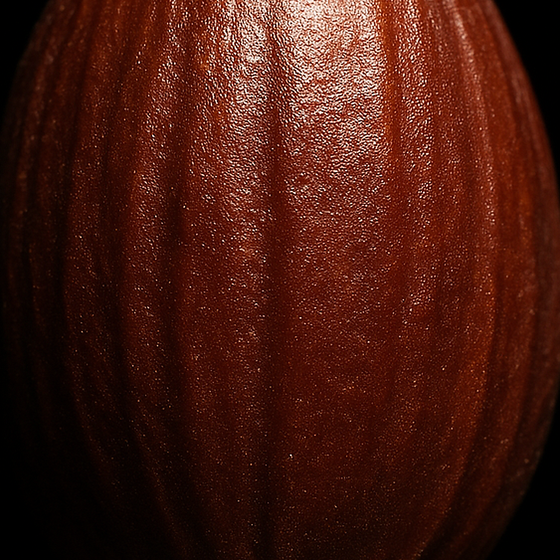
Jojoba (Simmondsia chinensis) is an evergreen, dioecious shrub native to the Southwestern United States and northern Mexico. It is the sole species of the family Simmondsiaceae. Jojoba is grown for the liquid wax in its seeds, commonly called jojoba oil. The oil makes up approximately 50% of the jojoba seed by weight.
The plant is a native shrub of the Sonoran Desert, the Colorado Desert and the Baja California desert, among other habitats. In the United States it is found in southern California, Arizona and Utah, and in Mexico in the state of Baja California. Jojoba typically grows to 1-2 meters tall, with a broad, dense crown. Its flowers are small and greenish-yellow, with 5-6 sepals and no petals. Each plant is dioecious, and in the wild the sexes appear in the ratio of 5 males for 1 female. Only the female bushes bear seeds that can be used for jojoba oil production.
The mature seed is a hard, dark brown oval. The jojoba genome was sequenced in 2020. Plantations have been established in desert and semi-desert areas, predominantly in Argentina, Australia, Israel, Mexico, Peru and the United States. The shrub prefers light, coarsely textured soils and tolerates salinity and nutrient-poor soils.
The oil is a straight-chain wax ester of very long chain length (C36-C46) and not a triglyceride, so it resembles whale oil more than traditional vegetable oils. Wax makes up about 98% of the oil, mainly wax esters with few free fatty acids, alcohols and hydrocarbons. Sterols, vitamins and a few triglyceride esters are also present. The oil contains a high proportion of monounsaturated fatty acids, primarily 11-eicosenoic acid. The acids and alcohols of the esters are both cis-monounsaturated at the ω-9 position. A derivative of jojoba oil, the jojoba esters, is a solid wax that is chemically and physically very similar to spermaceti.
Jojoba oil is relatively shelf-stable compared with other vegetable oils, mainly because it contains few triglycerides. The natural oil resists rancidity thanks to natural antioxidants, the α, γ and δ tocopherols. Removing these antioxidants by bleaching or stripping leads to a sharp decline in oxidative stability. The oil is soluble in common solvents such as benzene and chloroform but essentially immiscible in methanol.
Jojoba oil is used in hundreds of products, including cosmetics, pharmaceuticals, adhesives and lubricants. It also holds value in industry as an anti-rodent agent, insecticide, lubricant, surfactant and a source of bioenergy.
The O'odham Native American tribe extracted the oil from jojoba seeds to treat sores and wounds. The name "jojoba" is a hispanicization of hohohwi in Oʼodham. Archibald Menzies, the botanist with the Vancouver Expedition that arrived in Santa Barbara in November 1793, was given fruit and plants of the jojoba by a padre of the San Diego Mission. These survived the voyage back to the UK and were planted in the Royal Botanic Gardens at Kew. In 1943 jojoba oil was among the U.S. natural resources used during war as additives to motor oil, transmission oil and differential gear oil. Despite its scientific name, the plant is not native to China. The botanist Johann Link originally named it Buxus chinensis after misreading a collection label "Calif", referring to California, as "China". Thomas Nuttall collected jojoba again in 1836 and described it in 1844 as Simmondsia californica, but priority rules require that the original specific epithet be used.
Explore all seven extraits in the Discovery Set.
—
Related: 4 Methylanisole · Almaciga · Arnica · Assam Tea · Calycanthus · Camphor · Canvas · Carvone