


Cvet japanske kajsije
AkordCVETOVIcvetni · voćni · svež
Srednje notePiramida
4/5Jačina
—Trajnost
2Poreklo
Uzorak
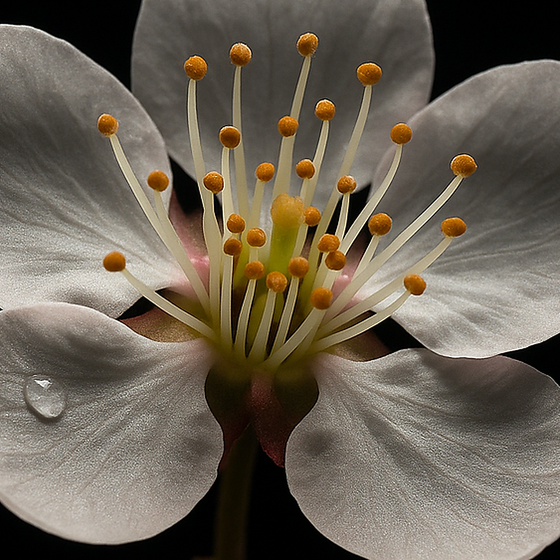
Prunus mume
Definicija
Plum blossom is the flower of Prunus mume, a species of tree in the rose family. The flowers have a strong fragrant scent.
CVETNI ZELEN SLADAK SVEŽ
ume, meihua, mei flowers
- Type
- Akord
- Olfactive family
- Cvetni
- Source
- flower
- Chemical class
- phenylpropanoids and benzenoids (main volatile categories)
Instrumenti
Piramida
GGornje note
SSrednje note
BBazne note
4/5Jačina
Visoka
jačina mirisa
Zemlje proizvođači
Kina Japan
Miris
U parfemima kuće PREMIEREPEAU
Detaljno
Dobijanje i hemija
Način dobijanja
Headspace extraction gave 21 compounds, steam distillation 30 and supercritical carbon dioxide 30. The supercritical carbon dioxide extract held more wax, and the combination of headspace extraction and steam distillation suited the detection of aromatic volatiles better.
- Formula
- Complex natural mixture (key constituents: benzyl acetate C₉H₁₀O₂; benzaldehyde C₇H₆O; eugenol; benzyl alcohol)
- Botanički naziv
- Prunus mume
- Jačina mirisa
- Jak
- Sinonimi
- ume, meihua, mei flowers
Status prema standardima IFRA
Pogledajte napomenuNo IFRA Standard for the material itself (51st Amendment)
U parfemima
Plum blossom appears as a named note in fragrance compositions, for example blended with peony, orris, shiso and golden amber.
Uloga u formuli
01pojačivač difuzije
02modifikator
03nota potpisa
04sredstvo za podizanje
05sirovina za stapanje
Oblici na tržištu
akord
Pogledajte i
7 nota