


Amberever
Редакційна приміткаМи не маємо жодних прав на цей матеріал, його назву чи торговельну марку. Ця стаття глосарію є незалежною редакційною журналістикою й опублікована на підставі свободи вираження поглядів.
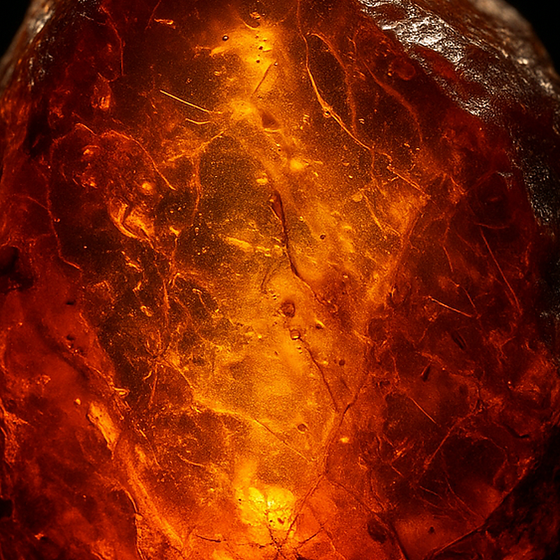
In perfumery, scents called amber are often created to emulate the golden warmth of fossil amber, which itself gives off very little scent. The term amber is loosely used to describe a scent that is warm, musky, rich and honey-like, and also somewhat earthy.
- Type
- Акорд
- Olfactive family
- Амброві й мускусні
Запах
Докладно
Цікавий факт
Ambergris is less dense than water and floats, whereas amber is denser and floats only in concentrated saline, or strong salty seawater. Yellow amber and ambergris may have been confused because both were found washed up on beaches. In past times, oil of amber was combined carefully with nitric acid to create "artificial musk", a resin with a peculiar musky odor. In ancient times, labdanum was collected by combing the beards and thighs of goats and sheep that had grazed on the cistus shrubs.
Отримання й хімія
Спосіб отримання
Labdanum, the main ingredient of the amber scent, yields a raw resin that is usually extracted by boiling the leaves and twigs. An absolute is also obtained by solvent extraction, and an essential oil by steam distillation.
No IFRA Standard for the material itself (51st Amendment)
У парфумерії
Amber, or Oriental, is a large fragrance class featuring sweet, slightly animalic scents of ambergris or labdanum, often combined with vanilla, tonka bean, flowers and woods. Amber is one of the five main families of the fragrance wheel created in 1983 by Michael Edwards. Many resins, wood scents and amber bases are used as fixatives. Labdanum is valued in perfumery for its resemblance to ambergris, which has been banned from use in many countries. Benzoin is used in perfumery as a fixative, slowing the dispersion of essential oils and other fragrance materials into the air. Some of what is called amber and copal in perfumery today is the resinous secretion of fossil conifers.
Див. також
7 ноти