Беладона

НатуральнийПОПУЛЯРНІ Й НЕЗВИЧНІplant · faintly scented
Ноти серцяПіраміда
—Сила
—Стійкість
—Походження
Зразок
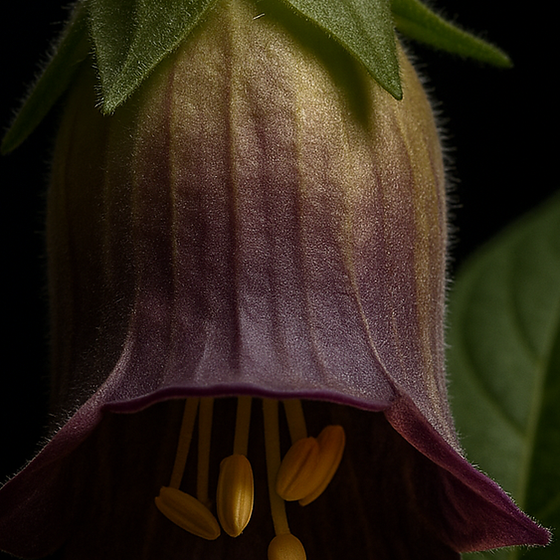
Беладона як парфумерна сировина
Ноти серця
Atropa belladonna
Визначення

Belladonna is the common name of Atropa belladonna, the deadly nightshade, a perennial herbaceous plant of the nightshade family. Its leaves and berries are highly toxic.

FAINT
Deadly nightshade, dwale, banewort, devil's cherries, naughty man's cherries, divale, black cherry, devil's herb, great morel, dwayberry
Type
Складник
Olfactive family
Квіткові
Source
Plant
Chemical class
Tropane alkaloid-containing plant
Інструменти
Піраміда
ВВерхні ноти
СНоти серця
ББазові ноти

Запах

The bell-shaped flowers of belladonna are faintly scented.

Докладно

The plant

Atropa bella-donna is a branching herbaceous perennial, often growing as a subshrub from a fleshy rootstock. Plants can reach a height of 2 m, more commonly 1.5 m, and have ovate leaves up to 18 cm long. The bell-shaped flowers are dull purple tinged yellow-green toward the base. The fruits are berries, green ripening to a shiny black and approximately 1.5 cm in diameter. The berries are sweet and are eaten by animals, mainly birds, that disperse the seeds in their droppings. A rare variant has pale-yellow flowers and pale yellow fruit. The plant is native to Europe and Western Asia, including Turkey, and extends from England in the west to western Ukraine and the Iranian province of Gilan in the east.

Chemistry and toxicity

All parts of the plant contain tropane alkaloids. The toxins include atropine, scopolamine and hyoscyamine, which cause delirium and hallucinations. By fresh weight, roots hold up to 1.3% tropane alkaloids, leaves 1.2%, stalks 0.65%, flowers 0.6%, ripe berries 0.7% and seeds 0.4%. The root is generally the most toxic part, though this can vary from one specimen to another. Deadly nightshade is one of the most toxic plants known. Ingestion of a leaf can be fatal to an adult. The berries pose the greatest danger to children because they look attractive and have a somewhat sweet taste. In 2009, an adult woman mistook belladonna berries for blueberries, and the six berries she ate were documented to result in severe anticholinergic syndrome. Symptoms of poisoning include dilated pupils, tachycardia, hallucinations, blurred vision, loss of balance, a feeling of flight and staggering. Many animals, such as rabbits, birds and deer, seem to eat the plant without suffering harmful effects, though dogs and cats are affected.

Name and uses

The common name belladonna originates from its historic use by women, as bella donna is Italian for beautiful woman. Belladonna drops act as a muscarinic antagonist, blocking receptors in the muscles of the eye that constrict pupil size. Belladonna is currently rarely used cosmetically, as it causes minor visual distortions, inability to focus on near objects, and increased heart rate. Prolonged usage was reputed to cause blindness. The plant is an important source of atropine, an effective treatment for the effects of poisoning by cholinesterase inhibitors. Atropine occurs naturally in a number of plants of the nightshade family, including deadly nightshade and jimsonweed.

—

Related: Cacao Blossom

Цікавий факт

Optometrists and ophthalmologists use atropine for pupil dilation in eye examinations, though the dose used is small. Children have been poisoned by eating as few as three berries.

Отримання й хімія

Формула
Complex natural mixture (key constituents: atropine C₁₇H₂₃NO₃; scopolamine; hyoscyamine)
CAS
8007-93-0
Ботанічна назва
Atropa belladonna
Зовнішній вигляд
Herbaceous perennial with dull purple bell-shaped flowers and shiny black berries
Синоніми
Deadly nightshade, dwale, banewort, devil's cherries, naughty man's cherries, divale, black cherry, devil's herb, great morel, dwayberry
Статус IFRA
Див. примітку

No IFRA Standard for the material itself (51st Amendment)

У парфумерії

Belladonna's flowers are only faintly scented, and the IFRA Standards library holds no standard for it.

Роль у формулі
01модифікатор
02фірмова нота
03сполучний компонент
Форми випуску
синтетичний акорд фантазійна нота

Див. також

6 ноти