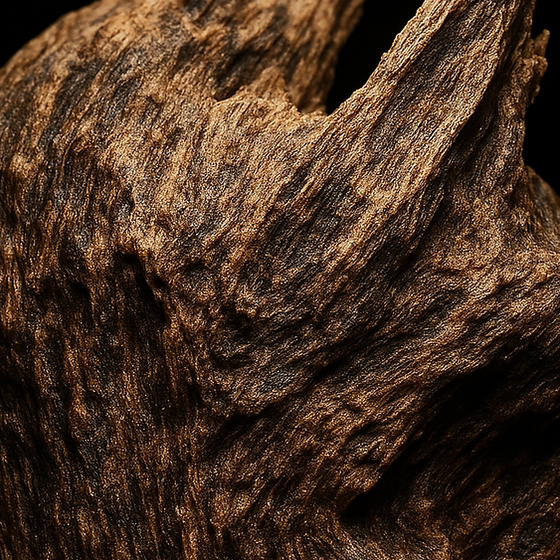
Камбоджійський уд

НатуральнийДЕРЕВИНА Й МОХИнасичений · деревний · бальзамічний

Сім ароматівОдин із них дивиться на вас

Базові нотиПіраміда
—Сила
—Стійкість
1Походження
Зразок
Камбоджійський уд як парфумерна сировина
Базові ноти
Aquilaria crassna
Визначення

Cambodian oud is oud from Cambodia, an oil distilled from agarwood, the fragrant resinous heartwood of Aquilaria trees. Its fragrance is unique and intense.

Boisé
100
Terreux
76
Vert
60
Fumé
40
Résineux
36
Doux
56
Type
Складник
Olfactive family
Деревні
Source
resinous heartwood
Chemical class
Complex natural mixture of sesquiterpenes and chromones
Інструменти
Піраміда
ВВерхні ноти
СНоти серця
ББазові ноти
—Сила
Інтенсивна
Інтенсивна
Країни-виробники
Камбоджа

Запах

The odour of agarwood is complex and pleasing, with few or no similar natural analogues.

Теруар і зрілість

Докладно

Origin

Aquilaria crassna is one source of agarwood, a resinous heartwood used for perfume and incense. It is critically endangered and native to Southeast Asia. The genus Aquilaria includes 21 species native to Southeast Asia, occurring particularly in the rainforests of Indonesia, Thailand, Cambodia, Laos, Vietnam and other countries. Aquilaria crassna is a native agarwood species of the Cardamom Mountain range in southwestern Cambodia. Most of the remaining wild agarwood trees in Cambodia now exist in deep forest areas of Protected Areas.

The aromatic qualities of agarwood vary with the species, the geographic location, the branch, trunk or root of origin, the length of time since infection, and the methods of harvesting and processing. Cambodia's agarwood is highly regarded by some consumer countries, such as the United Arab Emirates, for its high quality. Vietnam, Thailand and Malaysia import agarwood from Laos and Cambodia for re-export to markets in the Middle East and East Asia.

Formation

The tree produces the resin in response to infection by a parasitic ascomycetous mould, Phaeoacremonium parasitica. The resin dramatically increases the mass and density of the affected wood and changes its colour from pale beige to yellow, orange, red, dark brown or black. Natural agarwood formation can take up to 10 years.

A common method in planted forestry is to inoculate trees with the fungus. In the plantation process described for Cambodia, chemical inoculation is carried out by drilling holes into the trees at around eight years of age. Resin begins to form over a period of about three years after inoculation, after which harvesting should be carried out. Aquilaria crassna is favored in plantations because of its higher resin yield.

Chemistry

The composition of agarwood oil is exceedingly complex, with more than 150 chemical compounds identified. At least 70 of these are terpenoids, in the form of sesquiterpenes and chromones, and no monoterpenes have been detected at all. 2-(2-Phenylethyl)chromones, especially the highly oxidized 5,6,7,8-tetrahydro-2-(2-phenylethyl)chromones, are the main representative compounds of agarwood. Among 89 2-(2-phenylethyl)chromones, 33 highly oxidized chromones appear to be unique to agarwood and are not found in healthy Aquilaria specimens.

Other common classes of compounds include agarofurans, cadinanes, eudesmanes, valencanes and eremophilanes, guaianes, prezizanes and vetispiranes. The exact balance of these materials varies with the age and species of the tree and with the details of the oil extraction process.

Trade

More than 99% of traded Aquilaria crassna is sourced from plantations, because of the significant decline of wild populations of this critically endangered species. Demand for wild-sourced agarwood remains strong because of its perceived higher quality.

—

Related: Agarwood Oil · Agarwood Oud · Australian Oud · Chinese Oud · Indian Oud · Indonesian Oud · Laotian Oud · Malaysian Oud

Цікавий факт

First-grade agarwood is one of the most expensive natural raw materials in the world; 2026 prices for superior pure material are as high as US$290,000 per kilogram. In natural forests, only about 7 out of 100 Aquilaria trees of the same species are infected and produce agarwood.

Отримання й хімія

Спосіб отримання

Oud oil is distilled from agarwood using steam; the total yield of oil for 70 kg of wood does not exceed 20 ml. Traditionally, harvested agarwood chips have been soaked in water before hydrodistillation, which aims to increase oil yield. In the oil extraction process described for Cambodia, resin-containing wood is first milled into a fine powder. About 20 kilograms of this powder are soaked in water for around 35 days, with regular stirring to improve fermentation. The water is preferably local groundwater, which is believed to enhance fragrance. Treating Aquilaria crassna with an enzyme mixture of cellulase, xylase, alcalase and rohalase before supercritical fluid extraction significantly increased the extraction yield.

Формула
Complex natural mixture (key constituents: agarospirol C₁₅H₂₆O; 2-(2-phenylethyl)chromones)
CAS
94350-09-1
Ботанічна назва
Aquilaria crassna
Зовнішній вигляд
Thick liquid
Сила запаху
Інтенсивна
Статус IFRA
Див. примітку

No IFRA Standard for the material itself (51st Amendment)

Фізичні властивості
Температура спалаху
141.00 °F

У парфумерії

Oud has become a popular component in perfumery. It is generally used as a base note and is traditionally paired with rose. Few perfume houses use real oud in their creations, because oud is very expensive and potent. An accord of oud can be created through the use of certain chemical scent components. Oud is used in colognes, incense and perfumes.

Роль у формулі
01фіксатор
02модифікатор
03кістяк
04сполучний компонент
05формувач об’єму
Форми випуску
ефірна олія абсолют

Див. також

7 ноти