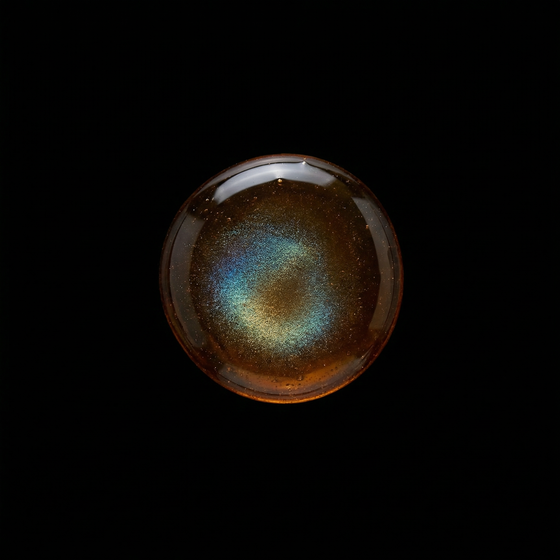
Мед

Натуральний і синтетичнийСОЛОДОЩІ Й ГУРМАНСЬКІ ЗАПАХИгурманський · тваринний · солодкий
Базові нотиПіраміда
—Сила
—Стійкість
4Походження
Зразок
Мед як парфумерна сировина
Базові ноти
Apis mellifera L. (beeswax absolute)
Визначення

Its odor type is honey, with sweet and balsamic aspects.

ДЕРЕВНИЙ КВІТКОВИЙ ЗЕМЛИСТИЙ СОЛОДКИЙ ФРУКТОВИЙ ТЕПЛИЙ ВЕРШКОВИЙ
Type
Акорд
Olfactive family
Гурманські
Chemical class
wax esters (beeswax) · phenylacetic acid and its esters
Інструменти
Піраміда
ВВерхні ноти
СНоти серця
ББазові ноти
Країни-виробники
Китай Туреччина Ефіопія Іран

Запах

Beeswax absolute smells sweet, with dried fruit, hay and tobacco-like, herbal tones and honey notes. Its scent runs buttery, floral and faintly animal. It is described as smelling of warm comb, crushed pollen and sun-heated wood, with a faint leathery hum.

At low concentration phenylacetic acid smells honey-like, and at high concentration it smells urine-like. At full strength it is sweet to the point of queasiness, with a sour, almost barnyard underside.

The honey fragrance material is also described as sugar, earthy, resinous and fruity.

Докладно

Honey and its volatile compounds

Honeys from different plant sources each contain over 100 volatile organic compounds, and these play a primary role in determining their flavors and aromas. Unifloral honeys differ from each other in volatile composition, which strongly influences the sensory character of each honey type. More than 600 compounds have been identified as honey volatiles, in different chemical families. The typical families include hydrocarbons, aldehydes, alcohols, ketones, esters, acids, benzenes, furans, pyrans, norisoprenoids and terpenes. Unifloral honey comes from nectar gathered wholly or mainly from a single plant species, so it carries a specific set of volatiles that can serve as a fingerprint of its floral origin.

Odorants of the honey note

Phenylacetic acid is one of the main compounds responsible for the flavor of honey. It is a white solid with a strong honey-like odor. Methyl phenylacetate is the methyl ester of phenylacetic acid and has a strong odor similar to honey. The compound also occurs in honey. The aroma of phenylacetaldehyde is described as honey-like, sweet, rose, green and grassy. Phenylacetic acid has the formula C₈H₈O₂ and a molar mass of 136.15 g/mol. It acts as a weak plant hormone of the auxin type, found mainly in fruits, and ants make it in the metapleural gland as an antimicrobial. Methyl phenylacetate is a colorless liquid, only slightly soluble in water but soluble in most organic solvents. Besides honey, it occurs in brandy, capsicum, coffee, pepper and some wine. Phenylacetaldehyde occurs extensively in nature because the amino acid phenylalanine gives rise to it; natural sources include chocolate, buckwheat and flowers. It is readily oxidized to phenylacetic acid.

Beeswax

Beeswax is a fragrant solid at room temperature. Its main constituents are palmitate, palmitoleate and oleate esters of long-chain aliphatic alcohols. The long-chain alcohols carry 30 to 32 carbons. Triacontanyl palmitate, a wax ester, is a major component, and an approximate chemical formula for beeswax is C₁₅H₃₁COOC₃₀H₆₁. Beeswax has a relatively low melting point range of 62 to 64 °C. The wax softens further at human body temperature, 37 °C, and heating it above 85 °C discolors it. Worker bees use the beeswax to build honeycomb cells. The color of beeswax varies from nearly white to brownish, and is most often a shade of yellow. Its wax scales are about three millimetres across and 0.1 mm thick, and about 1100 are needed to make a gram of wax. Sugars from honey are metabolized into beeswax in fat cells associated with the wax glands.

World production

In 2023, world production of honey was 1.9 million tonnes, led by China with 24% of the total. China produced 463,500 tonnes, followed by Turkey with 114,886 tonnes, Ethiopia with 84,591 tonnes and Iran with 80,389 tonnes. The long shelf life of honey is attributed to an enzyme from the stomach of bees: glucose oxidase mixed with nectar yields gluconic acid and hydrogen peroxide, which partly account for honey's acidity and for the suppression of bacterial growth.

Цікавий факт

Phenylacetic acid, one of the main compounds responsible for the flavor of honey, is subject to controls in countries including the United States and China. The controls exist because it can be used in the illicit production of phenylacetone, which is used in the manufacture of substituted amphetamines.

Отримання й хімія

Спосіб отримання

Yellow beeswax is the crude product obtained from the honeycomb. Beeswax absolute is yellow beeswax treated with alcohol. White beeswax is yellow beeswax that has been bleached or filtered. Beeswax for human use may come from cappings cut off the cells during honey extraction, from old scrapped comb, or from unwanted burr comb and brace comb removed from a hive. Because of its impurities the wax must be rendered before further use, and it may be clarified further by heating in water. Phenylacetic acid may be prepared by the hydrolysis of benzyl cyanide.

CAS
8012-89-3 (beeswax absolute) · 103-82-2 (phenylacetic acid)
Ботанічна назва
Apis mellifera L. (beeswax absolute)
Зовнішній вигляд
yellow brown to brown red semi-solid to solid (beeswax absolute)
Статус IFRA
Див. примітку

No IFRA Standard for the material itself (51st Amendment)

Фізичні властивості
Температура плавлення
61.00 to 63.00 °C.
Температура спалаху
> 212.00 °F. TCC
Відносна густина
0.94000 to 1.00000 @ 25.00 °C
Показник заломлення
1.42000 to 1.49000 @ 20.00 °C

У парфумерії

Methyl phenylacetate is used in the flavor industry and in perfumes to impart honey scents. Some perfumes use phenylacetic acid for its persistent honey-like odor at low concentrations. Phenylacetaldehyde is added to fragrances to impart hyacinth, narcissi or rose nuances.

Роль у формулі
01модифікатор
02компонент піднесення
03сполучний компонент
04натуралізатор
05формувач об’єму
06фіксатор
Форми випуску
абсолют (бджолиний віск) синтетичний акорд

Див. також

8 ноти