Materials
Aloeswood, also known as agarwood (jinkō), is produced in certain parts of southeast Asia such as Vietnam. The characters in agarwood mean "incense that sinks in water" due to the weight of the resin in the wood. The trees secrete an aromatic resin, which over time turns the wood into kōboku. The aromatic qualities of agarwood vary with the species, the place it grows, the part of the tree it comes from, the time since infection, and the methods of harvesting and processing. One particular grade of kōboku with a high oil content and superior fragrance is called kyara. Japanese incense companies divide agarwood into six categories depending on the region obtained and the properties of the agarwood.
Sandalwood (byakudan) originates primarily from India, Indonesia, southern China or other parts of southeast Asia. Sandalwood trees need around 60 years to produce their signature fragrance that can be deemed acceptable to be used for kōdō. The most valued sandalwood comes from Mysore in the state of Karnataka in India, where it is endangered. Other materials used are cinnamon bark, chebulic myrobalan, clove, ginger lily, lavender, licorice, patchouli, spikenard, camomile, rhubarb, safflower, star anise, and other herbs. Shell fragrances and other animal-derived aromatic materials are also used.
Cost and supply
Raw materials such as agarwood are becoming increasingly rare due to the depletion of the wild resource, which has made prime material very expensive. As of late 2012, the cost of lower grade kyara was about 20,000 yen per gram, and top quality kyara cost over 40,000 yen per gram. If the particular piece of incense wood has a history, the price can be even higher.
Production
A Japanese incense manufacturer either imports aromatic raw materials directly from overseas or purchases them from specialized suppliers. 70% of all of Japan's incense is manufactured on Awaji Island, a small island south of Osaka. The main reason incense manufacturing took root on Awaji Island is its nishi-kaze (west wind). This strong seasonal wind hampers the fishing industry, giving rise to the necessity for cottage industries such as incense making. The wind is also great for drying incense.
Forms and burning
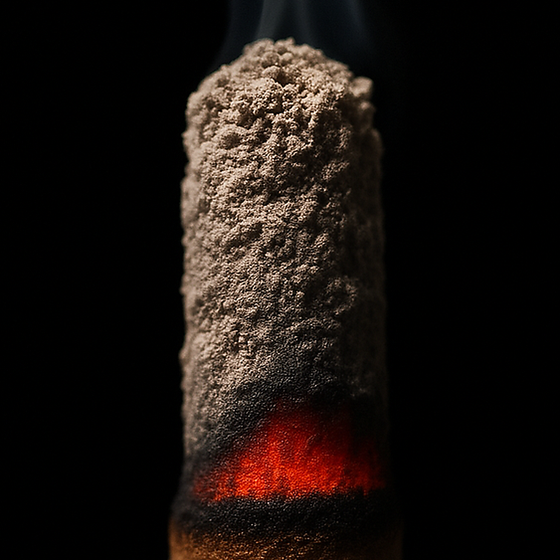
In kōdō, a small piece of fragrant wood is heated on a small mica plate, which is heated from below by a piece of charcoal that is surrounded by ash. In kōdō it is not usual for wood or incense sticks to be burned, because that would create smoke. Incense cones were invented in Japan in the 1800s. Japan has a history of kneaded incense, called nerikō or awasekō.
Kōdō
Kōdō (Way of Incense) is the Japanese art of appreciating incense, similar to the tea ceremony, in which participants follow established practises involving the preparation and enjoyment of incense. Kōdō includes all aspects of the incense process, from the tools to activities such as the incense-comparing games kumikō and genjikō. For kumikō, participants sit near one another and take turns smelling incense from a censer as they pass it around the group. Genjikō is one such game, in which participants are to determine which of five prepared censers contain different scents, and which contain the same scent. Players' determinations (and the actual answers) are recorded using genji-mon linear patterns, the elements of which allude to chapters in the Tale of Genji. Apart from kōdō, incense can also be used during the tea ceremony or other functions. The high costs and difficulty in obtaining acceptable raw material are one of the reasons why kōdō is not as widely practiced or known as the art of flower arrangement or the tea ceremony.
—
Related: Incense