Березовий дьоготь

НатуральнийСМОЛИ Й БАЛЬЗАМИдимний · фенольний · шкіряний
Базові нотиПіраміда
—Сила
—Стійкість
1Походження
Зразок
Березовий дьоготь як парфумерна сировина
Базові ноти
Betula pubescens Betula pendula Betula lenta Betula alba
Визначення

Birch tar oil is a thick liquid prepared by the destructive distillation of the wood and bark of birch. Its odour is peculiar, agreeable and penetrating.

ДИМНИЙ ШКІРЯНИЙ ФЕНОЛЬНИЙ ПРИЄМНИЙ ПРОНИКНИЙ
birch tar oil, birch oil, birch bark pitch, oleum rusci, oil of white birch, oleum betulae affix, oleum rusci pyroligneum, oleum betulae pyroligneum
Type
Складник
Olfactive family
Шкіряні
Source
bark and wood
Chemical class
pyrolysis product (lupane and oleanane triterpenoids; phenols)
Інструменти
Піраміда
ВВерхні ноти
СНоти серця
ББазові ноти
Країни-виробники
Росія (отримання олії)

Запах

In fragrances it imparts a leathery, smoky note.

Сорти й витримка

Докладно

Crude birch wood or bark pyrolysates are derived by pyrolysis (destructive distillation) of the wood or bark of Betula pubescens, Betula pendula, Betula lenta or Betula alba. The oil does not harden on exposure to the air. Birch bark tar is mainly composed of triterpenoid compounds of the lupane and oleanane family. The most characteristic molecules are betulin and lupeol. Birch bark is composed of approximately 25-34% betulin and contains other triterpenes with lupane skeletons. Some of these molecules degrade into other lupane and oleanane skeleton triterpenes. The most commonly found of these additional molecules are lupenone, betulone, lupa-2,20(29)-dien-28-ol, lupa-2,20(29)-diene and allobetulin. Betulin, lupeol and their degradation products are the chemical markers most commonly used to identify birch bark tar in the archaeological record. Birch tar oil contains, among other constituents, guaiacol, cresol and pyrocatechol. Guaiacol (CAS 90-05-1) is a phenolic compound and a common product of the pyrolysis of wood. Rectified birch tar oil consists chiefly of guaiacol and cresol, with smaller quantities of creosol and xylenol, and probably traces of phenol. It is soluble in oils, fats or chloroform and partially soluble in alcohol. The specific gravity of the rectified oil is given as 0.900 to 0.920.

Regulation

The IFRA Standard on birch wood pyrolysate, published in 2013 (Amendment 47), says that crude birch wood or bark pyrolysates should not be used as a fragrance ingredient in any finished product application. Only rectified (purified) birch tar oils that comply with the Standard's limits for polynuclear aromatic hydrocarbons (PAH) should be used. Benzopyrene and 1,2-benzanthracene serve as markers for PAH. If the oil is used alone or in combination with rectified cade, styrax or opoponax oil, the total concentration of both markers should not exceed 1 ppb in the final product. The Standard manages carcinogenicity and genotoxicity from the release of polynuclear hydrocarbons.

The Russian Leather Connection

Russian leather owes its characteristic odour to birch tar oil, which is used in its preparation. Russia leather is a water-resistant leather, oiled with birch bark oil after tanning. The oil impregnation also deterred insect attack and gave the leather a distinctive and pleasant aroma that was seen as a mark of quality.

Related Materials

Birch tar oil resembles oil of cade in its properties. Birch tar oil can be told apart from other tars that may be substituted for it: an aqueous solution made by shaking a few drops of the tar with water gives a pink colouration with potassium cyanide solution, intensified by ammonia.

Other Uses

Birch bark tar has also been used as a disinfectant, in leather dressing and in medicine. Birch bark tar oil has strong antiseptic properties, owing to a large amount of phenol derivatives and terpenoid derivatives. Birch bark tar is also one of the components of Vishnevsky liniment. Birch tar oil is used for external application, as an ointment or a soap at 10 per cent, for eczema, psoriasis and other skin affections. Mixed with essential oils, it is used to keep away mosquitoes. Birch bark tar oil is an effective repellent of gastropods, and the effect lasts about two weeks. Mixed with petroleum jelly and applied to a fence, the repellent effect of the oil can last up to several months.

—

Related: Amberwood · Andiroba · Bakhoor · Balsamic Notes · Benzoin Resinoid · Benzyl Benzoate · Benzyl Salicylate · Blue Amber

Цікавий факт

Birch bark tar is currently the oldest known adhesive substance, dating to at least 190,000 years ago at Campitello Quarry, Italy. At Königsaue in Germany, Neanderthals did not use the simplest method to make tar; they distilled it in an intentionally created underground environment that restricted oxygen flow. If the Campitello dates of 200,000 years are correct, Neanderthals made tar more than 100,000 years before the earliest known adhesive production by Homo sapiens.

Отримання й хімія

Спосіб отримання

Birch bark tar is made by dry distillation of birch tree bark. Birch tar oil is prepared in Russia by the destructive distillation of the wood and bark of Betula alba. In the modern single-pot method, the bark is heated under airtight conditions, and the final product consists of tar and the ashes of the bark. A rectified birch tar oil is obtained from the crude tar by steam distillation. Birch trees show no visible exudate that could have been recognised as a potential adhesive, so the bark must be processed to make glue. In reference tars made with Stone Age techniques, the bark is burned beside cobbles so that tar condenses on the stone surface. In one underground technique, bark rolls are buried under thin layers of sediment, the mounds are covered with embers, and tar forms in the windings of the rolls.

Формула
Complex natural mixture (key constituents: guaiacol C₇H₈O₂; cresol; pyrocatechol C₆H₆O₂)
CAS
8001-88-5; 84012-15-7
Ботанічна назва
Betula pubescens Betula pendula Betula lenta Betula alba
Зовнішній вигляд
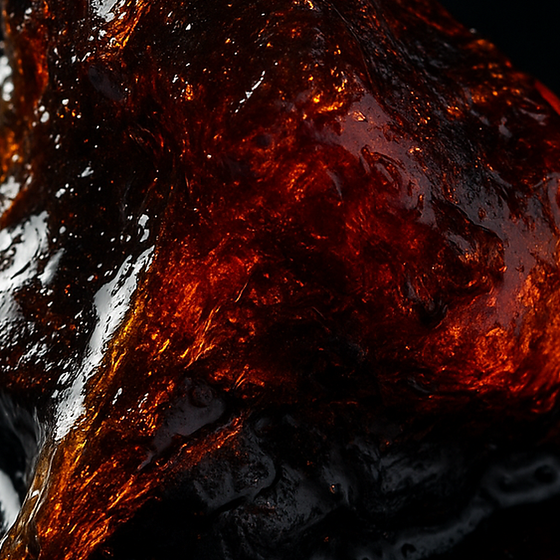
Thick liquid resembling wood tar in colour; light brown oil when rectified
Синоніми
birch tar oil, birch oil, birch bark pitch, oleum rusci, oil of white birch, oleum betulae affix, oleum rusci pyroligneum, oleum betulae pyroligneum
Статус IFRA
Заборонено (деякі форми)

Prohibited (crude) and Specification (rectified distillates) — IFRA Standard « Birch wood pyrolysate » (Amendment 47)

Фізичні властивості
Відносна густина
0.926 to 0.955 at 20°

У парфумерії

Birch bark tar is used as a base note, especially in fragrances of the leather and tobacco genre and, to a lesser extent, in chypres. It is used in Cuir de Russie perfumes and fragrance bases, typically together with castoreum and isobutyl quinoline. It is also used as an ingredient in some soaps, although pine and coal tars are more commonly used in soaps as a medicating agent.

Роль у формулі
01фіксатор
02фірмова нота
03модифікатор
04формувач об’єму
05сполучний компонент
Форми випуску
стандартна форма

Див. також

8 ноти