


Фіміам
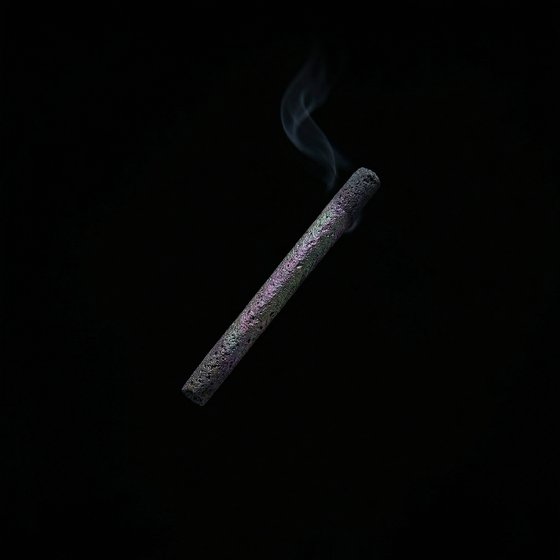
Terpenic, bright, unexpectedly citrus for a resin. Olibanum smells like the inside of a stone church at dawn — cold mineral air crossed with lemon peel and warm dust from the censer.
- Type
- Складник
- Olfactive family
- Смолисті
- Source
- natural extract
- Chemical class
- Oleo-gum-resin (monoterpenes, diterpenes, triterpenoids)
Запах
Докладно
Цікавий факт
Incensole acetate, a cembranoid diterpene specific to Boswellia resin, was demonstrated in a 2008 study by Moussaieff et al. (The FASEB Journal, 22(8):3024-34) to activate TRPV3 ion channels in mouse brains, producing anxiolytic and antidepressant-like effects. The same effect was absent in TRPV3-knockout mice, confirming the mechanism. TRPV3 channels are normally involved in warm-temperature sensing — a possible neurochemical basis for the calming effect historically attributed to burning frankincense in religious settings.
Отримання й хімія
Спосіб отримання
Steam distillation of dried Boswellia resin tears yields the essential oil: 5–6% from B. carterii, up to 9–10% from B. sacra, approximately 2% from B. frereana. The oil is approximately 75% monoterpenes, with alpha-pinene and alpha-thujene dominant but in highly variable ratios depending on species, chemotype, and terroir. CO2 supercritical extraction captures a broader molecular range including the heavier diterpenes (incensole, incensole acetate) and — unlike steam distillation — the non-volatile boswellic acids (MW ~470), producing a rounder, more complete olfactory profile. Solvent extraction yields an absolute. Hydrocarbon solvent extraction of the crude oleo-gum-resin produces a darker, more tenacious resinoid. Principal commercial species: B. carterii (Somalia, Ethiopia), B. sacra (Oman, Yemen), B. serrata (India, CAS 97952-72-2), B. papyrifera (Sudan, Ethiopia).
- Формула
- C10H16 (alpha-Pinene, ~60%)
- CAS
- 8016-36-2 (essential oil, B. carterii) · 97952-72-2 (essential oil, B. serrata) · 8050-07-5 (resinoid/gum)
- Ботанічна назва
- Various (Boswellia, Commiphora, Styrax)
- Зовнішній вигляд
- Colorless to pale yellow clear liquid (essential oil)
- Сила запаху
- Висока
- Стійкість
- 188 hours @ 100% (TGSC data)
- Синоніми
- ENCENS OLIBANUM CHURCH INCENSE KO BAKHOOR
Restricted: up to 8% in fragrance concentrate (TGSC data for CAS 8016-36-2). Restricted components include carvone (0.3%), alpha-thujone (0.1%), (+)-isothujone (0.4%).
- Температура кипіння
- 137–141 °C @ 760 mm Hg
- Температура спалаху
- 96 °F / 35.56 °C (TCC)
- Відносна густина
- 0.855 to 0.880 @ 25.00 °C (essential oil, B. carterii)
- Показник заломлення
- 1.466 to 1.477 @ 20.00 °C
У парфумерії
Olibanum is one of few natural materials that spans from top to base in a single composition. The monoterpene-rich head (alpha-pinene, alpha-thujene) provides a citrusy, peppery lift; the diterpene body (incensole, incensole acetate) anchors the dry-down with balsamic warmth. This dual character makes it structurally adaptable across fragrance families. In ambers and ambers, it supplies the sacral, smoky-resinous quality. In chypre constructions, it can extend or partially substitute oakmoss. In fresh-incense compositions — a category that has expanded significantly since the early 2000s — the essential oil's terpenic top is foregrounded against clean woods and citrus. CO2 extract is preferred when the full resinous arc is needed; steam-distilled oil when the bright, citrusy opening matters more. The resinoid is a fixative, adding tenacity without the volatility of the essential oil. No single synthetic molecule replicates olibanum's full profile, though various incense accords are built using combinations of Iso E Super, Cashmeran, and terpenic isolates.
Див. також
8 ноти