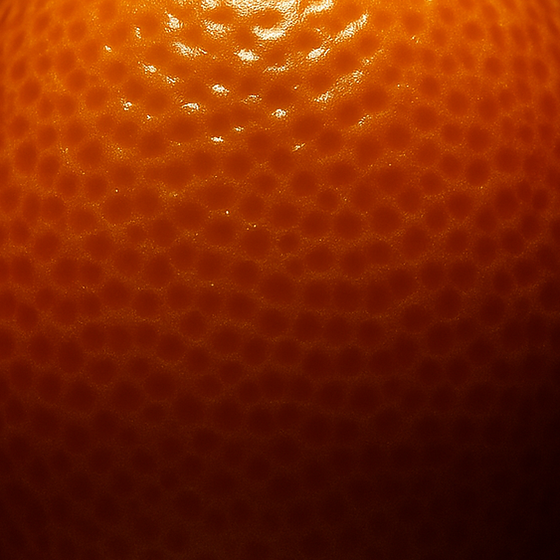
Kumquat is a citrus plant native to Southern China. The fruits are yellowish-orange and oval or round, and can measure 2.5 to 5 centimeters across. The English word kumquat is borrowed from the Cantonese gām gwāt, from gām 'golden' and gwāt 'mandarin orange'.
Plant and fruit
Kumquat plants have extremely glossy leaves and bear small white flowers in clusters or singly in the leaf axils. The plants can reach a height of 2.5 to 4.5 meters, with dense branches that sometimes bear small thorns. A typical Nagami fruit is oval, one and one-quarter inch long and three-quarters of an inch wide, and holds about five or six seeds.
Taxonomy
Fortunella is a now-historical genus in which kumquats were formerly classified. Classifications have ranged from a single species, Citrus japonica, to numerous species representing each cultivar. Recent genomic analysis defines three pure species, Citrus hindsii, C. margarita and C. crassifolia, with C. × japonica a hybrid of the last two. Citrus japonica, the round kumquat, was first described by Carl Peter Thunberg in 1780 as Fortunella japonica. The Nagami kumquat, Fortunella margarita, is the most commonly grown type of kumquat. Calamansi is a hybrid of mandarin orange and kumquat.
Species and hybrids
Citrus japonica belongs to the family Rutaceae, in the order Sapindales. Other kumquat species are Citrus hindsii, the Hong Kong kumquat; C. crassifolia, the Meiwa kumquat; C. margarita, the oval or Nagami kumquat; C. obovata, the Jiangsu or Fukushu kumquat; and C. swinglei, the Malayan kumquat. C. hindsii is distributed in China and C. swinglei on the Malay Peninsula, while the other species are found in China and Japan. Hybrids of the kumquat include the limequat (key lime × kumquat), the mandarinquat (Satsuma mandarin × kumquat), the citrangequat (citrange × kumquat) and the yuzuquat (yuzu × kumquat).
Composition
The essential oil of the kumquat peel is composed principally of limonene, which makes up around 93% of the total. Limonene is a cyclic monoterpene and the major component in the fragrance and essential oil of citrus fruit peels. Limonene is a chiral molecule, and the (+)-isomer, d-limonene, is the form that occurs more commonly in citrus fruit peels. Alpha-pinene (0.34%) is a second monoterpene in the oil, beside limonene. The oil is unusually rich in sesquiterpenes, 0.38% in total, such as α-bergamotene, caryophyllene, α-humulene and α-muurolene. These sesquiterpenes contribute to the spicy and woody flavor of the fruit. Carbonyl compounds make up much of the remainder and are responsible for much of the distinctive flavor. They include esters such as isopropyl propanoate (1.8%) and terpinyl acetate (1.26%), and aldehydes such as citronellal (0.6%). The oil also holds ketones such as carvone (0.175%). Other oxygenated compounds include nerol (0.22%) and trans-linalool oxide (0.15%). Citronellyl acetate (C₁₂H₂₂O₂) is an important aroma component in kumquat oil. Citronellyl acetate is neither cytotoxic nor genotoxic, but it can cause sensitization.
Cultivation
Kumquats have been cultivated for centuries in other parts of East Asia, South Asia and Southeast Asia. They do well in USDA hardy zones 9 and 10, and on mature trees the fruit forms in about 90 days. They do best in direct sunlight, needing 6 to 7 hours a day, and are planted directly in the ground. Kumquats flower in summer, and the fruits mature in late winter and hold well on the tree. Kumquats do not grow well from seeds, so they are propagated vegetatively, using the rootstock of another citrus fruit, air layering or cuttings. The Nordmann seedless is a seedless cultivar of the Nagami kumquat, similar to Nagami but with a slightly different shape and lighter skin. The Centennial Variegated, another Nagami cultivar, has fruits striped light green and yellow when underripe, which turn orange and lose their stripes as they ripen. In the UK, Citrus japonica has gained the Royal Horticultural Society's Award of Garden Merit.
Nutrition
Raw kumquat is 81% water, 16% carbohydrates, 2% protein and 1% fat. A 100-gram portion supplies 296 kilojoules (71 kilocalories) and is a rich source of vitamin C, at 49% of the Daily Value. It also supplies 6.5 grams of dietary fiber.