


Цариця ночі
КВІТИквітковий · насичений · солодкий
Ноти серцяПіраміда
—Сила
—Стійкість
—Походження
Зразок
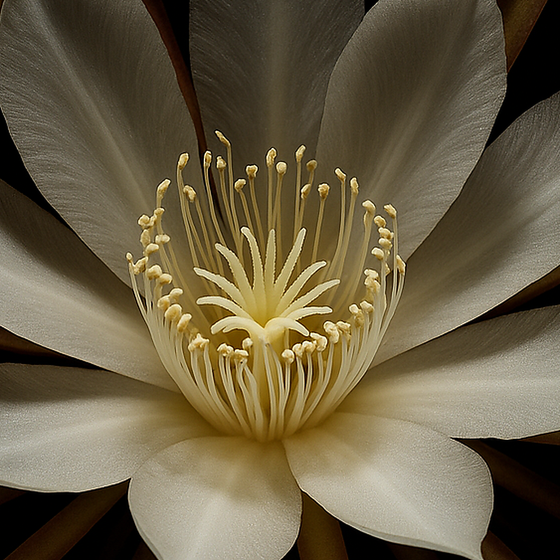
Selenicereus grandiflorus
Визначення
Queen of the night is the common name of Selenicereus grandiflorus, a cactus species originating from the Antilles, Mexico and Central America. Its fragrance is reminiscent of vanilla and orange-flower.
КВІТКОВИЙ ЗЕЛЕНИЙ СОЛОДКИЙ ТЕПЛИЙ СВІЖИЙ ВЕРШКОВИЙ
Queen of the night, night-blooming cereus, large-flowered cactus, sweet-scented cactus, vanilla cactus
- Type
- Акорд
- Olfactive family
- Квіткові
Інструменти
Піраміда
ВВерхні ноти
СНоти серця
ББазові ноти
Запах
В ароматах PREMIEREPEAU
Докладно
Цікавий факт
Grandiflorus is Latin for 'large flowered'. Paradoxically, its flowers are moderate in size compared with several other Selenicereus species.
Отримання й хімія
- CAS
- 8007-78-1
- Ботанічна назва
- Selenicereus grandiflorus
- Зовнішній вигляд
- Enormous white flowers
- Синоніми
- Queen of the night, night-blooming cereus, large-flowered cactus, sweet-scented cactus, vanilla cactus
Статус IFRA
Див. приміткуNo IFRA Standard for the material itself (51st Amendment)
Див. також
7 ноти