Botany
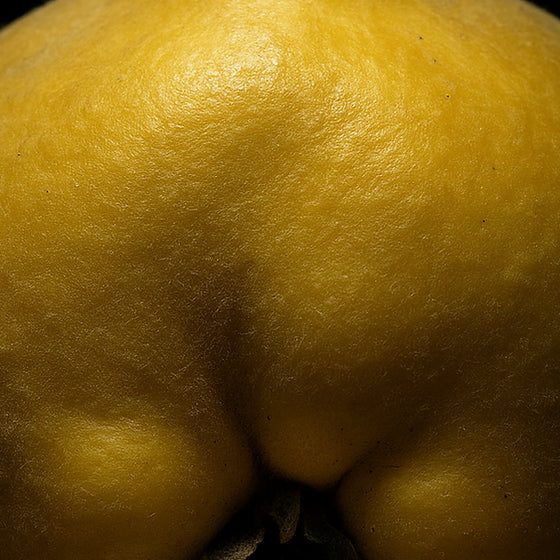
Quince (Cydonia oblonga) is the sole member of the genus Cydonia in the Malinae subtribe, which contains apples, pears and other fruits, of the Rosaceae family. It is a deciduous tree that bears hard, aromatic, bright golden-yellow pome fruit, similar in appearance to a pear. Quinces are shrubs or small trees up to 4 to 6 metres tall. The solitary flowers, produced in late spring after the leaves, are white or pink. The quince tree is sometimes grown as an ornamental plant for its attractive pale pink blossoms.
The ripe fruit is larger than many apples, weighing as much as 1 kilogram, and is often pear-shaped but sometimes roughly spherical. Gritty stone cells are dispersed through the flesh. Ripe quince fruits are hard, tart, and astringent. The seeds contain nitriles, common in the seeds of the rose family. In the stomach, some of the nitriles are hydrolysed to produce toxic hydrogen cyanide. The seeds are toxic only if eaten in large quantities.
Origin and cultivation
Quince is native to the Hyrcanian forests south of the Caspian Sea in Iran. Neolithic farmers spread it radially from that centre, c. 5000 to 3000 BC, to secondary centres including Turkey, Azerbaijan, Turkmenistan, Kashmir, Afghanistan, and Syria. Quince is cultivated on all continents in warm-temperate and temperate climates. It requires a cooler period of the year, with temperatures under 7 °C, to flower properly. In 2023, world production of quinces was 687,036 tonnes, with Turkey and China accounting for 44% of the total. Cultivars include 'Perfume', 'Pineapple', 'Champion' and 'Smyrna'.
History
Quince came from the Minoan port of Kydonia. The ancient Greeks were great quince producers and made quince cheese, sweetening it with honey. The Roman cookbook of Apicius, compiled in the late 4th or early 5th century AD, also gives recipes for stewing quince with honey. Charlemagne directed that quinces be planted in well-stocked orchards. Quinces in England are first recorded in about 1275, when Edward I had some planted at the Tower of London. The modern English name originated in the 14th century as a plural, understood as a singular noun, of quoyn, via Old French cooin, from Latin cotoneum malum. Settlers brought it to North America in the 17th century, and to Central and South America in the 18th century.
Volatile composition
Analysis of the steam-distilled oil by gas chromatography and gas chromatography-mass spectrometry identified 62 compounds: 2 hydrocarbons, 13 esters, 11 alcohols, 11 aldehydes, 11 ketones, 5 lactones and 9 miscellaneous compounds. The structures of two new oxide compounds, trans- and cis-3-methyl-5-[(E)-3'-methyl-1',3'-butadien-1'-yl]tetrahydrofuran, were elucidated by instrumental analyses.
In two quince cultivars, Round and Oblong, 87 free and glycosidically bound volatile compounds have been reported. The major free volatile compounds were ethyl acetate, ethyl (E)-2-butenoate, hexyl butanoate, hexyl 2-methylbutanoate, ethyl 3-phenylpropanoate, α-farnesene, hexanal, 1-hexanol, dihydro-β-ionol and linalool oxide. The major bound volatiles were ethyl acetate, hexyl pentafluoro propanoate, ethyl hexanoate, γ-elemene, cyclocitral, megastigmatrienone-II and dihydro-β-ionol. Of these, γ-elemene in glycosidically bound form, cyclocitral and (E)-β-damascenone were found for the first time in quince fruit. Variation in free and bound volatiles between the two cultivars resulted in different organoleptic properties.
α-Farnesene, a sesquiterpene, is found in the coating of apples and other fruits, where it is responsible for the characteristic green apple odour. β-Ionone, another volatile of quince, belongs to the ionones, which are C13-norisoprenoids formed by oxidative cleavage of larger carotenoid molecules.
Uses
Ripe quinces are eaten raw or processed into jam, quince cheese, or alcoholic drinks. Quince cheese, also known as quince paste, is a sweet and tart, thick jelly made of the pulp of the quince fruit. In Spanish it is known as ate, dulce de membrillo or carne de membrillo, and in Portuguese as marmelada or doce de marmelo. Puente Genil, in Spain, is the main world producer of quince cheese. In Argentina and Uruguay, a slice of dulce de membrillo eaten with a slice of soft cheese is considered the national dessert. Quince jelly is made from the skins and core, including pips, left over from preparing quince cheese. In the Balkans, quince eau-de-vie (rakija) is made.
Quince is used in the Levant, especially in Syria. It is added to either chicken or kibbeh to create an intense and unique taste.