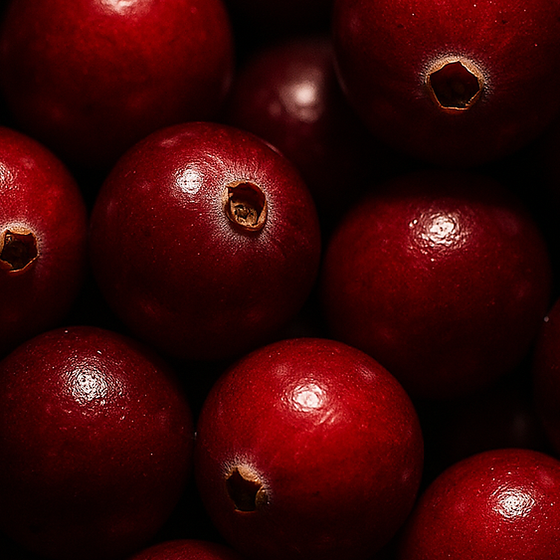
Червоні ягоди

АкордФРУКТИ, ОВОЧІ Й ГОРІХИфруктовий · свіжий · солодкий
Ноти серця·Базові нотиПіраміда
4/5Сила
—Стійкість
—Походження
Зразок
Червоні ягоди як парфумерна сировина
Від нот серця до базових нот
Фантазійний/концептуальний
Визначення

Red berries in perfumery: raspberry ketone, the primary aroma compound of red raspberries, is sometimes used to impart a fruity odor. Raspberry ketone has a fruity, sweet, powdery odor with red fruit facets.

КВІТКОВИЙ СОЛОДКИЙ ФРУКТОВИЙ ТЕПЛИЙ СВІЖИЙ
Type
Акорд
Olfactive family
Фруктові
Інструменти
Піраміда
ВВерхні ноти
СНоти серця
ББазові ноти
4/5Сила
Висока
інтенсивність запаху
Стійкість на блотері
High (raspberry ketone)

Запах

Raspberry ketone opens on a sweet, fresh raspberry note with berry-jam nuances, develops into a full red fruit heart and settles into a soft, powdery, subtly warm dry-down. At higher concentrations, jammy, preserve-like characteristics emerge alongside faint woody-warm undertones. Its powdery effect parallels heliotropin or benzyl salicylate, though it is more fruit-focused and less floral.

The odor of β-ionone is described as raspberry-violet. The (R)-enantiomer of α-ionone, which is present in raspberry, is reported to produce a violet-like, fruity, raspberry-type, floral odor. The aroma of ethyl methylphenylglycidate is described as sweet, fruity, strawberry, floral, honey, fatty. cis-3-Hexen-1-ol has an intense grassy-green odor of freshly cut green grass and leaves. Ethyl butyrate has a fruity odour that includes juicy fruit, pineapple, cognac, sweet and tutti frutti facets.

Докладно

Raspberry ketone is a naturally occurring phenolic compound that is the primary aroma compound of red raspberries. It occurs in a variety of fruits, including raspberries, cranberries, and blackberries. The smell of raspberries is due to lots of molecules, but raspberry ketone is the "impact molecule" associated with their particular smell. Over 200 molecules have been identified in raspberry flavour. Strawberry emissions are dominated by esters, up to 90% in some cultivars, whereas terpenoids, ketones and aldehydes make up the majority of emissions from raspberries. In wild raspberries, the amount of raspberry ketone was found to be three times higher than in cultivated varieties, although the amount of α- and β-ionone was 1.5-2 times lower.

The Molecules Behind the Berry Note

Raspberry ketone has the preferred IUPAC name 4-(4-hydroxyphenyl)butan-2-one and the CAS number 5471-51-2. It is also known as frambinone, rheosmin and oxyphenylon. Among the compounds with smells characteristic of ripe fruit in raspberry flavour are α- and β-ionone, β-damascenone, linalool and geraniol. The ionones are derived from the degradation of carotenoids. β-Ionone has the CAS number 79-77-6. Among the most intense odor-active compounds found in samples of the Meeker raspberry cultivar were strawberry furanone, hexanal and β-ionone.

cis-3-Hexen-1-ol, also known as leaf alcohol, is a colorless oily liquid with the CAS number 928-96-1. It is produced in small amounts by most plants. Among the raspberry volatiles, (Z)-3-hexen-1-ol, 1-hexanol, hexanal and (Z)-3-hexenyl acetate are commonly produced by plants and are generally indicated as leaf compounds.

Ethyl methylphenylglycidate (CAS 77-83-8) is commonly known as strawberry aldehyde and as Aldehyde C-16. It contains ester and epoxide functional groups but, despite its common name, lacks an aldehyde group. It is a colorless liquid that is insoluble in water.

Because of their low odor thresholds and attractive odor qualities, 4-hydroxy-3(2H)-furanones are considered exceptional aroma compounds. The furanone HDMF has been isolated from fresh fruits such as strawberry and raspberry.

Цікавий факт

Raspberry ketone is one of the most expensive natural flavor components used in the food industry, and the natural compound can cost as much as $20,000 per kg. Melon flies, found across a wide area of Southeast Asia, are strongly attracted by raspberry ketone.

Отримання й хімія

Спосіб отримання

Raspberry ketone can be extracted from the fruit, yielding about 1-4 mg per kg of raspberries. Since its natural abundance is low, it is prepared industrially by a variety of methods from chemical intermediates. One of these methods is a Claisen-Schmidt condensation followed by catalytic hydrogenation. First, acetone is condensed with 4-hydroxybenzaldehyde to form an α,β-unsaturated ketone. Then the alkene part is reduced to the alkane. This two-step method produces raspberry ketone in 99% yield. Nickel boride is a less expensive hydrogenation catalyst that also shows high selectivity towards hydrogenation of the double bond of the enone. Ethyl methylphenylglycidate is usually prepared by the condensation of acetophenone and the ethyl ester of monochloroacetic acid in the presence of a base, in a reaction known as the Darzens condensation. Ionone can be synthesised from citral and acetone with calcium oxide as a basic heterogeneous catalyst.

Сила запаху
High (raspberry ketone)
Стійкість
High (raspberry ketone)
Статус IFRA
Див. примітку

No IFRA Standard for the material itself (51st Amendment)

Фізичні властивості
Температура кипіння
140 to 146 °C at 0.5 mmHg (raspberry ketone)
Температура плавлення
82 to 84 °C (raspberry ketone)

У парфумерії

Raspberry ketone is sometimes used in perfumery, in cosmetics, and as a food additive to impart a fruity odor. The combination of α-ionone and β-ionone is characteristic of the scent of violets and is used with other components in perfumery and flavouring to recreate that scent. β-Ionone is an important fragrance chemical used in perfumery. Ethyl methylphenylglycidate is used in artificial fruit flavors, particularly strawberry, and finds use in the fragrance industry and in cosmetics. γ-Decalactone is particularly important in the formulation of peach, apricot, and strawberry flavourants. Ethyl butyrate is used in a variety of flavourings, including orange, cherry, pineapple, mango, guava, bubblegum, peach, apricot, fig and plum. It is also used as a solvent in perfumery products.

Роль у формулі
01модифікатор
02фірмова нота
03компонент піднесення
04сполучний компонент
05формувач об’єму
06свіжість
Форми випуску
синтетичний акорд фантазійна нота

Див. також

8 ноти