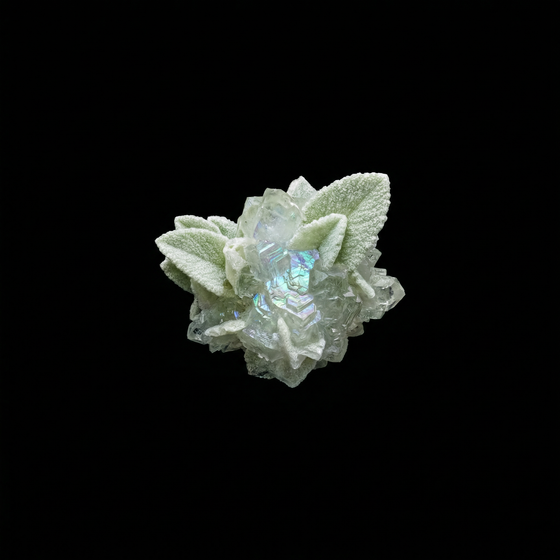
Склареол

НатуральнийНАТУРАЛЬНІ Й СИНТЕТИЧНІ, ПОПУЛЯРНІ Й НЕЗВИЧНІамбровий · трав’яний · тютюн
Базові нотиПіраміда
—Сила
—Стійкість
3Походження
Зразок
Склареол як парфумерна сировина
Базові ноти
Salvia sclarea L. (clary sage)
Визначення

Sclareol is a fragrant chemical compound found in Salvia sclarea, from which it derives its name. It is an amber-colored solid with a sweet, herbaceous, balsamic scent.

ЗЕЛЕНИЙ СОЛОДКИЙ БАЛЬЗАМІЧНИЙ АМБРОВИЙ ТЕПЛИЙ
(-)-sclareol
Type
Складник
Olfactive family
Амброві й мускусні
Chemical class
bicyclic diterpene alcohol
Інструменти
Піраміда
ВВерхні ноти
СНоти серця
ББазові ноти
Країни-виробники
Франція Угорщина Росія

Запах

Sclareol has a sweet, herbaceous, balsamic scent. Its aroma is also described as bitter, herbaceous and hay-like. Salvia plants, and the sclareol in them, are harvested for their earthy aromatic character.

Молекула: виробники й варіанти

Докладно

Sclareol is a bicyclic diterpene alcohol with roles in plant growth, development, defense, and attraction of pollinators. Its molecular formula is C₂₀H₃₆O₂ and its molecular weight is 308.5. It is also named Labd-14-ene-8,13-diol. Extracted from plant matter, it is accompanied by several other diterpene alcohols of similar structure, the best known being cis-abienol and sclareolide.

Physical Properties

Sclareol is a solid that forms large crystals. It melts at 95.6 to 98.7 °C. It is practically insoluble or insoluble in water and soluble in ethanol.

Plant Sources

Salvia sclarea, the clary sage, is a biennial (short-lived) herbaceous perennial in the genus Salvia. It is native to the northern Mediterranean Basin and to some areas of north Africa and Central Asia. It reaches 0.91 to 1.22 m in height. Sclareol is mainly produced in the glandular trichomes of sage flower calyces. It is formed via a methylerythritol-phosphate biosynthetic pathway. Sclareol is mainly isolated from the inflorescences of Salvia sclarea, where it is concentrated in the oil glands of the calyces. In Salvia sclarea, sclareol accounts for about 11.5-15.7% of the essential oil. The terpenoid content of S. sclarea, sclareol included, is affected by geography, climate, temperature, carbon dioxide, nitrogen, plant lines and other factors. Sclareol is also extracted from the flowers of Cistus creticus, Nicotiana glutinosa, and Cleome spinosa. In an aromatic extraction product of Nicotiana glutinosa sclareol made up 6.9%.

Cultivation

Clary sage is cultivated in countries including Hungary, Bulgaria, Moldavia, Romania and France, where growing global demand for sclareol has encouraged new breeding initiatives. Breeding produced the variety Scalia, which has a high sclareol yield but flowers late, and then the variety Toscalia, which has a high sclareol yield without late flowering. The ornamental cultivar Vatican White produced 20% less sclareol than the cultivar used for oil production.

From Sclareol to Ambroxide

Ambroxide is a naturally occurring terpenoid and one of the key constituents responsible for the odor of ambergris. It has an ambery and woody smell historically linked to ambergris, reminiscent of tobacco and clary sage. Among the starting materials used for the semi-synthesis of ambroxide, sclareol is the most promising because of its structural similarity to ambroxide, both having a labdane carbon skeleton. The industrial route has four steps: extraction of sclareol from Salvia sclarea, oxidation of its side chain to sclareolide, reduction of sclareolide to ambradiol, and cyclodehydration of ambradiol to ambroxide. A one-pot synthesis from sclareol is viewed as convenient and environmentally friendly. Hyphozyma roseonigra converts sclareol to ambradiol, which can be converted to ambroxide by a cyclodehydration process. The route faces challenges such as the long growth cycle of the plant, its susceptibility to climate changes and the environmental issue associated with the chemical waste. A newer patented method uses homofarnesol as the raw material and was stated to require 100 times less agricultural surface than the traditional method from clary sage.

Microbial Conversion

Cryptococcus albidus converted 60 g/L of sclareol to 43 g/L of sclareolide within 5 days in a fermenter, and Filobasidium magnum converted 30 g/L to 21.62 g/L within 72 hours in flasks. A co-culture of sclareol-producing engineered yeast and Hyphozyma roseonigra gave 493.1 mg/L of ambradiol, the first complete biosynthesis of ambradiol from glucose.

Цікавий факт

The yearly use of ambroxide as the most appreciated substitute of ambergris is estimated at more than 100 t.

Отримання й хімія

Спосіб отримання

Sclareol is extracted by steam distillation of fresh flowers, then purified by further extraction using an organic solvent. Sclareol is also extracted from clary sage straw. A waxy n-hexane extract of Salvia sclarea L. is called a concrete. In a two-step supercritical carbon dioxide extraction of this concrete, the first step, at 90 bar and 50 °C, collected only lighter compounds such as monoterpenes and sesquiterpenes, and the second, at 100 bar and 40 °C, recovered only sclareol and related compounds. The extraction yield increased from about 6.0% to 9.3% w/w as the CO₂ density increased.

Формула
C₂₀H₃₆O₂
CAS
515-03-7
Ботанічна назва
Salvia sclarea L. (clary sage)
Зовнішній вигляд
Amber-colored solid, large crystals
Синоніми
(-)-sclareol
Статус IFRA
Обмежено

Specification — IFRA Standard « Sclareol » (Amendment 39). Sclareol used as a fragrance ingredient should have a minimum purity of 98%.

Фізичні властивості
Температура плавлення
95.6 to 98.7 °C

У парфумерії

Sclareol is used as a fragrance in perfume manufacturing and as a flavoring agent. Sclareol is the most common starting material for manufacturing ambroxide, which is used as a fixative in commercial perfumes. Ambroxide is used in perfumery for creating ambergris notes and as a fixative. The most prominent use of ambroxide is in fine fragrance, where it serves simultaneously as a base note and a fixative. Perfume makers highly valued ambergris as a fixative, although it has been mostly replaced by synthetic ambroxide.

Роль у формулі
01фіксатор
02сполучний компонент
Форми випуску
ефірна олія конкрет

Див. також

7 ноти