


Спартіум
НатуральнийКВІТИквітковий · солодкий · зелений
Ноти серцяПіраміда
—Сила
—Стійкість
—Походження
Зразок
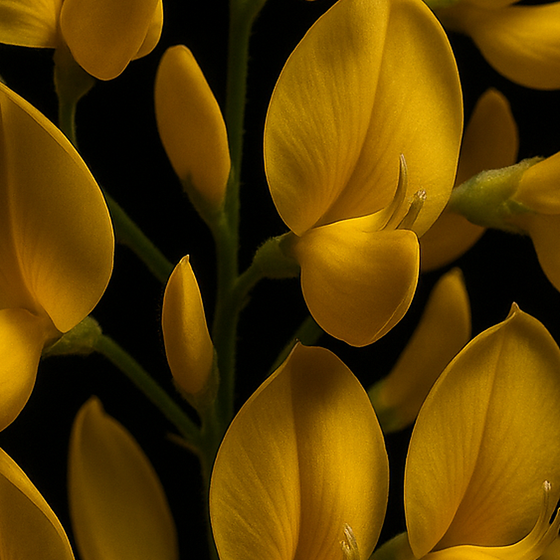
Spartium junceum
Визначення
Spanish broom (Spartium junceum) is a Mediterranean shrub of the family Fabaceae whose essential oil is known as genet absolute. It is the only species in the genus Spartium.
КВІТКОВИЙ ЗЕЛЕНИЙ СОЛОДКИЙ ТРАВ’ЯНИЙ ТЕПЛИЙ СВІЖИЙ МЕДОВИЙ
Rush broom, weaver's broom, genêt d'Espagne, genet absolute, broom absolute
- Type
- Складник
- Olfactive family
- Квіткові
- Source
- plant
- Chemical class
- absolute
Інструменти
Піраміда
ВВерхні ноти
СНоти серця
ББазові ноти
Запах
В ароматах PREMIEREPEAU
Докладно
Цікавий факт
The seed pods burst open, often with an audible crack, spreading seed from the parent plant.
Отримання й хімія
Спосіб отримання
The dried flowers are extracted with petroleum ether, which gives a concrete in a yield of about 0.1%. The absolute is then prepared by alcoholic extraction of this concrete.
- Формула
- Complex natural mixture
- CAS
- 8023-80-1
- Ботанічна назва
- Spartium junceum
- Зовнішній вигляд
- Dark brown semi-solid
- Синоніми
- Rush broom, weaver's broom, genêt d'Espagne, genet absolute, broom absolute
Статус IFRA
Див. приміткуNo IFRA Standard for the material itself (51st Amendment)
Фізичні властивості
- Температура спалаху
- > 200 °F
- Відносна густина
- 0.900 to 0.980 @ 25 °C
- Показник заломлення
- 1.474 to 1.482 @ 20 °C
У парфумерії
The plant is also used as a flavoring.
Роль у формулі
01підсилювач дифузії
02модифікатор
03фірмова нота
04компонент піднесення
05формувач об’єму
06свіжість
Форми випуску
ефірна олія
Див. також
8 нотиТроянда квітковий · медовий · зелений Лілія квітковий · зелений · восковий Гвоздика садова квітковий · пряний · гвоздика (прянощі) Тубероза квітковий · наркотичний · вершковий Ірис пудровий · землистий · фіалка Золотушник квітковий · зелений · солодкий Буркун квітковий · солодкий · зелений Мати-й-мачуха квітковий · солодкий · зелений
