


Wild Strawberry
Keywords: fruity · sweet · fresh
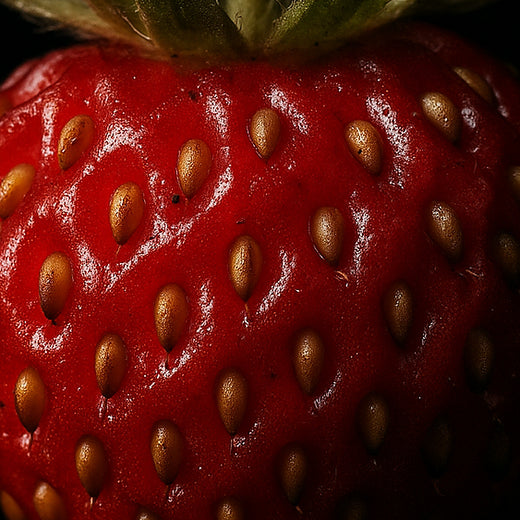
Wild strawberry is the fruit of Fragaria vesca, a perennial herbaceous plant in the rose family. Its scent has more floral nuances than that of traditional strawberries.
- Olfactive family
- Fruity · 698 entries of the glossary in this family Subfamily: Berry notes · 71 entries in this subfamily
- Material
- Accord Fruit
- Pyramid
- Heart · Volatility: Heart Note
- Strength
- Medium Step 3 of 5 · shared by 1,462 of 2,148 graded entries Graded entries at each step, from 1 to 5: 4, 118, 1,462, 500, 40. 24 more sit between two steps.
- Also called
- woodland strawberry, Alpine strawberry, Carpathian strawberry, European strawberry
Wild Strawberry · Facets
Entries of the glossary that carry each facet, of 3,979:
- green 1,442
- sweet 1,988
- gourmand 91
- warm 1,108
- fresh 1,387
- creamy 401
Editorial note We own no rights to this material, its name or its trademark. This entry is independent editorial journalism, published under freedom of expression.
Wild Strawberry · Scent
The aroma of wild strawberries is sweet and floral. The fruit’s scent has flowery accents, like a cross between violet and white flowers. Wild strawberries, often in fact a specific variety that can also be cultivated, have a more refined, fruity-floral fragrance. The strawberry note is described as red berry, juicy and green floral. Methyl anthranilate, on which the fragrance of wild strawberries largely depends, gives an intensive sweetish-flowery impression.
Evolution over time
Wild Strawberry: scent over time.
- Immediately
Red berry, juicy, green
Scent words: green - After a few hours
Sweet, with floral nuances
Scent words: floral · sweet - After a few days
Flowery accents, like a cross between violet and white flowers
Scent words: floral
Wild Strawberry · In Perfumery
The strawberry note has many workaday uses and makes an occasional appearance in fine fragrance, although it is not often flaunted. Strawberry flavour and fragrance are used widely in manufacturing, including foods, beverages, perfumes and cosmetics. Ethyl methylphenylglycidate is used in the fragrance industry, in artificial flavors and in cosmetics. The acetate ester of furaneol, also known as strawberry acetate, is used in traces in perfumery to add a sweet gourmand note.
Pyramid
Wild Strawberry: Heart. Entries of the glossary stored at each place of the pyramid, of 4,000 (36 store no place):
- Top 718
- Top · Heart 497
- Heart 1,641
- Heart · Base 514
- Base 594
Role in the formula
Wild Strawberry: roles in the formula. Entries of the glossary that share each role, of 4,000:
- Signature note 897
- Lifting agent 567
- Blender 1,040
- Freshness 720
Wild Strawberry · Terroir & Origins
- Producing countries
- Turkey
Wild Strawberry · Extraction & Chemistry
Perfumers recreate strawberry fragrance in the laboratory by combining different molecules. Ethyl methylphenylglycidate is usually prepared by the condensation of acetophenone and the ethyl ester of monochloroacetic acid in the presence of a base, in a reaction known as the Darzens condensation.
Available as
Wild Strawberry: available as.
- absolute
- accord
- Appearance
- Dark amber viscous liquid
Wild Strawberry · Did You Know?
Its fruit persists for an average of 1.2 days, which is possibly the shortest persistence of any fleshy fruit in Europe. It bears an average of 46.8 seeds per fruit, which is possibly the highest per fruit of any in Europe.
Wild Strawberry · In Depth
Wild strawberry is the fruit of Fragaria vesca, a perennial herbaceous plant in the rose family that grows naturally throughout much of the Northern Hemisphere. The plant is also called the woodland strawberry, Alpine strawberry, Carpathian strawberry or European strawberry. The Latin epithet vesca literally means thin or feeble, but it likely carries the sense of edible in this context.
Botany
Five to eleven soft, hairy white flowers are borne on a 3–15 centimetre stalk that usually lifts them above the leaves. The leaves are light green and trifoliate, with toothed margins. The plant spreads mostly by runners, but its seeds are viable and establish new populations.
Fruits average 84.0% water, and their dry weight includes 21.0% carbohydrates and 5.5% lipids. The wild strawberry is used as a genetic model plant for the garden strawberry and for the family Rosaceae in general. Its genome was sequenced in 2010, and again with greater detail and accuracy in 2017.
Origin and Production
The typical habitat of Fragaria vesca is along trails and roadsides, embankments, hillsides, meadows, young woodlands, sparse forest, woodland edges and clearings. The fruit is eaten by a variety of mammals and birds that also help to distribute the seeds in their droppings.
Woodland strawberry fruit is strongly flavored and is still collected and grown for domestic use, and on a small scale commercially for gourmets and as an ingredient for commercial jam, sauces, liqueurs, cosmetics and alternative medicine. In Turkey, hundreds of tons of wild fruit are harvested each year, mainly for export.
Most of the cultivated varieties have a long flowering period, and they are usually called alpine strawberries. Some cultivars have fruit that are white or yellow when fully ripe, instead of the normal red.
Chemistry
Esters, terpenes and furans are the chemical compounds with the strongest relationships to strawberry flavour, sweetness and fragrance. More than 970 volatile compounds have been reported in strawberry fruits in total. Over 130 different ester molecules have been identified in strawberries. The fragrance of wild strawberries depends largely on relatively high amounts of methyl anthranilate.
Methyl anthranilate is an ester of anthranilic acid. Methyl anthranilate and gamma-decalactone are prominent in aromatic wild strawberries. Strawberry aroma types are essentially divided into those containing methyl anthranilate and those free of it. Methyl anthranilate appears to be absent in most modern strawberry cultivars.
Modern strawberry cultivars show a pronounced depletion of volatile compounds and poor aroma quality compared with older cultivars and wild strawberry species. Fragaria vesca contains the ellagitannin agrimoniin, an isomer of sanguiin H-6.
Furaneol and strawberry aldehyde
Furaneol, also called strawberry furanone, is found in strawberries. It has a caramel-like odor at high concentrations and a sweet strawberry aroma when dilute. Ethyl methylphenylglycidate, the so-called strawberry aldehyde, contains ester and epoxide functional groups and has no aldehyde group. Its aroma is described as sweet, fruity, strawberry, floral, honey, fatty.
Wild Strawberry · History
Evidence from archaeological excavations suggests that Fragaria vesca has been consumed by humans since the Stone Age. In Europe, until the 17th century, cultivated plants were obtained by transplanting strawberries from the forests. Fragaria vesca, the small wild woodland strawberry, was commonly collected from the wild.
French gardeners in Brittany noticed in the 1750s that the Chilean plants bore only female flowers. They planted the wild woodland strawberry Fragaria vesca among the Chilean plants to provide pollen, and the plants then bore abundant fruits. Large-fruiting forms have been known since the 18th century and were called Fressant in France.
Wild Strawberry · Technical Sheet
Identity
- Botanical
- Fragaria vesca
- Taxonomy
- Rosales order › Rosaceae family › Fragaria genus · GBIF
- Botanical records
- Fragaria vesca: POWO, Fragaria vesca · IPNI, Fragaria vesca · GBIF, Fragaria vesca · Wikidata, Fragaria vesca · Wikipedia, Fragaria vesca
- IPNI
- Fragaria vesca L., Sp. Pl. 1: 494 (−495) (1753) — Carl Linnaeus (1707–1778)
- Type
- Accord
- Category
- Fruits, vegetables and nuts
In Nature
- Growth form
- Herb · POWO
- Native range
- Northern Europe · Middle Europe · Southwestern Europe · Southeastern Europe · Eastern Europe · Macaronesia · Siberia · Middle Asia · 14 more regions · POWO
- Introduced to
- 30 regions · Africa 10 · Tropical Asia 6 · Southern America 6 · Temperate Asia 2 · Australasia 2 · Northern America 2 · Europe 1 · Pacific 1
- Flowering
- peak in May · north of the equator · iNaturalist
- Recorded altitude
- 250–1,450 m · median 700 m · 105,596 records with an altitude · GBIF
- Wild or cultivated
- 114,750 native · 167 introduced · 619 cultivated among 821,444 records (the rest carry no such mark) · GBIF
- Recorded in
- 119 of 512 squares of the world grid; a brighter dot holds more records · GBIF
- Also from this genus
- Fragaria: Little Doll Strawberry · Strawberry Flower · Gariguette Strawberry · Strawberry · Strawberry Leaf · Strawberry Plant
- Also from this botanical family
- Rosaceae: Almond · Almond Blossom · Almond tree · Amaretto · Apothecary Rose · Apple · 63 more entries
In Print
- Timeline
- first described 1753 · earliest aroma paper in Europe PMC, 2014
- In English books
- most mentioned in the 1880s · Google Books Ngram
Classification
- Cluster
- Berry notes · 62 entries in this cluster
- Chemical class
- Complex natural (absolute)
Chemical data
- Formula
- Complex natural mixture (key constituents: methyl anthranilate C₈H₉NO₂; gamma-decalactone)
- Most reported compounds
- Catechin (2 papers; one: Chem Pharm Bull (Tokyo) 1988) · Proanthocyanidin B2 (2 papers; one: Chem Pharm Bull (Tokyo) 1988) · Vitamin C (1 paper; one: Mutat Res 1983) · Ellagic Acid (1 paper; one: Journal of small fruit & viticulture 1994) · LOTUS
- Structure
- Methyl Anthranilate, Gamma-Decalactone:
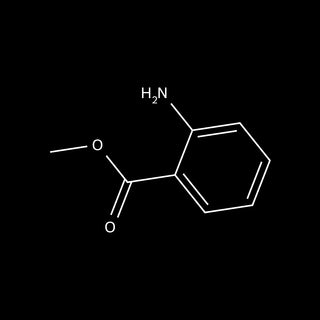
Methyl Anthranilate
PubChem, Methyl Anthranilate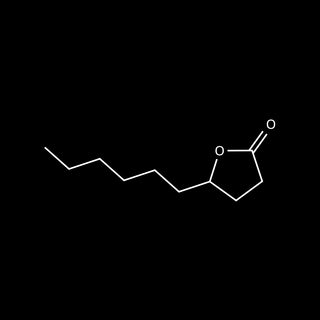
Gamma-Decalactone
PubChem, Gamma-Decalactone - CAS
- 84929-78-2 (Fragaria vesca extract)
- INCI names (CosIng)
- FRAGARIA VESCA SEED OIL (SKIN CONDITIONING – EMOLLIENT, SKIN CONDITIONING)FRAGARIA VESCA FLOWER EXTRACT (ASTRINGENT, SKIN CONDITIONING)FRAGARIA VESCA FRUIT EXTRACT (ASTRINGENT, SKIN CONDITIONING)FRAGARIA VESCA LEAF EXTRACT (ASTRINGENT, SKIN CONDITIONING)FRAGARIA VESCA FRUIT (ASTRINGENT, SKIN CONDITIONING)FRAGARIA VESCA JUICE (ASTRINGENT, SKIN CONDITIONING)FRAGARIA VESCA SEED (ASTRINGENT, SKIN CONDITIONING)FRAGARIA VESCA SEED BUTTER (SKIN CONDITIONING – EMOLLIENT, HAIR CONDITIONING, SKIN CONDITIONING)
Physical properties
- Flash point
- > 200.00 °F. TCC (> 93.33 °C.) (est)
Performance and rules
- IFRA status
- No IFRA Standard for the material itself (51st Amendment)
Wild Strawberry · See Also
Entries related to Wild Strawberry, by their place in the pyramid. “shared” marks a scent word Wild Strawberry has too.
Top notes

Strawberry
fruity (shared) · sweet (shared) · fresh (shared) Fruity / Same cluster / Fantasy/Concept
Lychee
fruity (shared) · floral · rosy Fruity / Natural


Heart notes

White Mulberry
fruity (shared) · sweet (shared) · fresh (shared) Fruity / Same cluster / Fantasy/Concept
Winterberry
Berries Fruity / Same cluster / Fantasy/Concept
Strawberry Plant
fruity (shared) · fresh (shared) · green (shared) Fruity / Same subfamily / Natural
Little Doll Strawberry
fruity (shared) · sweet (shared) · fresh (shared) Gourmand / Heart · Base / Natural & Synthetic
Strawberry Flower
floral · fruity (shared) · fresh (shared) Florals / Fantasy/Concept


Other entries · Place in the pyramid not stored

Maqui Berry
fruity (shared) · sweet (shared) · fresh (shared) Fruity / Same cluster / Natural

Wild Strawberry · Sources
- PLOS ONE (2023) Variation in Volatile Organic Compounds in native, synanthropic accessions and cultivars of the musk strawberry (Fragaria moschata Duchesne ex Weston)
- Frontiers Comparative analysis of fruit aroma patterns in the domesticated wild strawberries “Profumata di Tortona” (F. moschata) and “Regina delle Valli” (F. vesca)
- PubChem Methyl Anthranilate
- IFRA Standards, 51st Amendment
- Wikipedia Fragaria vesca
- Wikipedia Strawberry
- Wikipedia Methyl anthranilate
- Wikipedia Ethyl methylphenylglycidate
- Wikipedia Furaneol
Cite as PREMIEREPEAU Glossary, “Wild Strawberry”, https://premierepeau.com/
