


Srednje notePiramida
—Jačina
—Trajnost
—Poreklo
Uzorak
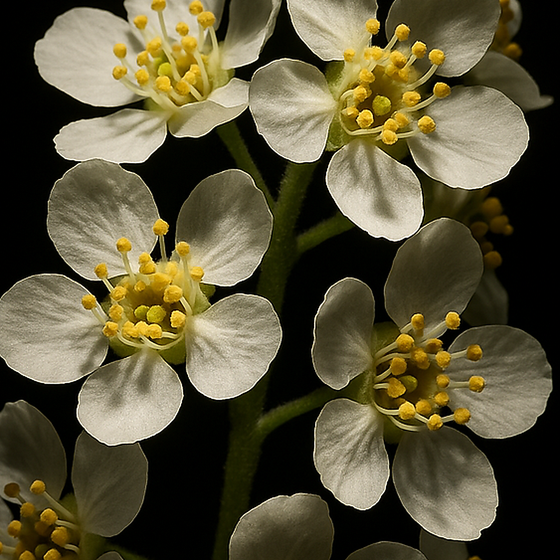
Prunus padus
Definicija
Bird cherry is Prunus padus, a flowering plant in the rose family. Its flowers are held in racemes and are scented.
CVETNI GORAK ZELEN MEDICINSKI BADEMAST
Cerasus padus, Cerasus racemosa, Padus avium, Prunus racemosa
- Type
- Sirovina
- Olfactive family
- Cvetni
Instrumenti
Piramida
GGornje note
SSrednje note
BBazne note
Miris
U parfemima kuće PREMIEREPEAU
Teroar i poreklo
Detaljno
Zanimljivosti
In Eurasia, the bird-cherry ermine moth uses bird cherry as its host plant, and the larvae can eat single trees leafless. The common name mayday tree refers to the May Day festival, being unrelated to the distress signal mayday.
Dobijanje i hemija
- Formula
- Complex natural mixture (key constituents: benzaldehyde C₇H₆O; amygdalin C₂₀H₂₇NO₁₁)
- Botanički naziv
- Prunus padus
- Izgled
- White flowers in racemes 7-15 cm long; fruit black when ripe, 8 mm in diameter
- Sinonimi
- Cerasus padus, Cerasus racemosa, Padus avium, Prunus racemosa
Status prema standardima IFRA
Pogledajte napomenuNo IFRA Standard for the material itself (51st Amendment)
Pogledajte i
7 nota