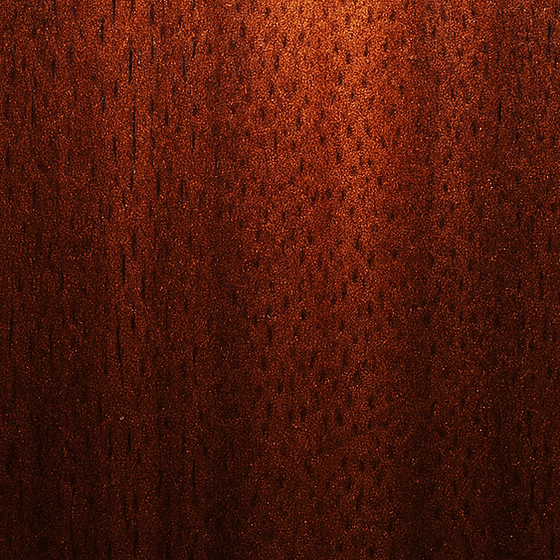
Mahogany is the term for wood from three tropical hardwood species of the genus Swietenia: Swietenia macrophylla, Swietenia mahagoni and Swietenia humilis. Of these, Swietenia macrophylla is the most widespread and the only species widely grown commercially. Mahogany is valued for its color, durability and workability, and is used for furniture, cabinetry, boats and musical instruments.
The Mahogany Family
Meliaceae, the mahogany family, is a flowering plant family of mostly trees and shrubs. The family includes about 53 genera and about 600 known species, with a pantropical distribution. Most species of the family are evergreen, though some lose their leaves in the dry season or in winter. They most commonly grow as understory trees in rainforests, but are also found in mangroves and arid regions. Members of the family are used for vegetable oil, soap-making, insecticides and timber. Swietenia is the classic mahogany genus of the tropical Americas. Other genera of the family, such as Toona, Chukrasia, Entandrophragma, Carapa, Turraeanthus, Dysoxylum and Guarea, are sometimes called mahogany in various regions but cannot be marketed as such in the United States. Several unrelated species also carry the name, among them Santos mahogany (Myroxylon balsamum), mountain mahogany (Cercocarpus) and swamp mahogany (Eucalyptus robusta).
The Three Species and Their Trees
Swietenia mahagoni is the species from which the original mahogany wood was produced. Linnaeus described the West Indian tree in 1758 as Cedrela mahagoni, and two years later Jacquin placed it in his newly created genus Swietenia. Swietenia humilis grows in the seasonally dry regions of the Pacific coast of Central America, from southwestern Mexico to Costa Rica.
Swietenia mahagoni is a medium-sized semi-evergreen tree that grows 30 to 35 metres tall. Its leaves are pinnate, with four to eight leaflets and no terminal leaflet. The flowers are small and borne in panicles, and the fruit is a woody capsule containing numerous winged seeds. The bark of young trees is smooth and grayish and becomes darker and furrowed with age. Swietenia macrophylla has large leaves up to 45 cm long. Its fruits can reach 40 cm and are called sky fruits because they grow upward toward the sky.
The Wood Itself
West Indian mahogany is native to islands in the West Indies including the Bahamas, Cuba, Jamaica, the Cayman Islands and Hispaniola. Swietenia macrophylla ranges from the Yucatán Peninsula southward through Central America and into South America, reaching Peru, Bolivia and western Brazil. The mahogany timber grown in Asian plantations is the major source of international trade in genuine mahogany today. Peru is currently the largest exporter, surpassing Brazil after Brazil banned mahogany exports in 2001. Swietenia humilis was listed on CITES Appendix II in 1975, Swietenia mahagoni in 1992 and Swietenia macrophylla in 2003.
Properties of the Timber
The reddish-brown color of the wood deepens with age and develops a warm sheen when polished. Its texture is straight and fine, sometimes grainy, and the wood is generally free of holes and has excellent workability. Because mature trees have a large girth, the wood historically allowed wide boards. Density varies with the species: Cuban mahogany averages 660 kg/m3, Honduran mahogany about 650 kg/m3 and Spanish mahogany about 850 kg/m3. The Navy Bureau of Ships approves mahogany for small boats and high-speed boats that need a wood easy to work. In large ships its use is confined largely to interior trim, paneling and furniture.
The origin of the word mahogany is uncertain and debated. French colonists used the term acajou, while Spanish territories used caoba.
Trade and Conservation
The United States is the leading importer of genuine mahogany, followed by Britain. Illegal logging remains a major issue, and an estimated 80 to 90 percent of Peruvian mahogany exported to the United States is illegally harvested. In the United States only Swietenia species may be sold as mahogany without qualification, while other woods must carry a qualifier, such as African mahogany or Philippine mahogany. India and Fiji are the major world suppliers of plantation-grown Swietenia macrophylla. Swietenia species have been introduced widely outside their native range since the 19th century. The IUCN classifies Swietenia mahagoni as Near Threatened and Swietenia macrophylla as Endangered.
Explore all seven extraits in the Discovery Set.
—
Related: Alder · Alpha Humulene · Amaranth · Amberever · Amburana Bark · Amyris · Antillone