


Cvet belog čaja
PrirodnaCVETOVIcvetni · svež · zelen
Srednje notePiramida
5/5Jačina
—Trajnost
3Poreklo
Uzorak
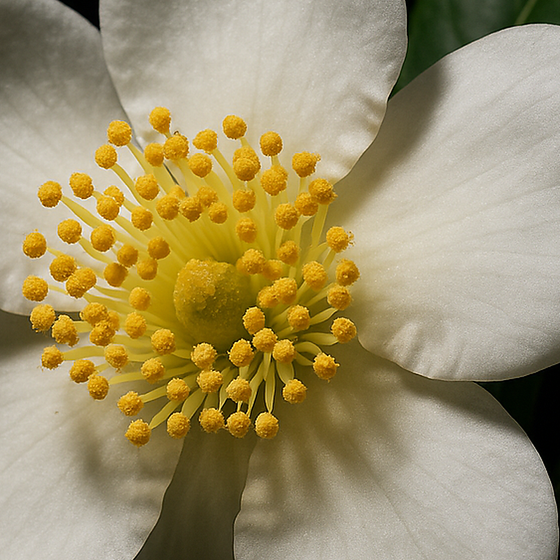
Camellia sinensis
Definicija
White tea blossom is the flower of the tea plant, Camellia sinensis. Half-opened and fully opened tea flowers have floral, powdery or almond-like odors.
Floral94
Vert61
Doux56
Poudré47
Fruité29
Boisé32
tea flower
- Type
- Sirovina
- Olfactive family
- Cvetni
- Source
- flower
- Chemical class
- Alcohols, aldehydes and heterocyclic compounds
Instrumenti
Piramida
GGornje note
SSrednje note
BBazne note
5/5Jačina
Vrlo visoka
jačina mirisa
Zemlje proizvođači
Kina Japan Indija
Miris
U parfemima kuće PREMIEREPEAU
Teroar i poreklo
Detaljno
Dobijanje i hemija
Način dobijanja
The aroma compounds of fresh tea flowers have been extracted by the HS method and analyzed by GC-MS.
- Formula
- Complex natural mixture (key constituents: linalool C₁₀H₁₈O; phenylethyl alcohol; methyl salicylate)
- Botanički naziv
- Camellia sinensis
- Izgled
- White flowers, 2.5 to 3.5 cm across, with six to eight petals
- Jačina mirisa
- Extremely high
- Sinonimi
- tea flower
Status prema standardima IFRA
Pogledajte napomenuNo IFRA Standard for the material itself (51st Amendment)
U parfemima
Half-opened tea flowers, with strong floral and almond-like odors, make an ideal choice for perfumes and cosmetics to impart a fresh and inviting scent. Linalool, which is prominent in tea flowers, is used in the manufacture of fragrances.
Uloga u formuli
01pojačivač difuzije
02modifikator
03sirovina za stapanje
04graditelj volumena
05svežina
Oblici na tržištu
eterično ulje apsolut
Pogledajte i
7 nota