Jasmine is a central flower in perfumery, and one that is often misunderstood. According to Chemical & Engineering News (Rouhi, 1999), it appears in about 83% of women's fragrances and 33% of men's. The name evokes white petals and wedding garlands. But the flower itself is stranger than its reputation. It contains indole, the same molecule found in faeces, at concentrations that walk the line between narcotic beauty and biological repulsion. It cannot survive steam distillation; heat destroys its most delicate compounds. It is picked by hand, early in the morning, around daybreak, because no machine is gentle enough. And it takes roughly 8,000 blossoms to produce a single gram of absolute. This is the ingredient the perfume industry calls the queen of flowers. The title is not honorary. It is earned through difficulty.
15 min
Two Species, Two Worlds: Grandiflorum and Sambac
When perfumers say "jasmine," they mean one of two flowers that share a genus and almost nothing else. Jasminum grandiflorum, spanish jasmine, royal jasmine, the jasmine of Grasse, is a scrambling, semi-deciduous vine native to South Asia that was carried to the Mediterranean via Arab trade routes. It produces small, star-shaped white flowers with five to nine petals, each about two centimetres across. The scent is lush, green, and transparently floral, with fruity undertones of apricot and strawberry and a carnal warmth that builds as the flower opens. This is the species that built the jasmine fields of Provence and the extraction facilities of the Nile Delta. It blooms from August to October, releasing its peak volatile concentration in the hours between midnight and sunrise.
Jasminum sambac, arabian jasmine, mogra, sampaguita, is a different animal. Evergreen, bushier, with thicker, waxier petals and a rounder, creamier scent profile. Where grandiflorum reads as Mediterranean sunlight filtered through green leaves, sambac is tropical nighttime: heavier, more honeyed, with banana-like fruity notes and a methyl anthranilate character that tilts toward grape and narcotic sweetness. It originated in the eastern Himalayas and spread through Southeast Asia, where it became the national flower of the Philippines and the base for Chinese jasmine tea.
| Characteristic | J. grandiflorum | J. sambac |
|---|---|---|
| Growth habit | Scrambling vine, semi-deciduous | Evergreen shrub or vine |
| Petal count | 5–9 (single layer) | 5–13 (often double-flowered cultivars) |
| Scent character | Green, fruity-floral, transparent, animalic | Creamy, honeyed, banana-fruity, narcotic |
| Key aromatic compounds | Benzyl acetate (up to 25%), linalool (8–16%), indole (0.3–2.9%) | Linalool (higher %), methyl anthranilate, benzyl alcohol |
| Primary growing regions | Egypt, India (Tamil Nadu), Grasse | China, India (Karnataka), Philippines, Thailand |
| Main use in perfumery | Fine fragrance absolute | Fine fragrance, jasmine tea, ritual |
| Harvest window | August–October, early morning | May–September, early morning |
The chemistry confirms what the nose detects. In 13 commercial J. grandiflorum absolutes from India, Egypt and Morocco, indole ranges from 0.3 to 2.9% (GC area), and up to 4.9% in Indian processing trials (Braun & Sim 2020). Sambac, by contrast, carries higher concentrations of methyl anthranilate and benzyl alcohol, compounds that shift the olfactory signature toward grape-like sweetness and heavy cream. The two species are deployed differently on the perfumer's organ. Grandiflorum is architectural. Sambac is atmospheric.
A third species, Jasminum auriculatum, is cultivated in South India for garlands but rarely enters fine perfumery. And synthetic jasmine accords, built on hedione (methyl dihydrojasmonate), which sells for $20 to $50 per kilogram against $5,000 or more for natural absolute, dominate mass-market formulations. But no synthetic replicates the full-spectrum complexity of either species. The natural jasmine absolute contains over 200 identified volatile compounds. The synthetic accord typically uses six to twelve.
The Harvest: Night Scent, Morning Picking
Jasmine is a night-blooming flower, and its scent output follows a daily rhythm. In a study of four Jasminum species, the summer-blooming J. grandiflorum released its volatiles with a nocturnal maximum, from bud to senescence (Barman and Mitra, Physiologia Plantarum, 2019). In J. sambac, the enzymes that make benzyl acetate, methyl benzoate and methyl salicylate follow the same rhythm as the release of those esters (Bera, Mukherjee and Mitra, Plant Science, 2017).
Harvest takes place early in the morning, around daybreak (Braun & Sim 2020).
In the fields of Gharbia governorate, in Egypt's Nile Delta, where a single village, Shubra Beloula, is credited with more than half of world jasmine production, pickers begin work in the middle of the night, from around midnight to 3 a.m. (BBC Travel 2022; AFP via Ahram Online). They move through rows of grandiflorum by lamplight, gathering the small white flowers by hand into baskets lined with damp cloth. A single picker collects two to three kilograms per session. Each kilogram contains approximately 8,000 individual blossoms. By mid-morning, the harvest must reach the extraction facility.
The same discipline applies in Grasse, where the few remaining hectares of jasmine are tended by farming families who understand that the flower operates on its own schedule. In Tamil Nadu, India's other major growing region, the harvest takes place early in the morning, around daybreak (Braun & Sim 2020). The flower does not negotiate.
The jasmine harvest in Grasse runs August to October and follows traditions unchanged in centuries. Inside the world capital of perfume, what survives.
The physical toll is real. Jasmine picking is repetitive, posture-straining work done in darkness and humidity. The season lasts two to three months. In Egypt, where over 2,500 tonnes of petals are harvested annually from about 250 acres in Shubra Beloula alone, the labour employs most of the village's 15,000 inhabitants during peak season. These are not mechanised operations. No machine can distinguish a fully opened jasmine flower from a bud that needs another night. The human hand remains the only instrument precise enough.
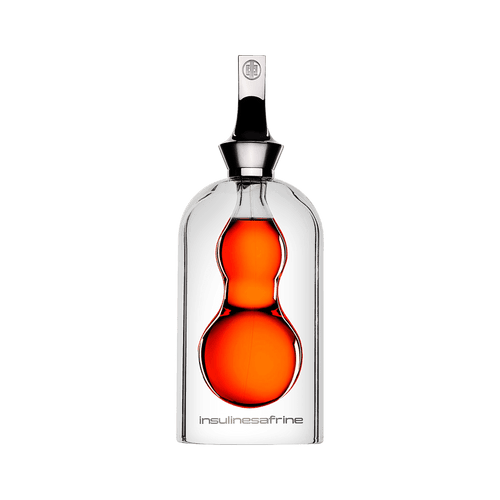
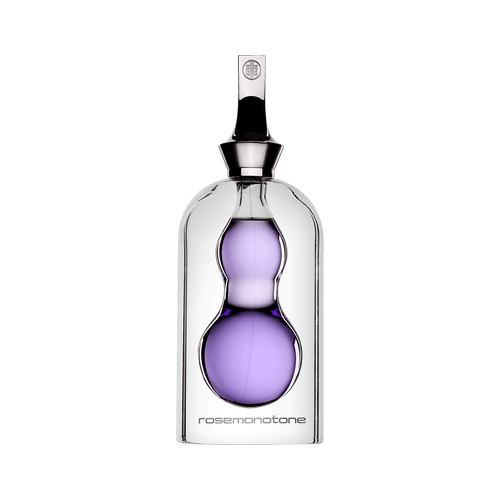
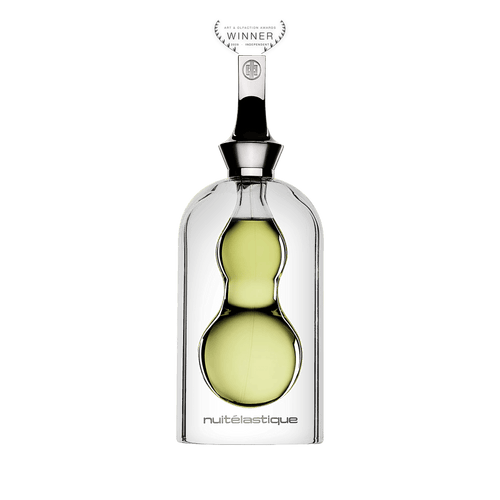
Première Peau's Nuit Élastique takes its name from the elastic quality of night itself, the way darkness stretches time, slows perception, opens the senses. It is built on jasmine that carries this nocturnal logic: an absolute extracted from flowers picked in the hours when the plant is at its most generous, its most indolic, its most alive.
Your wedding perfume becomes a lifelong scent memory. Skip the safe floral. A contrarian guide.
Musk sits in 90% of perfume bases. Its 3,000-year arc runs from deer glands through a Nobel Prize to polluted waterways. The full investigation.
Skip the ranked lists. The dry-down at hour four is the truth. The spritz at minute one is the advertisement. Find yours by method, not by list.
The Indole Paradox: Beauty and Decay in One Molecule
Indole is an aromatic heterocyclic compound, a benzene ring fused to a nitrogen-containing pyrrole ring, and it is the molecule that makes jasmine polarising. At concentrations below 0.1%, indole smells radiant, floral, animalic in the most seductive sense. It is the warmth beneath the brightness. The thing that makes jasmine smell alive rather than soapy. At concentrations above 1%, the same molecule smells putrid, faecal, unmistakably of decomposition.
This is not metaphor. Indole is a major component of mammalian faeces. Your gut bacteria produce it from the amino acid tryptophan during digestion. The same compound is present in tuberose (1.7–6.7%), orange blossom, gardenia, and coal tar. The biological purpose in flowers is pollinator attraction: indole draws nocturnal moths and beetles that associate the scent with the organic matter where they lay eggs. The jasmine is, in a sense, lying to its pollinators. Promising decay, delivering nectar.
In perfumery, this creates the most elegant calibration problem. Commercial jasmine grandiflorum absolute contains 0.3 to 2.9% indole (GC area), well below the faecal threshold for most people but high enough to produce the warm, carnal, skin-like quality that distinguishes natural jasmine from synthetic accords. Perfumers working with jasmine absolute are working with a material that is inherently provocative: beautiful and repulsive at once, depending on concentration and context.
"Indole is the molecule that separates a pretty floral from something that makes you catch your breath. Without it, jasmine would be pleasant. With it, jasmine is unforgettable.". Luca Turin, biophysicist and fragrance critic, The Secret of Scent (2006)
The paradox reaches down to the receptors. In cell assays, the human olfactory receptor OR2L3 responds to both indole and skatole, and fragrance materials that block it have been used to make fecal smells less unpleasant (Mihara et al., Journal of Society of Cosmetic Chemists of Japan, 2023). Genetic variation in human olfactory receptors is known to change how individuals perceive certain scent molecules (Mainland et al., Scientific Data, 2015); a link between a specific receptor variant and indole remains unproven. The person who finds jasmine intoxicating and the person who finds it cloying may be smelling the same flower with different biological hardware.
This is why jasmine divides rooms. Not because of taste. Because of olfactory receptors.
Why Jasmine Cannot Be Steam-Distilled
There is no jasmine essential oil. There is jasmine absolute. The distinction matters.
Essential oils are produced by steam distillation, passing hot steam through plant material, vaporising the volatile compounds, then condensing the steam and collecting the oil that separates from the water. The method works beautifully for lavender, eucalyptus, peppermint, even rose (which yields both a distilled otto and a solvent-extracted absolute). It does not work for jasmine. The heat of steam, 100°C at atmospheric pressure, destroys the most thermally fragile compounds in jasmine's volatile profile: the esters, the linalool, the delicate lactones that give the flower its dewy top note. What survives distillation is a flat, cooked-smelling residue that bears little resemblance to the living bloom.
Instead, jasmine is extracted by solvent. Fresh flowers are immersed in hexane (or, increasingly, ethanol or supercritical CO2), which dissolves the aromatic compounds along with waxes and pigments. The solvent is evaporated under reduced pressure, leaving a waxy, semi-solid substance called the concrete. The concrete is then washed with ethanol to separate the aromatic molecules from the waxes, yielding the absolute, a viscous, deeply amber liquid so concentrated that it must be diluted before it becomes recognisably floral.
| Parameter | Steam Distillation | Solvent Extraction (Hexane) | CO2 Extraction |
|---|---|---|---|
| Temperature | ~100°C | Ambient to 50°C | 31–50°C |
| Jasmine compatibility | Incompatible, destroys key compounds | Standard method | Excellent, preserves top notes |
| Yield from flowers | Negligible | 0.1% concrete; ~50% conversion to absolute | Variable, higher top-note retention |
| Output name | Essential oil (not applicable for jasmine) | Concrete → Absolute | CO2 extract / select |
| Solvent residue risk | None | Trace hexane (<10 ppm in quality absolute) | None. CO2 evaporates completely |
The yield is brutal. Roughly 700 to 800 kilograms of fresh jasmine flowers produce one kilogram of concrete, and approximately half of that concrete converts to usable absolute. Put differently: one kilogram of jasmine absolute requires somewhere between 3.5 and 7 million individual flowers, depending on species, origin, and extraction efficiency. The 8,000-flowers-per-gram figure is not poetic exaggeration. It is logistics.
Before solvents, jasmine was captured by enfleurage, pressing petals into cold animal fat for weeks. The method is almost extinct. How it worked, why it died, and who still practises it.
Terroir: Egypt, Grasse, India. Three Jasmines, Three Prices
The same species, Jasminum grandiflorum, planted in different soils, under different skies, produces measurably different absolutes. This is terroir, and in jasmine it operates as powerfully as it does in wine.
Egyptian jasmine Egypt and India together supply about 95% of jasmine concrete (IFEAT). The village of Shubra Beloula in Gharbia governorate, roughly 100 kilometres north of Cairo, is credited with more than half of world jasmine production (BBC Travel 2022). Egypt's Nile Delta soil, rich, alluvial, warm, produces a grandiflorum absolute that is deeply indolic, warm, and sunny, with pronounced fruity facets and a creamy density that reads as sensual and slightly dirty. Egyptian absolute sells for approximately $3,500 to $5,500 per kilogram, depending on grade and processor. The industry is under pressure: climate change has reduced per-plant yields from six kilograms to two or three over recent years, and rising temperatures are introducing pest pressure from spider mites and leaf worms.
Indian jasmine from Tamil Nadu (around Coimbatore and Madurai) offers a sweeter, more sultry profile. Indian grandiflorum absolute tends toward higher benzyl benzoate content, giving it a balsamic-fixative quality that extends longevity in formulas. India also dominates sambac production, particularly in Karnataka. Indian grandiflorum absolute is the most affordable origin, typically $3,200 to $3,600 per kilogram.
Grasse jasmine is the most expensive natural material in perfumery. Only a few dozen hectares remain under cultivation, nearly all contracted to two or three major luxury houses. Grasse grandiflorum is described as more transparent, greener, with a luminous top note and a precision that neither Egyptian nor Indian origins replicate. Gas chromatographic analysis shows distinctive ratios of benzyl acetate to linalool and lower indole content relative to Egyptian material. Grasse jasmine absolute sells for upward of €50,000 per kilogram, roughly ten times the Egyptian price.
| Origin | Price per kg (absolute) | Scent profile | Supply status |
|---|---|---|---|
| Egypt (Gharbia) | $3,500–$5,500 | Warm, indolic, sunny, creamy-fruity | Nearly half of world concrete (AFP 2025); climate-threatened |
| India (Tamil Nadu) | $3,200–$3,600 | Sweet, sultry, balsamic, dense | Stable; also major sambac producer |
| Grasse (France) | €40,000–50,000+ | Green, transparent, luminous, precise | Extremely scarce; nearly all pre-contracted |
Does the price gap matter? For a mass-market fragrance using jasmine at 0.5% of the formula, the origin of the absolute is inaudible. For a composition where jasmine is the structural centre, the load-bearing beam, the origin changes the architecture. A perfumer working with Grasse jasmine is starting from transparency and building density. A perfumer working with Egyptian jasmine is starting from density and carving clarity. Neither is superior. They are different starting points for different buildings.
Jasmine absolute sits alongside oud, orris, and ambergris on the list of perfumery's costliest raw materials. The real prices, extraction yields, and why they matter.
Gajra, Mo Li Hua, and the Sails of Cleopatra
Jasmine is one of those rare ingredients whose cultural weight matches its chemical complexity. The name derives from the Persian yasmin: "gift from God", by way of Arabic. It entered European languages through the Spanish jazmín during the Moorish period.
In India, jasmine is not a perfume ingredient. It is a daily presence. South Indian women wear gajra, garlands of sambac jasmine woven on cotton thread, in their hair as part of everyday grooming, not only for ceremonies. Brides wear elaborate jasmine garlands as symbols of purity and new beginnings. In Hindu tradition, jasmine is one of the Pushpa Panchamrita, the five sacred flowers offered in worship. The Madurai jasmine market moves tonnes of fresh blooms every morning before the rest of the city wakes.
In China, Jasminum sambac, mòlì huā (茉莉花), has been cultivated since at least the Song Dynasty (960–1279) for the production of jasmine tea. The scenting process is itself a form of enfleurage: fresh blooms are layered with green tea leaves in the evening, when the flowers open and release their volatiles. The spent blossoms are removed the next morning. Premium grades repeat this seven times. The tea absorbs the jasmine's aromatic compounds through simple diffusion, the same principle that governs cold enfleurage, without the fat.
In the Philippines, J. sambac, known as sampaguita, is the national flower, chosen in 1934 for its association with fidelity and devotion. Street vendors in Manila sell garlands outside churches at dawn.
And then there is Cleopatra. Historical accounts describe her ships approaching Rome with sails soaked in jasmine oil, the scent carrying across the water as a herald of her arrival. Whether the detail is literally true is debatable. What is true is that jasmine was cultivated in Egypt at least 2,000 years ago, and that the connection between jasmine and power, political, sexual, sacred, has never broken.
Jasmine in the Formula: How Perfumers Use It
Jasmine absolute is not a top note. It is not a base note. It occupies the heart of a composition with the authority of something that knows it belongs there. In a well-constructed formula, jasmine does three things simultaneously: it provides floral body (benzyl acetate, linalool), it adds carnal warmth (indole), and it acts as a bridge between lighter citrus-green top notes and heavier balsamic-woody base notes. Very few materials perform all three functions at once.
Perfumers deploy jasmine in several distinct architectures:
As the soliflore protagonist. The most demanding use. A jasmine soliflore must render the full spectrum of the flower, brightness, warmth, indolic shadow, without supporting actors to hide behind. The 1925 composition that invented the modern jasmine soliflore (a creation by Henri Alméras for a major house) used grandiflorum at concentrations considered audacious at the time.
As the white-floral anchor. In white floral bouquets, compositions built on jasmine, tuberose, ylang-ylang, and neroli, jasmine provides the structural spine. Its benzyl acetate content gives the floral accord its characteristic diffusive lift. Without jasmine, white floral compositions tend to feel either too sweet (tuberose-dominated) or too sharp (neroli-dominated). Jasmine is the mediator.
As the invisible amplifier. At low doses (0.5–2% of a formula), jasmine absolute does not read as "jasmine" to the wearer. It reads as richness. A rose composition with a trace of jasmine absolute becomes warmer, more bodily. A woody-amber formula with jasmine becomes more radiant. Perfumers call this "turning on the lights", jasmine adds luminosity to anything it touches.
As an indolic modifier. For perfumers who want animalic warmth without using animal-derived materials, jasmine absolute is the cleanest path. The indole content provides a carnal, skin-close quality that aligns with the body's own chemistry. This is why jasmine appears so frequently in "skin scents", fragrances designed to smell like an idealised version of warm human skin.
Hedione, methyl dihydrojasmonate, first synthesised by a Swiss fragrance house in 1962, transformed the economics of jasmine in perfumery. At $20–50 per kilogram, it reproduces the radiant, diffusive, transparent facet of jasmine. It lacks the depth, the indolic shadow, the full-spectrum complexity. But it brought jasmine's luminous quality to every price point. A major 1966 men's composition used hedione at an unprecedented 10% concentration, creating a fresh, jasmine-radiant effect that redefined masculine perfumery. Since then, hedione has become the most-used synthetic in the industry.
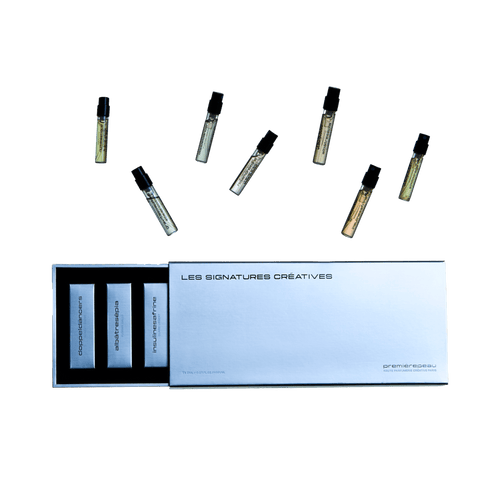
Our Première Peau Discovery Set contains seven compositions that treat raw materials as creative decisions, not procurement shortcuts. Jasmine, when it appears, carries the weight of origin and method. Your skin will tell you the rest.
Frequently Asked Questions
What does jasmine smell like?
Jasmine grandiflorum smells green, fruity-floral, and transparently luminous, with an underlying carnal warmth from indole. Jasmine sambac is creamier, more honeyed, with banana-like fruity notes and a heavier, narcotic quality. Both species share a distinctive richness that separates natural jasmine from its synthetic approximations. The scent intensifies after dark, when the flower's volatile production peaks.
Why is jasmine absolute so expensive?
Yield is the primary driver. Roughly 700–800 kilograms of hand-picked flowers, approximately 5 to 7 million individual blossoms, produce one kilogram of absolute. Every flower is harvested by hand, early in the morning, during a two-to-three-month season. Egyptian jasmine absolute costs $3,500–$5,500 per kilogram. Grasse jasmine, nearly all pre-contracted to luxury houses, exceeds €50,000.
What is the difference between jasmine essential oil and jasmine absolute?
There is no true jasmine essential oil. Jasmine cannot survive steam distillation, the heat destroys its most delicate aromatic compounds. What is sold as "jasmine essential oil" is either a synthetic fragrance oil or a mislabelled product. Authentic jasmine absolute is produced by solvent extraction: flowers dissolved in hexane, evaporated to a concrete, then washed with ethanol to yield the absolute.
Why does jasmine contain the same molecule as faeces?
Indole, present at 0.3 to 2.9% (GC area) in commercial jasmine grandiflorum absolutes, is also produced by gut bacteria during tryptophan digestion. In the flower, indole is a pollinator attractant, nocturnal moths associate the scent with the organic matter where they breed. At jasmine's natural concentration, indole reads as warm and carnal. Above 1%, it becomes faecal. The boundary between beauty and repulsion is measured in parts per million.
What is the difference between grandiflorum and sambac jasmine?
Jasminum grandiflorum is a semi-deciduous vine with a green, fruity-floral, transparent scent, the classic fine-fragrance jasmine. Jasminum sambac is an evergreen shrub with a creamier, more honeyed, banana-fruity profile. Grandiflorum is dominant in Western perfumery. Sambac is used in jasmine tea production in China and is the national flower of the Philippines.
Where does most jasmine for perfumery come from?
Egypt produces nearly half of the world's jasmine concrete, according to its largest processor (AFP 2025), concentrated in the village of Shubra Beloula in the Nile Delta's Gharbia governorate. India (Tamil Nadu) is the second-largest producer. Grasse, France, historically the centre of jasmine cultivation, now maintains only a few dozen hectares, producing tiny quantities at premium prices.
Why is jasmine picked early in the morning?
Jasmine releases its scent on a daily rhythm; in J. grandiflorum, emission peaks at night (Barman and Mitra 2019). Harvest takes place early in the morning, around daybreak (Braun & Sim 2020).
Can jasmine be grown at home for fragrance?
Both grandiflorum and sambac can be grown in warm climates (USDA zones 9–11) or as container plants brought indoors during winter. They require full sun, regular watering, and warm nights to bloom. A single plant in flower will perfume a garden or balcony, particularly after sunset when volatile emission peaks. Extracting your own absolute, however, requires industrial equipment and thousands of flowers.