


Сир
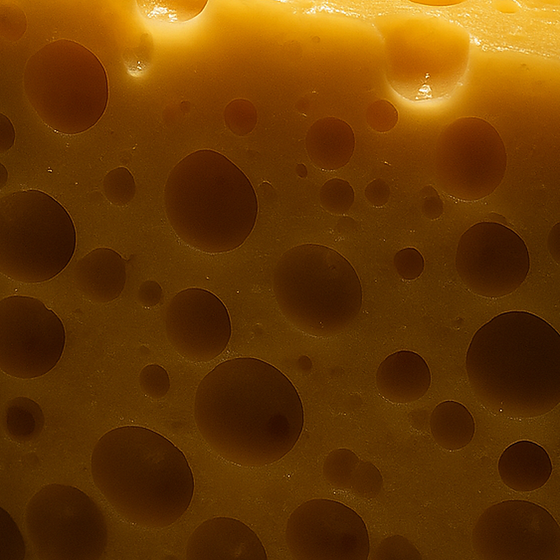
Butyric, acidic, fermented-animal. Cheese in perfumery is the smell of microbial transformation of milk fat — pungent, polarizing, deliberately uncomfortable.
- Type
- Акорд
- Olfactive family
- Амброві й мускусні
- Source
- Perfumer's accord (no single natural source; composed to carries cheese using butyric, lactonic, and fermented notes)
Запах
Докладно
Цікавий факт
Butyric acid gets its name from the Latin butyrum (butter) — it was first isolated from rancid butter in 1814 by Michel Eugene Chevreul. At high concentrations, it is the particular smell of vomit and body odor. At very low concentrations (parts per million), it reads as pleasant creamy richness. Many perfumers use it without disclosing it.
Отримання й хімія
Спосіб отримання
No extraction from cheese. Butyric acid and isovaleric acid are produced synthetically. Both occur naturally in human sweat and aged cheese.
- Формула
- N/A — key odorants: butyric acid C₄H₈O₂, isovaleric acid C₅H₁₀O₂, diacetyl C₄H₆O₂
- CAS
- N/A — fermented dairy, not a single substance
- Ботанічна назва
- N/A — fermented dairy product
- Зовнішній вигляд
- Varies widely by type — white to deep orange, soft to hard
- Сила запаху
- Середня
- Синоніми
- DAIRY
Not applicable: accord or concept, not a single material
- Нота
- Animalic-creamy note in perfumery. Key molecules: butyric acid, isovaleric acid, diacetyl, methional.
У парфумерії
Avant-garde concept using butyric acid and related fermentation compounds. At threshold doses, adds creamy richness. At higher doses, reads as explicitly cheese/body. Functions in provocative and body-themed compositions. The dose-response curve is the material's artistic challenge.
Див. також
7 ноти