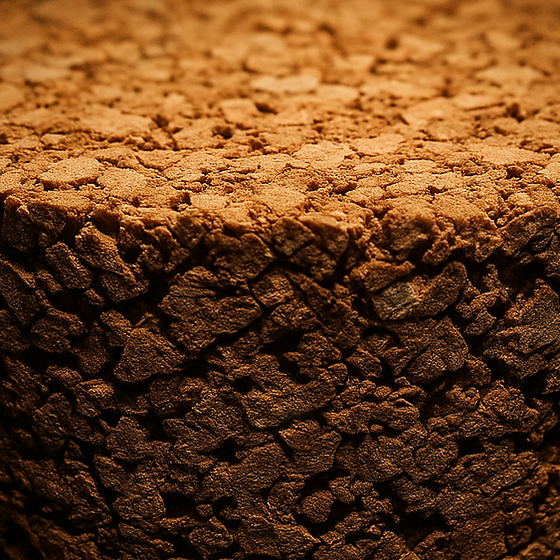
Корок

АкордДЕРЕВИНА Й МОХИдеревний · землистий · теплий
Базові нотиПіраміда
3/5Сила
—Стійкість
1Походження
Зразок
Корок як парфумерна сировина
Базові ноти
Quercus suber
Фантазійний/концептуальний
Визначення

Dry, faintly musty, mineral-woody. Cork smells like what it is — compressed bark with a dusty, slightly tannic quality. The smell of a freshly pulled wine cork, before the wine.

ДЕРЕВНИЙ ЗЕМЛИСТИЙ СОЛОДКИЙ ТЕПЛИЙ
Quercus suber, cork oak
Type
Акорд
Olfactive family
Деревні
Source
wood
Chemical class
olfactory accord
Інструменти
Піраміда
ВВерхні ноти
СНоти серця
ББазові ноти
3/5Сила
Середня
інтенсивність запаху
Країни-виробники
Середземномор’я

Запах

Dry, faintly musty, mineral-woody, with a light tannic quality. Not aromatic in the conventional sense — quiet, muted, bark-like. Like holding a fresh wine cork to your nose before the wine has perfumed it — dry, dusty, faintly woody, with that specific suberin-waxy quality unique to cork bark.

Докладно

Cork (Quercus suber bark) has a particular, muted aromatic character: dry, faintly musty, mineral, with a light woody-tannic quality. The scent is subtle — cork is more notable for what it absorbs (wine aromas, in particular) than for what it emits.

The volatile compounds in cork include 2,4,6-trichloroanisole (TCA — the infamous 'cork taint' molecule, detectable at 2-5 parts per trillion), guaiacol (smoky), vanillin (sweet), and various sesquiterpenes. TCA, when present, overwhelms all other volatiles — it is the musty, wet-cardboard smell that ruins an estimated 3-5% of wine bottles.

Quercus suber is native to the western Mediterranean — Portugal produces approximately 50% of the world's cork. The bark is harvested every 9-12 years without killing the tree, making cork a sustainable natural materials.

In perfumery, cork provides a dry, mineral, woody-bark note — useful in wine-inspired accords, natural compositions, and Mediterranean terroir notes.

Explore all seven extraits in the Discovery Set.

—

Related: Alder · Alpha Humulene · Amaranth · Amberever · Amburana Bark · Antillone · Apple Tree

Отримання й хімія

Спосіб отримання

No standard commercial cork extraction for perfumery. CO2 extraction of Quercus suber bark could produce an aromatic extract but is not standard practice. Cork tincture (bark macerated in alcohol) is used by some artisan perfumers. The note is typically reconstructed from synthetic materials.

Формула
Key compounds: suberin (complex polymer), 2,4,6-trichloroanisole (C₇H₅Cl₃O, cork taint compound)
CAS
N/A — natural material, no single CAS
Ботанічна назва
Quercus suber
Зовнішній вигляд
Tincture: pale amber liquid with earthy, woody, slightly musty character
Сила запаху
Середня
Синоніми
Quercus suber, cork oak
Статус IFRA
Див. примітку

Not applicable: accord or concept, not a single material

Фізичні властивості
Нота
Tincture or CO₂ extract from Quercus suber bark

У парфумерії

Cork provides a dry, mineral, woody-bark modifier. Functions in wine-inspired accords, natural-terroir compositions, and Mediterranean notes. Reconstructed from dry wood materials, faint musty modifiers, and mineral notes. The suberin (cork's waxy polymer) contributes a specific dry, waxy quality. Not commercially extracted for perfumery — the note is reconstructed.

Роль у формулі
01модифікатор
02фірмова нота
03формувач об’єму
Форми випуску
синтетичний акорд фантазійна нота

Див. також

7 ноти