


Дурман
АкордКВІТИквітковий · насичений · вершковий
Ноти серцяПіраміда
—Сила
—Стійкість
—Походження
Зразок
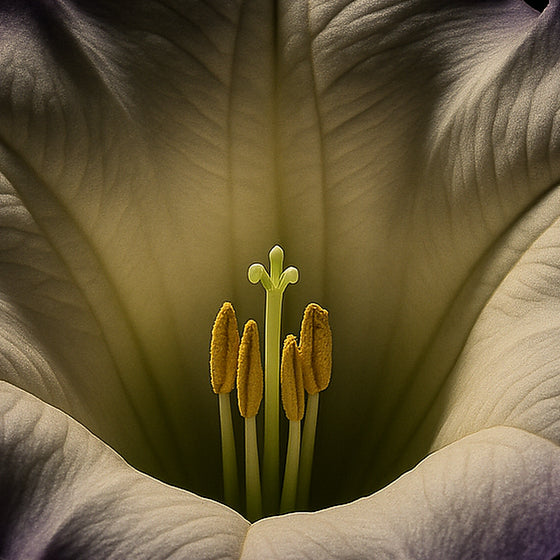
Datura L.
Фантазійний/концептуальний
Визначення
Datura is a genus of nine species of highly poisonous, vespertine-flowering plants of the nightshade family (Solanaceae). In Datura wrightii the flowers are sweetly fragrant white trumpets.
КВІТКОВИЙ ЗЕЛЕНИЙ СОЛОДКИЙ ТЕПЛИЙ ВЕРШКОВИЙ
Thornapple, jimsonweed, devil's trumpet, moonflower, devil's weed, hell's bells
- Type
- Акорд
- Olfactive family
- Квіткові
Інструменти
Піраміда
ВВерхні ноти
СНоти серця
ББазові ноти
Запах
В ароматах PREMIEREPEAU
Докладно
Цікавий факт
The American artist Georgia O'Keeffe painted jimson weed several times. She was fond of the flowers, which grew wild around her New Mexico house. In South Africa, Datura stramonium is colloquially known by the Afrikaans name malpitte, meaning 'mad seeds'.
Отримання й хімія
Спосіб отримання
The scent of Datura wrightii flowers has been captured by collecting the flower volatiles overnight and analysing them by chiral gas chromatography and mass spectrometry.
- Ботанічна назва
- Datura L.
- Зовнішній вигляд
- Trumpet-shaped flowers in colours from white to yellow and pale purple
- Синоніми
- Thornapple, jimsonweed, devil's trumpet, moonflower, devil's weed, hell's bells
Статус IFRA
Див. приміткуNo IFRA Standard for the material itself (51st Amendment)
Див. також
7 ноти