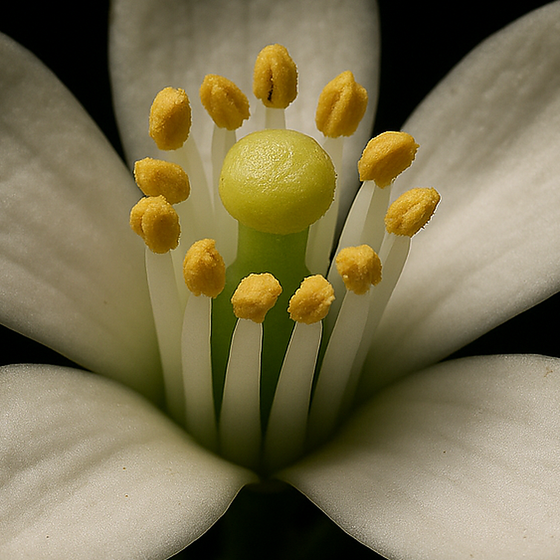
Цвіт юдзу

АкордКВІТИквітковий · свіжий · цитрусовий
Ноти серцяПіраміда
—Сила
—Стійкість
3Походження
Зразок
Цвіт юдзу як парфумерна сировина
Ноти серця
Citrus junos
Фантазійний/концептуальний
Визначення

Yuzu, Citrus × junos, is a citrus fruit and plant in the family Rutaceae of Chinese origin.

КВІТКОВИЙ ЦИТРУСОВИЙ СОЛОДКИЙ СВІЖИЙ ВЕРШКОВИЙ
Type
Акорд
Olfactive family
Квіткові
Інструменти
Піраміда
ВВерхні ноти
СНоти серця
ББазові ноти
Країни-виробники
Японія Корея Китай

Запах

The oil from yuzu peel smells bright, strong and faintly floral, a citrus aroma in the manner of bergamot or grapefruit. Beneath it lies a zesty, green citrus and pith note that turns into a balsamic sweetness in the drydown. The aroma is also described as fruity and fresh, with a slight bitterness and a warm undertone. A tart, dry note reminiscent of green grapefruit has been noted too.

Докладно

Yuzu is believed to have originated in central China as an F1 hybrid of the mangshanyeju subspecies of mandarin orange and the ichang papeda. Yuzu has been cultivated mainly in East Asia, though it has also recently been grown in New Zealand, Australia, Spain, Italy, and France.

Yuzu forms as an upright shrub or small tree, which commonly has many large thorns. The leaves have a large leaf-like petiole and are heavily scented. The fruit resembles a yellow clementine with uneven skin and can be either yellow or green depending on the degree of ripeness. The Ichang papeda, a parent of yuzu, has characteristic lemon-scented foliage and flowers. Hana yuzu, whose name literally means 'flower yuzu', is a variety with smaller fruits, thinner skin, a little lighter aroma, and smaller thorns.

Yuzunone, an odor-active volatile identified in yuzu peel oil, has been found to contribute greatly to yuzu's distinctive aroma. Limonene is the most abundant compound in Citrus junos, in concentrations between 63 and 77%. Meyer described the rind of the fruit he found as full of oil glands and smelling like a fine lemon.

Citrus flowers and leaves show a volatile profile different from that of the rind oils. In flowers, depending on the species, monoterpenes such as linalool, β-myrcene or β-citronellol may be the most prominent compounds. Neroli oil, produced from the blossom of the bitter orange tree, has a scent that is sweet, honeyed, and somewhat metallic with green and spicy facets. Petitgrain, by contrast, is distilled from the leaves and sometimes the twigs and branches of the bitter orange tree, whereas neroli is distilled from the blossoms.

In Japanese cuisine, the aromatic zest and the juice of yuzu are used much in the same way that lemons are used in other cuisines. The taste of the fruit is tart and fragrant, like grapefruit with mandarin-orange overtones. Yuzu is an integral ingredient, along with sudachi, daidai and other similar citrus fruits, in the citrus-based sauce ponzu.

Explore all seven extraits in the Discovery Set.

—

Related: Accord Eudora · African Marigold · Alpha Amylcinnamaldehyde · Alyssum · Angels Trumpet · Aquaflora · Ashoka Flower · Aurantiol

Цікавий факт

Yuzu is unusual among citrus plants in being relatively frost-hardy, due to its cold-hardy Ichang papeda ancestry, and can be grown in regions with winters as low as -7 °C (19 °F) where more sensitive citrus would not thrive. In Japan, bathing with yuzu on Tōji, the winter solstice, is a custom that dates to at least the early 18th century.

Отримання й хімія

Спосіб отримання

Yuzu essential oil is obtained from the peel. Cold pressing, steam distillation and solvent extraction are all used, and each gives a yield of about 0.2%. Cold-pressed oil has a deeper, more complex aroma that closely resembles the fruit. Steam distillation gives a slightly lighter, fresh and clear character, and solvent extraction gives a more pronounced yuzu-like aroma. One Japanese producer vacuum distills the fresh peels left over after the fruit is juiced.

Ботанічна назва
Citrus junos
Статус IFRA
Див. примітку

No IFRA Standard for the material itself (51st Amendment)

У парфумерії

Yuzu peel oil is a top note, and it is suggested for perfumery as well as aromatherapy, cosmetics, soapmaking and candle making. Because its fragrance is relatively mild, a little more of the oil is advised to keep a blend balanced. It is also used in natural perfumery creations and in diffusers.

Роль у формулі
01підсилювач дифузії
02модифікатор
03фірмова нота
04компонент піднесення
05сполучний компонент
06формувач об’єму
Форми випуску
синтетичний акорд фантазійна нота

Див. також

7 ноти