Етилмальтол

СинтетичнийПОПУЛЯРНІ Й НЕЗВИЧНІсолодкий · теплий · гурманський
Ноти серця·Базові нотиПіраміда
3½/5Сила
—Стійкість
—Походження
Зразок
Етилмальтол як парфумерна сировина
Від нот серця до базових нот
Визначення

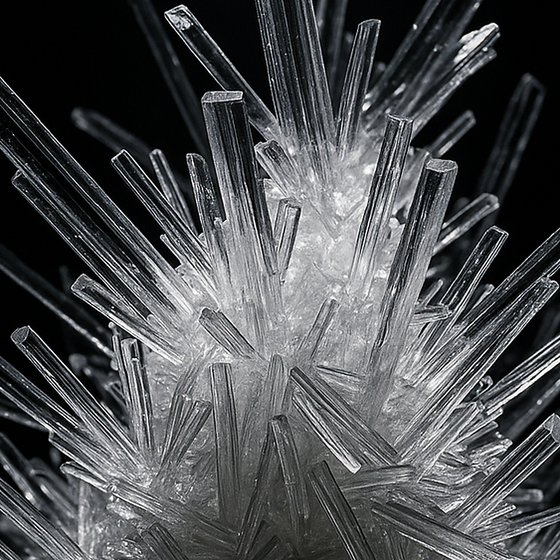
Ethyl maltol is a synthetic 4-pyrone that is related to maltol by replacement of the methyl group with an ethyl group. It is a white solid with a sweet smell that can be described as caramelized sugar or as caramelized fruit.

СОЛОДКИЙ ГУРМАНСЬКИЙ ТЕПЛИЙ КАРАМЕЛЬНИЙ
2-Ethyl-3-hydroxy-4H-pyran-4-one, 2-Ethyl pyromeconic acid, 3-Hydroxy-2-ethyl-4-pyrone
Type
Складник
Olfactive family
Гурманські
Source
Purely synthetic; it can be made from kojic acid, furfural or maltol.
Chemical class
4-pyrone
Інструменти
Піраміда
ВВерхні ноти
СНоти серця
ББазові ноти
3½/5Сила
Вище середньої
інтенсивність запаху

Запах

Its aroma is described as sweet, caramellic, jammy, strawberry, cotton candy, berry and sugar. Its odor character is similar to that of maltol but more intense and sweeter. Maltol has a more caramel-like odor, while ethylmaltol is fruitier.

Докладно

What it is

The preferred IUPAC name of ethyl maltol is 2-ethyl-3-hydroxy-4H-pyran-4-one. It is a common flavourant in some confectioneries. It is a white crystalline powder with the formula C₇H₈O₃ and a molar mass of about 140.14 g/mol.

Natural and synthetic

Maltol is also produced during the roasting of malt and in the baking of bread. Maltol has the odor of caramel and is used to impart a pleasant aroma to foods and fragrances. Ethyl maltol itself is purely synthetic.

Chemistry

The conjugate base derived from ethyl maltol has a high affinity for iron, forming a red coordination complex. In such compounds, the heterocycle is a bidentate ligand. Ethyl maltol is sparingly soluble in water and soluble in propylene glycol. It is also soluble in ethanol.

Specification

The JECFA specification describes ethyl maltol as a white crystalline powder with a characteristic odour and requires an assay of not less than 98%. Its melting range is 89 to 93 °C. Water content may not exceed 0.5%, sulfated ash may not exceed 0.2%, and lead may not exceed 1 mg/kg. It carries the INS number 637 and the functional classes flavouring agent and flavour enhancer.

Uses and regulation

Ethyl maltol is used as an additive in a wide range of beverages, perfumes, ice cream, cakes, confections, e-liquids, cigarettes and oral medications. In the European Union it has the food additive code E 637. Because of its lack of toxicity, it is approved to be dosed quantum satis, which means as much as necessary. It has been evaluated by JECFA and EFSA. Typical concentrations in food range between 1 and 100 ppm, depending on the application.

Food and drink tests

Ten parts per million of ethyl maltol in grape juice greatly amplifies the natural sweet grape aroma, and pineapple juice flavor is pleasingly enhanced at 4 ppm. Sherry wine has an improved flavor at 5 ppm, an orange-type liqueur is sweetened at 10 ppm, and the fruit flavor of a low calorie orange drink is enhanced at 1 ppm. In chocolate bars it increases the richness of the chocolate flavor, creates a blended taste and lifts the aroma. Creme candies containing 20 ppm had significantly better flavors than candies without it. In a strawberry-flavored gelatin dessert, ethyl maltol at about one fifth to one half of the maltol level gives a more flavorful product than maltol does.

Comparison with maltol

In a patent test of dilute solutions, the sample containing 500 ppm of maltol had about the same odor intensity as the sample containing 100 ppm of ethyl maltol.

In e-liquids

Explore all seven extraits in the Discovery Set.

—

Related: Acetyl Furan · Ambermax · Ambrofix · Egg · Flour · Furfural · Genepi · Gold

Цікавий факт

Added alone to a perfume base solvent at 10 ppm, ethyl maltol gave a pleasant cotton-candy like aroma when sprayed into an area. Its aroma was found to be 6 times as strong as that of maltol. Maltol can replace four times its weight of coumarin as a flavor and aroma enhancer. Maltol takes its name from malt, in which it is produced during roasting.

Отримання й хімія

Спосіб отримання

Numerous syntheses of ethylmaltol have been developed, most of which fall into two approaches based on their starting materials. One approach starts from a 4-pyrone such as kojic acid, which is readily available through fermentation. In one version, kojic acid is oxidized with molecular oxygen to comenic acid, which is then decarboxylated to yield pyromeconic acid. An aldol addition with acetaldehyde followed by reduction of the newly introduced secondary hydroxy group affords ethylmaltol in four steps overall. The second approach takes advantage of furfural. Furfural originates from the acid-catalyzed dehydration of agricultural biomass and is converted with an ethyl Grignard compound to an alcohol. Oxidation state adjustment of this alcohol through an Achmatowicz rearrangement, initiated by anodic oxidation, chlorine gas or tert-butyl hypochlorite, provides pyran-3-ones. Further oxidation and acid- or heat-induced rearrangement furnishes ethylmaltol. A route to ethylmaltol from naturally abundant maltol has also been disclosed. In the finalized procedure, maltol is deprotonated with sodium hydride and treated with TBSCl to give a silyl ether, which is deprotonated with LiHMDS and C-methylated with methyl iodide at 0 °C.

Формула
C₇H₈O₃
CAS
4940-11-8
Зовнішній вигляд
white crystalline powder
Сила запаху
Від середньої до сильної
Синоніми
2-Ethyl-3-hydroxy-4H-pyran-4-one, 2-Ethyl pyromeconic acid, 3-Hydroxy-2-ethyl-4-pyrone
Статус IFRA
Див. примітку

No IFRA Standard for the material itself (51st Amendment)

Фізичні властивості
Температура кипіння
289.00 to 290.00 °C. @ 760.00 mm Hg
Температура плавлення
90 - 91 °C

У парфумерії

Ethyl maltol is often used in perfumery to create gourmand scents. Dissolved in a floral base cologne at 4 to 250 ppm, ethyl maltol significantly enhanced the aromas of the perfumes. It bridges fruity and vanillic materials and extends sweetness, and it rounds and smooths fruity-lactonic blends.

Роль у формулі
01модифікатор
02формувач об’єму
03підсилювач дифузії
Форми випуску
стандартна форма

Див. також

7 ноти