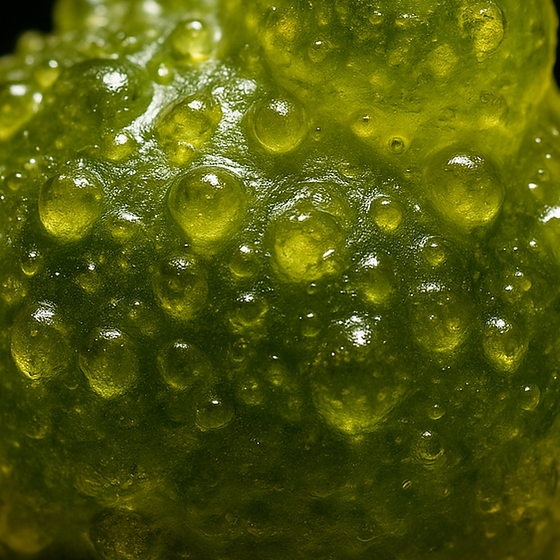
Гальбанум

НатуральнийЗЕЛЕНІ НОТИ, ТРАВИ Й ФУЖЕРНІ АКОРДИзелений · свіжий · бальзамічний
Верхні нотиПіраміда
—Сила
—Стійкість
1Походження
Зразок
Гальбанум як парфумерна сировина
Верхні ноти
Ferula gummosa Boiss. (syn. F. galbaniflua)
Визначення

Galbanum is an aromatic gum resin and a product of certain umbelliferous Persian plant species in the genus Ferula, chiefly Ferula gummosa (synonym F. galbaniflua) and Ferula rubricaulis. Galbanum resin has an intense green scent accompanied by a turpentine odor.

Herbacé
100
Vert
56
Frais
62
Aromatique
40
Boisé
30
Terreux
33
Galbanum resin, galbanum oil
Type
Складник
Olfactive family
Зелені
Source
gum oleo-resin
Chemical class
gum resin (terpenes, resin, gum)
Інструменти
Піраміда
ВВерхні ноти
СНоти серця
ББазові ноти
—Сила
висока
висока
Країни-виробники
Іран

Запах

Galbanum has a peculiar, somewhat musky odour. The initial notes are a very bitter, acrid, and peculiar scent, followed by a complex green, spicy, woody, balsam-like fragrance. When diluted, the scent has variously been described as reminiscent of pine, evergreen, green bamboo, parsley, green apples, musk, or simply intense green. The oil has a pine-like top note that is less pronounced in the odor of the resinoid. The resinoid has a more woody balsamic, conifer resinous character. Galbanum has a warm, resinous, somewhat spicy and balsamic odor. The oil has a green, slightly spicy odor. The odor has also been described as green and terpenic, with bitter and earthy notes and a slightly woody character. The absolute has an odour profile described as ambery-green, sweet, balsamic, resinous with hints of freshness.

Теруар і переробка

Докладно

Galbanum is the gum resin of Ferula gummosa, a perennial herb of the family Apiaceae that is also known under the synonym Ferula galbaniflua. It is native to Iran and Turkmenistan. Galbanum-yielding plants grow plentifully on the slopes of the mountain ranges of northern Iran. Ferula rubricaulis Boiss., which grows in southern Iran, also yields galbanum. Ferula galbaniflua is also widespread in Turkey and Lebanon. Two commercial types are distinguished: Levant galbanum, which is soft, and Persian galbanum, which is hard. The resin contains approximately 15 to 26% essential oil. The annual yield of gum is about 50 tonnes.

Galbanum occurs usually in hard or soft, irregular, more or less translucent and shining lumps, or occasionally in separate tears, of a light-brown, yellowish or greenish-yellow colour. It has a disagreeable, bitter taste. The gum contains about 8% terpenes, about 65% of a resin which contains sulfur, about 20% gum, and a very small quantity of the colorless crystalline substance umbelliferone. It also contains α-pinene, β-pinene, limonene, cadinene, 3-carene, and ocimene. Galbanum, a sticky tar-like resin, can be made into a powder by drying, low boiling, or adding a diluent.

Galbanum oil has the CAS number 8023-91-4. It contains about 75% monoterpene hydrocarbons and about 10% sesquiterpene hydrocarbons. Among the monoterpene hydrocarbons are α-pinene at 5–21%, β-pinene at 40–70% and 3-carene at 2–16%. The oil also contains a fairly large number of terpene and sesquiterpene alcohols and their acetates. Minor components, with entirely different structures and low odor threshold values, contribute strongly to the characteristic odor.

Galbanum is frequently adulterated with pine oil. The debut of galbanum in fine modern perfumery is generally thought to be the origin of the Green family of scents. A ferula called narthex, or giant fennel, shares the galbanum-like scent and has long, straight, sturdy hollow stalks segmented like bamboo. The Latin name ferula derives in part from ferule, a schoolmaster's rod.

—

Related: Alpha Pinene · Angelica · Angelica Root · Angelica Root Oil · Artemisia · Barrenwort · Beachheather · Behini Tree

Цікавий факт

Narthex, a giant fennel that shares the scent of galbanum, has hollow, bamboo-like stalks that were used as torches in antiquity; in Greek mythology Prometheus brought fire to humanity with such a torch. Some of that mythology may have passed to galbanum, which was called the sacred mother resin.

Отримання й хімія

Спосіб отримання

Galbanum oil is obtained by steam distillation of the dried resinous gum. The soft or Levant type is preferred because it contains far more essential oil. The yield of oil is generally in excess of 15%. The gum is collected from a cut in the upper part of the uncovered roots. Galbanum absolute is a brown viscous liquid that resinifies easily over time, even with minimal exposure to air, and is obtained by solvent extraction from the gum oleo-resin of the plant. The resinoid is produced by extraction of the gum with a nonpolar solvent. The resinoid was once prepared by hydrocarbon solvent extraction followed by evaporation of the solvent; today a high-boiling, odorless solvent is added before evaporation and left in the finished commercial product. Solvent extraction of the gum followed by molecular distillation gives a colourless product with a cleaner odour.

CAS
9000-24-2
Ботанічна назва
Ferula gummosa Boiss. (syn. F. galbaniflua)
Сила запаху
висока
Синоніми
Galbanum resin, galbanum oil
Статус IFRA
Див. примітку

No IFRA Standard for the material itself (51st Amendment)

Фізичні властивості
Відносна густина
0.867–0.890 (oil)
Показник заломлення
1.4780–1.4850 @ 20 °C (oil)

У парфумерії

Galbanum oil is used for creating green top notes in perfume compositions. The resinoid is used for the same purposes as the oil and has excellent fixative properties. Galbanum absolute acts as a base note in perfume compositions, as one of a handful of green base notes of natural origin. Because it is perceived as simultaneously green and sweet, the absolute finds a more specific role in green chypre, floral green, coniferous chypre, woody fougère and aquatic fougère compositions. Galbanum is occasionally used in the making of modern perfume.

Роль у формулі
01фіксатор
02модифікатор
03фірмова нота
04сполучний компонент
05формувач об’єму
06свіжість
Форми випуску
ефірна олія

Див. також

5 ноти