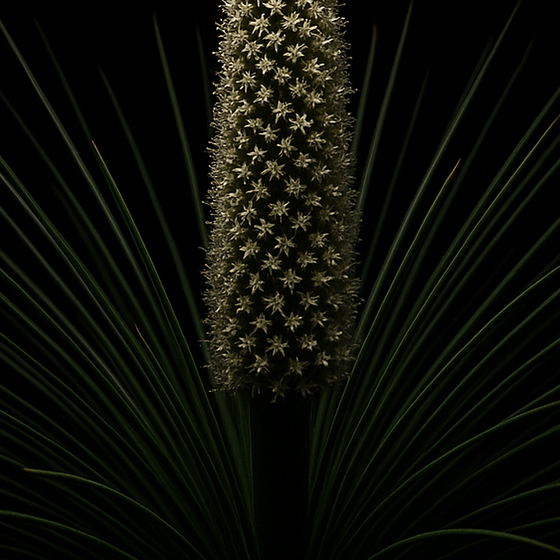
Ксанторея

НатуральнийДЕРЕВИНА Й МОХИзелений · деревний · землистий

Сім ароматівОдин із них дивиться на вас

Базові нотиПіраміда
—Сила
—Стійкість
1Походження
Зразок
Ксанторея як парфумерна сировина
Базові ноти
Xanthorrhoea
Визначення

Grass tree is the common name of Xanthorrhoea, a genus of about 30 species of succulent flowering plants endemic to Australia. Its resin has a balsamic, benzoin-like odour.

ДЕРЕВНИЙ ЗЕЛЕНИЙ ЗЕМЛИСТИЙ СОЛОДКИЙ ТЕПЛИЙ СВІЖИЙ СМОЛИСТИЙ
Black boy, balga, grasstree, grass gum-tree, kangaroo tail, yakka, yamina
Type
Складник
Olfactive family
Деревні
Source
resin
Chemical class
natural resin
Інструменти
Піраміда
ВВерхні ноти
СНоти серця
ББазові ноти
Країни-виробники
Австралія

Запах

The resin has a balsamic, benzoin-like odour due to its benzoic acid content. The yellow variety has an odour agreeably balsamic, especially when heated, and then emits a tolu-like odour. When heated, the yellow resin gives off a vapour with a fragrant odour like that of tolu or storax. When heated, the red resin gives off a fragrant balsamic odour. The oil distilled from the yellow resin has a storax-like odour. The oil from the red acaroid resin has a pleasant odour reminding of tolu and Peru balsams.

Докладно

The plant

Xanthorrhoea is a genus of about 30 species of succulent flowering plants in the family Asphodelaceae. All of them are endemic to Australia. Grass trees grow in coastal heaths and in wet and dry forests of Australia. Fires burn the leaves and blacken the trunk, but the plant survives because the dead leaves around the stem serve as insulation against the heat of a wildfire. The dead trunk is a hollow ring of accumulated leaf bases. The name Xanthorrhoea means yellow flowing and refers to the yellow resin typical of the genus.

The resin

The resin is known as gum acaroides, Botany Bay resin and grass-tree resin. Two resins are produced by the genus, one yellow and one red. The yellow variety resembles gamboge in appearance and is reddish yellow outside and lighter yellow inside. The red variety resembles dragon's blood in appearance and is deep brown-red outside and bright red inside.

Chemistry

The yellow resin consists essentially of resin, cinnamic acid, a small quantity of benzoic acid and a trace of volatile oil. The free acid of the oil distilled from the yellow resin was identified as cinnamic acid. The oil from the red acaroid resin contained cinnamic acid, both free and as an ester, and also styrene. The resin is soluble in alcohols and alkalis but insoluble in water and hydrocarbons.

Uses

Resin collected from the plant was used in Australia until the mid-twentieth century. It was burnt as incense in churches and served as a base component of a varnish used on furniture and in dwellings. It was also used as a polish and coating on metal surfaces, including stoves and brass instruments. It served as well in industrial processes such as sizing paper and making soap and early gramophone records. The resin has been used chiefly as a substitute for shellac and for making coloured varnishes.

—

Related: Alder · Alpha Humulene · Amaranth · Amberever · Amburana Bark · Antillone · Apple Tree

Цікавий факт

A five-metre-tall member of the fastest-growing Xanthorrhoea may be 200 years old, while a member of a more slowly growing species of equal height may be 600 years old.

Отримання й хімія

Спосіб отримання

The resin is a spontaneous exudation from the stems of different shrubby Australian plants of the genus Xanthorrhoea. The exuding resin often forms into balls that collect near the base of the trunk. Distilling the yellow resin gave 0.37 per cent of a yellow oil, and distilling the red acaroid resin gave 0.33 per cent of a reddish-brown oil.

Ботанічна назва
Xanthorrhoea
Зовнішній вигляд
Reddish-brown powder or aggregate
Синоніми
Black boy, balga, grasstree, grass gum-tree, kangaroo tail, yakka, yamina
Статус IFRA
Див. примітку

No IFRA Standard for the material itself (51st Amendment)

У парфумерії

Until the mid-twentieth century, the resin collected in Australia was used in industrial processes that included making perfumes. It was also burnt as incense in churches. An older account says the resin could stand in for other substances, or be mixed with them, in making fumigating pastilles.

Роль у формулі
01фіксатор
02модифікатор
03кістяк
04фірмова нота
05сполучний компонент
06натуралізатор
Форми випуску
резиноїд стандартна форма

Див. також

8 ноти